


Real Madrid’s Billionaire Ballot: A €150 Million Question of Power
POLICY WIRE — Madrid, Spain — The ballot boxes might still be awaiting their contents, but for Real Madrid, the presidential election isn’t about policy; it’s a bare-knuckle brawl fought...

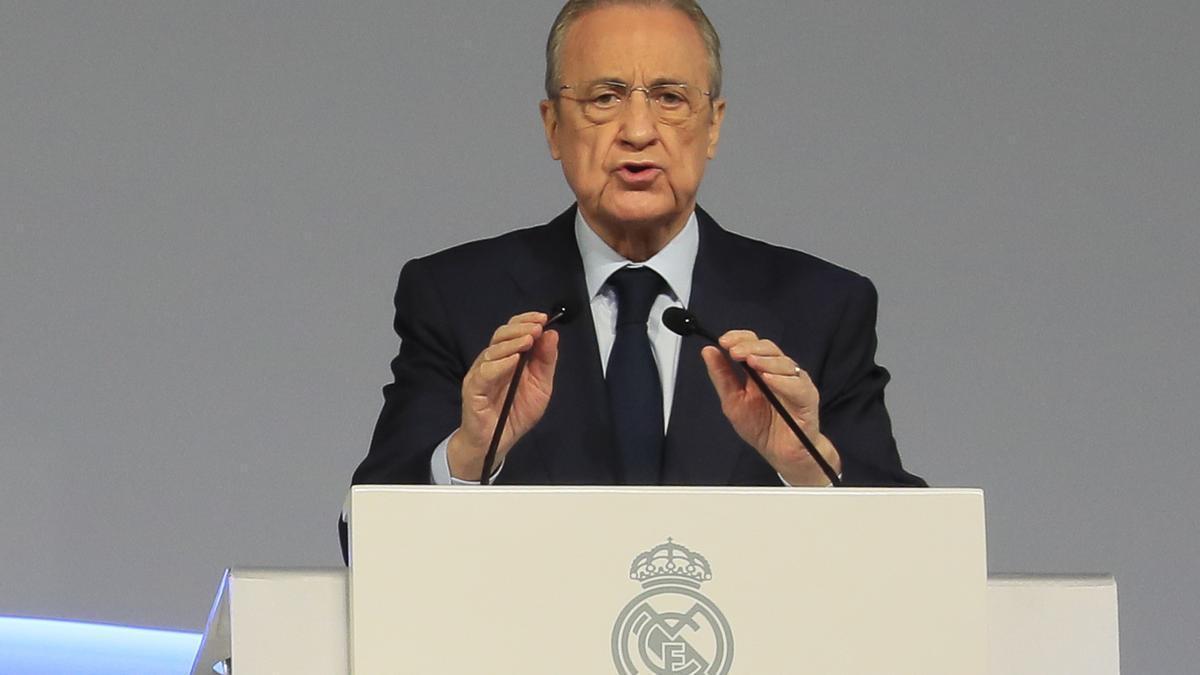
POLICY WIRE — Madrid, Spain — The ballot boxes might still be awaiting their contents, but for Real Madrid, the presidential election isn’t about policy; it’s a bare-knuckle brawl fought with promises of jaw-dropping sums for marquee footballers. It’s a grand spectacle of sporting democracy, perhaps, but one where the currency is often measured in nine figures and the rhetoric is tailored to electrify the loyal socios, irrespective of fiscal prudence. Florentino Pérez, the current incumbent — and perennial power broker, knows this game. He’s been playing it for decades. He threw his latest, rather glittering, grenade into the electoral fray with the kind of calculated nonchalance only a man of his standing—and vault—could muster.
It wasn’t a sudden, impromptu declaration. Pérez, the seasoned campaigner that he’s, waited for his moment, his preferred media platform. He’d outlined a vision for the club’s continued dominance, but the headline grabber—the true engine of the campaign trail—was his assertion: get me re-elected, and a record-breaking €150 million acquisition is on its way. Not just a player, mind you, but *the* most expensive signing in the club’s storied history. Never mind that the name remains elusive; the concept, the audacity of it, is what counts. “We build not just a team, but an empire. And an empire needs its crown jewels,” Pérez is understood to have remarked privately, a source close to the club revealed. “It isn’t about who we target; it’s about our unwavering ambition to always, always be the best. Our history demands it, and our future depends on it.” His political rival, of course, has his own high-stakes response.
Because these aren’t just transfers; they’re manifestos, strategic plays in a very high-stakes game for control of one of the world’s most valuable sports institutions. Perez’s genius, if you can call it that, lies in his strategic ambiguity. While he denied names like Erling Haaland or Michael Olise—both Manchester City and Bayern Munich assets, respectively—his inner circle has apparently zeroed in on a triumvirate. Names like Paris Saint-Germain’s Portuguese duo, Joao Neves and Vitinha, have emerged, players praised for their midfield acumen and recent form in Europe. And there’s Olise, too, despite earlier denials, seemingly earmarked as a right-sided attacking solution not really seen since Gareth Bale bid adieu to the Bernabéu years back. The club faithful still whispers about Vitinha’s prowess; they’ve apparently dreamed of him in white for a long time, eyeing him to sort out midfield kinks. His displays against Madrid in the Champions League clearly left an impression—good one, that’s.
But Enrique Riquelme, Pérez’s challenger, isn’t exactly short on grand promises. He’s countered Pérez’s veiled threat with specifics: Haaland and Rodri Hernández, both Manchester City titans, Riquelme claims, will don the pristine white if he’s handed the reins. His comments on Haaland’s agent denying any deal—that it’s “merely part of the game”—speaks volumes about the brinkmanship involved. It’s all high drama, pure electoral theater. One statistic provides context: European football’s aggregate club revenue hit an all-time high of €24 billion in 2023, according to Deloitte’s Annual Review of Football Finance. So yes, these clubs have the cash flow, or access to it, to make these pledges seem not entirely fantastical, merely wildly audacious. They’re spending, big time.
And let’s be frank, the sheer opulence of these financial maneuvers casts a peculiar shadow globally. While European club powerhouses haggle over players for sums that could fund small nations, you look towards regions like South Asia. In places like Pakistan, for instance, where daily life is often a gruelling dance with economic instability, hearing about €150 million for a single athlete — well, it’s not just astronomical, it’s frankly a bizarre, almost insulting abstraction. It doesn’t connect. People don’t even begin to grasp what that means in their local currency, how many schools it could build, or hospitals it could equip. It just emphasizes a chasm, a stark divide, between two wildly different financial realities. Still, they watch. Millions tune in. It’s a paradox.
Riquelme, it’s rumored, is looking to usher in a new era, though he’s yet to name his preferred manager. He has, however, made sure to distance himself from Jose Mourinho, the divisive figure whom Pérez, ironically, is keen to reinstate if he holds onto power. It’s a game of chess, truly, played out on a global stage where the pieces are world-class athletes and the stakes are measured in both silverware and cold, hard cash.
What This Means
This entire spectacle isn’t just about football; it’s a masterclass in political maneuvering within a hyper-capitalized sports entity. Pérez’s opaque pledge buys him flexibility. He avoids specifics, minimizing the risk of failure to deliver. If elected, he can chase any player fitting the bill—or pivot if market conditions shift. It also allows him to gauge competitor promises without fully revealing his own hand. Riquelme, on the other hand, opts for direct confrontation, naming specific, highly desirable players. This approach galvanizes supporters hungry for immediate, tangible change, but it also carries significant risk: any failure to secure those named players post-election could shatter credibility, possibly sinking his future ambitions. These promises inflate the player market further—something akin to an economic domino effect—making even ‘modest’ transfers seem pricier. What’s more, the focus on eye-watering sums diverts attention from core administrative issues, structural reforms, or youth development programs that might truly ensure long-term stability rather than short-term electoral thrills. It’s high finance, draped in team colours, disguised as democratic process. And ultimately, it just entrenches the idea that only those with access to immense capital can play this game. Check out the internal power dynamics at rival clubs, like Barcelona, here, and compare that with the long-term vision of Man City’s owners.