

Atlantic Gauntlet: F1’s Titans Brace for Arctic Chill and Upgrade War in Montreal
POLICY WIRE — Montreal, Canada — Forget the champagne-soaked celebrations and the glitzy Miami sun. Formula 1, that perpetually hungry beast of innovation and drama, doesn’t do complacency,...

POLICY WIRE — Montreal, Canada — Forget the champagne-soaked celebrations and the glitzy Miami sun. Formula 1, that perpetually hungry beast of innovation and drama, doesn’t do complacency, especially not at the cold, unforgiving Circuit Gilles Villeneuve. It’s here, amidst the bracing chill of early Canadian summer—and the very real threat of rain—that the 2026 championship battle gets a whole lot sharper. Mercedes, the outfit that’s carved a seemingly unassailable path through the season’s initial races, now faces an uncomfortable truth: their competitors aren’t just nipping at their heels. They’re lunging for the jugular. What began as a silver-arrow parade has morphed into a frantic dash to stay ahead, a brutal arms race on asphalt.
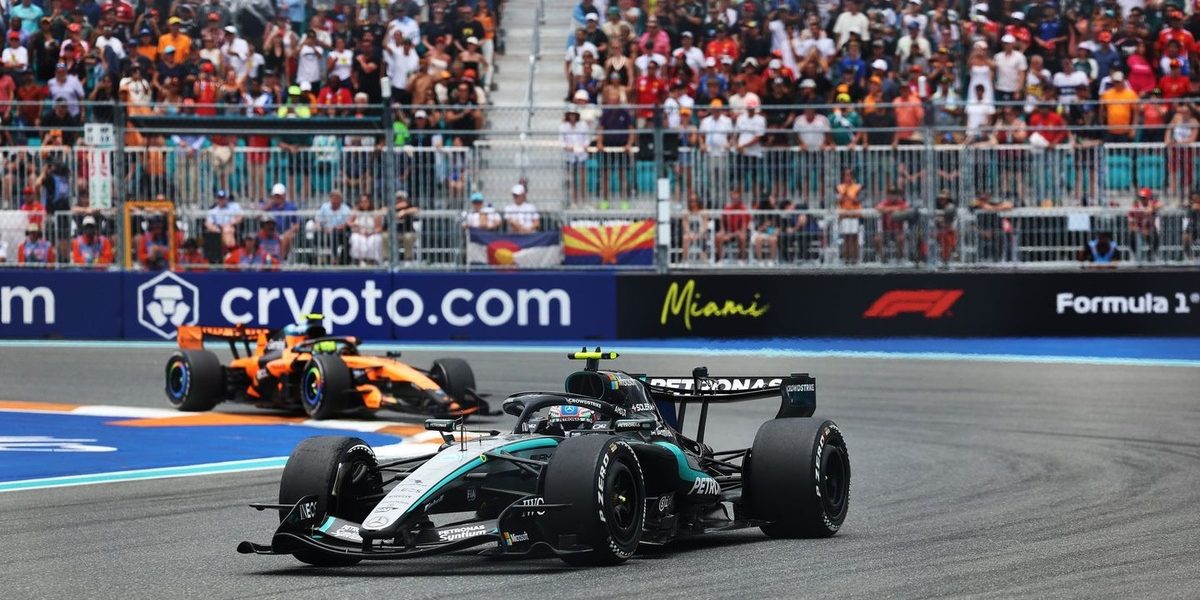
After their pristine, lights-to-flag victories earlier this year—rookie sensation Kimi Antonelli currently holds a 20-point advantage over teammate George Russell, according to official FIA standings—the German juggernaut watched McLaren snatch a sprint race victory in Florida. Not just a win, mind you, but a one-two. It wasn’t the full grand prix, sure, but it was a declaration. The Woking outfit, once lost in the competitive wilderness, suddenly looks like the most credible threat. And just when you thought the dust might settle, both teams are hauling more — considerably more — cutting-edge hardware across the Atlantic. This isn’t just about aerodynamics or engine maps; it’s a statement of intent, a strategic gamble for millions in global branding and prestige.
Mercedes boss Toto Wolff, usually composed, admitted as much. They’d deliberately held back, a calculated risk. “Yes, something is coming, or rather the bigger update will come in Canada,” Wolff told reporters, a hint of weariness in his voice. “Now we have to make sure it actually works. On paper it’s easy to say you’re three or four tenths faster. But it has to show on track and on the stopwatch.” A candid admission, considering Mercedes’ past struggles with upgrade correlation, proving even the sport’s behemoths aren’t immune to self-doubt. And that’s the rub, isn’t it? These upgrades, born in the rarefied air of simulations, must survive the harsh reality of tarmac — and g-forces.
McLaren isn’t just resting on their Miami laurels, either. Industry sources familiar with the teams’ development pipelines confirm that McLaren had only deployed roughly 60% of its planned upgrade package in Florida. The remaining 40%—primarily a redesigned front wing—is set to debut in Canada. McLaren Team Principal Andrea Stella, clearly emboldened, expressed cautious optimism. “We feel extremely satisfied with the weekend, very encouraged, not only because in a single weekend we scored more points than the three previous races, but also because of the trend that we have established,” Stella explained, adding that Mercedes still likely holds a slim advantage, especially in race pace. But, he stressed, “We know that we have some more upgrades coming… so we’re optimistic that they may allow us to take some further steps forward.” It’s a game of increments, a war of marginal gains.
The stage is set. And with forecasts of temperatures as low as 14 degrees Celsius—a distinct shift from Miami’s heat—plus the persistent threat of rain, the Circuit Gilles Villeneuve promises pure, unadulterated chaos. But because these cars are exquisitely sensitive to conditions, these wild fluctuations could mask the true efficacy of the upgrades until the calendar rolls into mid-June for Barcelona. It’s an unpredictable stew, further spiced by the inclusion of yet another sprint race format, forcing teams to commit to setups early without much wiggle room. For a sport increasingly watched across diverse demographics—from traditional European markets to burgeoning viewership in South Asia, including countries like Pakistan where aspirations for technological prowess and global engagement are high—these battles represent not just a sporting contest, but a dynamic display of cutting-edge engineering and strategic brinkmanship. Check out more on how global sports narratives intersect with local ambitions here.
What This Means
The escalating development war between Mercedes — and McLaren signifies a shift in the early 2026 season narrative. What appeared to be a dominant performance from Mercedes is now being fiercely challenged, forcing them to accelerate their own upgrade cycle rather than comfortably manage their lead. Economically, this arms race represents staggering investment. These aren’t just bits of carbon fibre; they’re millions of dollars poured into R&D, wind tunnels, and computational fluid dynamics, each designed to shave milliseconds off lap times. For manufacturers like Mercedes and their customer teams, success on track translates directly into brand value, R&D prestige, and ultimately, sales for their road-going vehicles in critical global markets. A strong showing—or indeed, any slip—in such a high-profile championship carries substantial commercial implications. Think about how brand victories echo globally, inspiring new generations of engineers and consumers, including in fast-developing economies. the unpredictable Canadian weather adds a layer of statistical variance to performance assessment. This makes objective evaluation of new parts difficult, blurring the competitive picture until later races. But that’s the whole point, isn’t it? Formula 1 thrives on uncertainty, on the knife-edge between brilliance — and failure. The season’s first true test of character isn’t just about speed; it’s about adaptability and sheer will. It’s going to be a bumpy ride, folks. And the ripples will be felt across the industry, impacting sponsor deals, driver contracts, and the future strategic direction of entire multi-billion-dollar corporations. You can get more insights on the business of sports here.