


Albuquerque’s Legendary Gathering of Nations Powwow Bids Bittersweet Farewell to Iconic Venue
POLICY WIRE — Albuquerque, New Mexico — Four decades. That’s how long the drums have beaten, the bells have jingled, and the vibrant regalia has whirled across the hallowed grounds of Expo New...

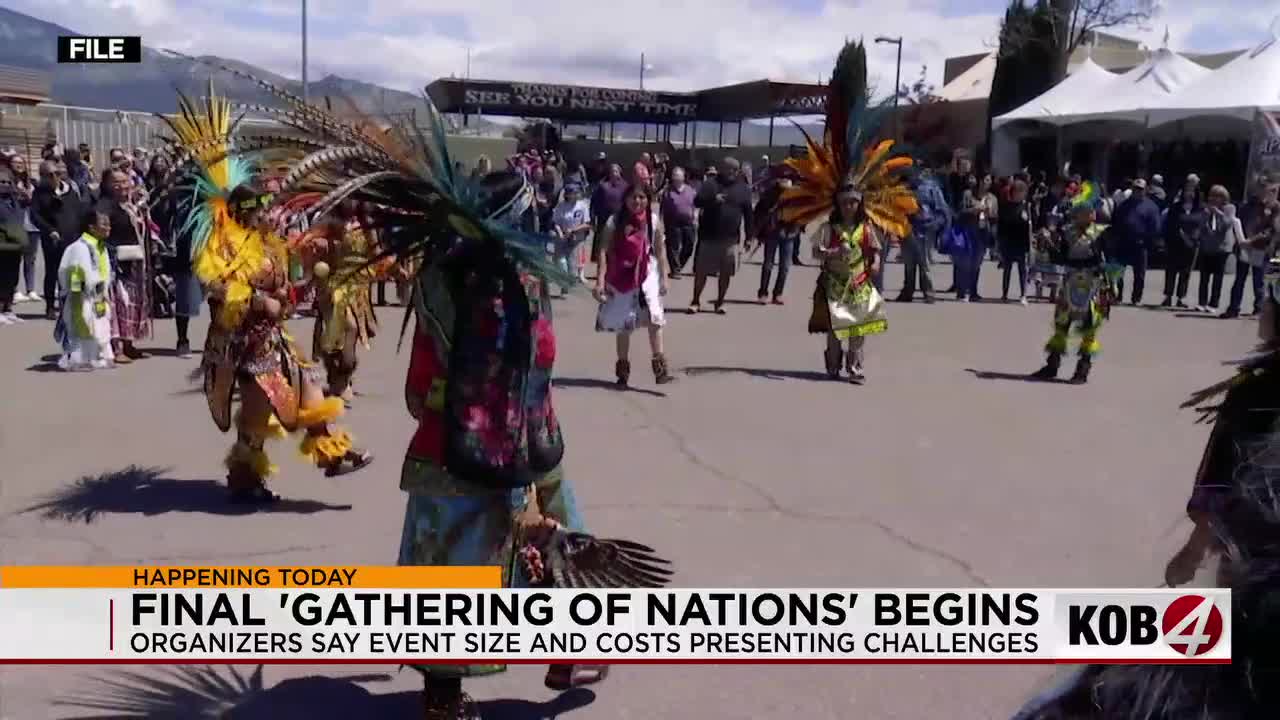
POLICY WIRE — Albuquerque, New Mexico — Four decades. That’s how long the drums have beaten, the bells have jingled, and the vibrant regalia has whirled across the hallowed grounds of Expo New Mexico, transforming the space into the world’s largest gathering of Indigenous peoples.
But this weekend, the annual Gathering of Nations powwow, a genuine cultural phenomenon, bids its final adieu at this iconic venue, a moment organizers have dubbed the ‘Last Dance.’
It’s a bittersweet crescendo, certainly. More than 3,000 dancers and drummers, representing over 500 tribes from across the United States and Canada, descend upon Tingley Coliseum for what’s become an unparalleled showcase of Native American heritage. Yet, the very success of this colossal event now prompts its temporary cessation. Quite the conundrum, isn’t it?
“At some point, you’re getting the message that it’s time,” shot back Derek Mathews, the powwow’s visionary founder, articulating the raw truth behind the decision. “We turned it into a festival. It’s not just a dance in a building. And that’s really, we may have outgrown ourselves.”
And outgrow it they’ve. The sheer logistics of hosting upwards of 100,000 attendees, managing intricate dance competitions, and facilitating a massive vendor market became an ever-increasing Everest to scale. Make no mistake, this isn’t merely a local fair; it’s a global beacon for Indigenous culture – a sun, really, that’s now a bit too big for its orbit.
Still, the departure from Expo New Mexico leaves a palpable void, both culturally — and economically. Albuquerque’s economy, we’re told, will feel the ripple effect. The Gathering of Nations delivers an estimated $30 million in economic impact to the city annually, making it one of New Mexico’s most lucrative attractions, second only to the famed Balloon Fiesta. Your local accountant’s probably already doing the math, — and it’s not looking rosy.
“We’re incredibly proud of the legacy the Gathering of Nations has built here,” stated Mayor Tim Keller of Albuquerque, acknowledging the fiscal blow. “It’s a testament to our city’s embrace of diverse cultures, and while we’ll miss its presence at Expo New Mexico, we’re committed to supporting its future, whatever form that takes.”
But what does the future hold? Not everyone believes this is the end, not really. Many veterans of the powwow anticipate a metamorphosis rather than an outright disappearance. Perhaps it’s a move to another venue, maybe even a new city, though the spiritual and historical ties to Albuquerque run deep – they’re part of the very bedrock, one could argue.
Indeed, the challenges facing the Gathering of Nations echo similar struggles for cultural preservation and event scaling in other parts of the world. Consider Pakistan’s vibrant Sufi *melas* or tribal festivals, which draw hundreds of thousands. These events often grapple with inadequate infrastructure, commercialization pressures, and the delicate balance between maintaining tradition and accommodating modern crowds, a tightrope walk that’s easy to fall from.
They too must confront the question: How does one sustain the authenticity and spirit of a centuries-old tradition when its popularity threatens to overwhelm its foundations? Is expansion always the answer, or does intimacy hold its own, often unquantifiable, value?
Back in 1983, when founder Derek Mathews first conceived the idea, he likely couldn’t have envisioned such an epic scale. It started modestly, a community effort to celebrate — and preserve Indigenous dance, music, and traditions. And boy, did it become a phenomenon. A genuine juggernaut, frankly.
This weekend’s grand entries — four planned through Friday and Saturday — promise to be particularly poignant. Attendees aren’t just watching performances; they’re witnessing a pivotal moment in the history of Indigenous cultural celebration, an inflection point where immense success forces a reevaluation – a moment where the very brilliance of the diamond necessitates a new setting for it to truly shine.
What This Means
The conclusion of the Gathering of Nations at Expo New Mexico signifies more than just a venue change; it marks a critical juncture for the world’s largest Indigenous cultural festival. Economically, Albuquerque faces a significant, albeit temporary, void. Local businesses, from hotels to restaurants, will need to adapt to the absence of the powwow’s massive financial injection. Culturally, it compels a conversation about the sustainability of mega-events dedicated to preserving heritage.
Can a phenomenon of this magnitude truly exist without the infrastructure it has historically relied upon? Or will a more decentralized, perhaps even multi-location, approach emerge as the new paradigm for such large-scale cultural showcases? The challenge lies in retaining the unique spirit and unifying power of the Gathering while navigating the practicalities of its immense scale – a task that’s easier said than done, if you ask me.
Few events manage to achieve such a delicate balance between cultural authenticity — and commercial viability. Its future location, or indeed its very format, will set a precedent for other large cultural festivals grappling with similar growing pains globally.
Ultimately, the enduring spirit of Indigenous cultures, a spirit of resilience and adaptation, will undoubtedly find a new stage. As one long-time participant noted, “I think that the gathering will continue in some form, maybe at a different venue, maybe somewhere else in the country, just because of the fact that it’s a perfect formula for a celebration, for food, for events, for the pageantry.” The math is stark: such vibrant cultural energy rarely dissipates. It simply seeks new channels. It always does.