


Gathering of Nations Powwow Bids Farewell to Expo New Mexico, Sparks Legacy Debate
POLICY WIRE — Albuquerque, New Mexico — A melancholy rhythm reverberates across the mesa this weekend, as the Gathering of Nations powwow, that kaleidoscopic mosaic of indigenous culture, stages its...

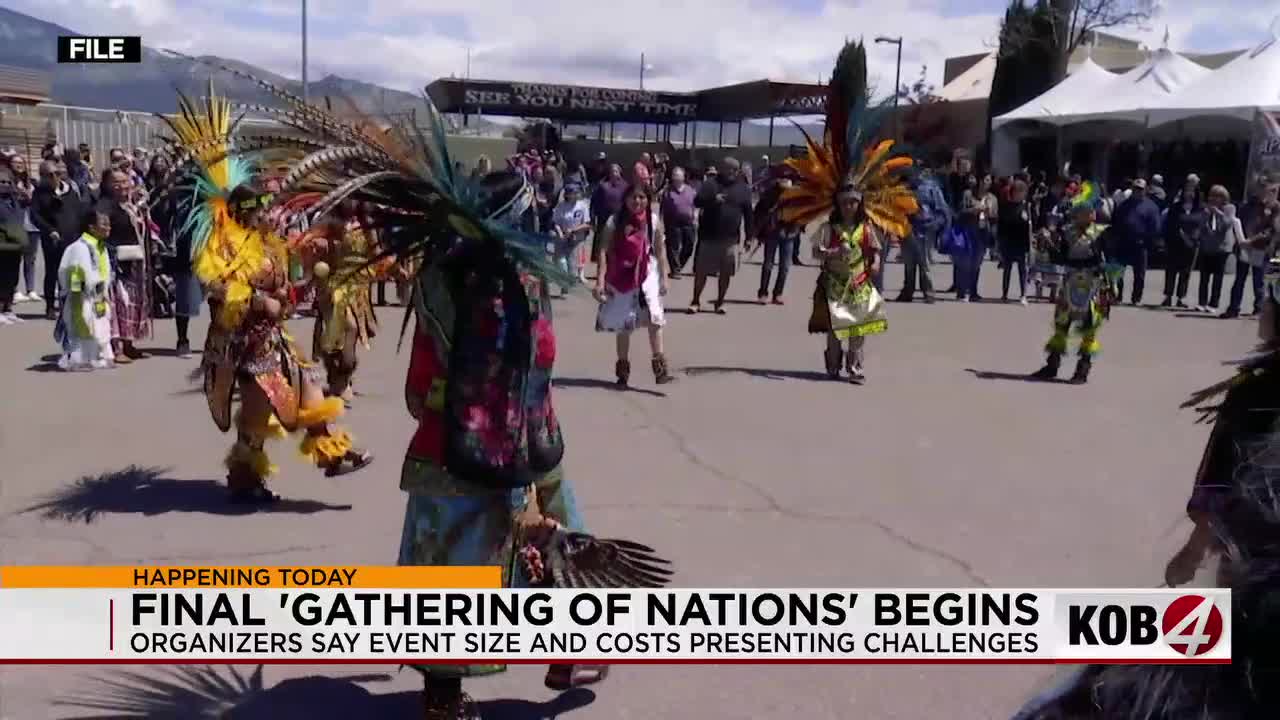
POLICY WIRE — Albuquerque, New Mexico — A melancholy rhythm reverberates across the mesa this weekend, as the Gathering of Nations powwow, that kaleidoscopic mosaic of indigenous culture, stages its final act at Expo New Mexico. For four decades, this colossal jamboree hasn’t just been a gathering; it’s been the thrumming core of Native American pride, resilience, and economic activity. Quite a thing.
But like some grand spectacle that’s simply outgrown its britches—a beloved old suit suddenly too tight—the world’s largest powwow confronts a predestined denouement in its current form. Organizers have dubbed this weekend’s festivities the “Last Dance”—a poignant farewell to a venue that has hosted hundreds of thousands of attendees and thousands of dancers since 1983. It’s been a long run, hasn’t it?
Gates opened Friday morning at 10 a.m., with the first grand entry at Tingley Coliseum igniting at noon. Imagine it. Thousands of dancers — and drummers, bedecked in stunning regalia, filling the arena with color, rhythm, and song. It’s a sight that commands awe, a sensory overload designed to celebrate — and share indigenous traditions. Really, it’s.
Still, founder Derek Mathews has been candid about the reasons behind this tectonic pivot. The sheer scale and escalating costs of producing an event that attracts over 100,000 attendees annually became, well, unsustainable. “At some point, you’re getting the message that it’s time,” Mathews recently told local media, acknowledging the gargantuan sprawl—a kind of magnificent monster they’d unleashed. “We turned it into a festival. It’s not just a dance in a building. And that’s really, we may have outgrown ourselves.” One might wonder if “growth” always implies “betterment,” eh?
And yet, few events manage to weave together cultural celebration with such potent economic impact. This isn’t just about heritage; it’s about hard cash. The Gathering of Nations rakes in an estimated $30 million for Albuquerque’s economy each year, second only to the city’s famed Balloon Fiesta. Who, precisely, bears the ultimate cost of such grandeur, one might ask?
That’s a hefty gush of revenue for local businesses, restaurants, — and hotels. “The Gathering of Nations isn’t just a cultural beacon; it’s a vital economic engine for our city,” remarked Albuquerque Mayor Tim Keller in a statement to Policy Wire. “While we’ll certainly miss its presence at Expo New Mexico, we deeply appreciate its profound impact on our community and look forward to how its spirit will continue.”
Cultural festivals, from the annual Urs festivals celebrating Sufi saints in Pakistan to the vibrant Navratri celebrations across South Asia, often serve a dual purpose: preserving deep-rooted traditions while simultaneously fueling local commerce and fostering inter-community dialogue. The challenges of managing such massive, beloved events, balancing tradition with modern logistics—it’s all a bit of a global phenomenon, really—aren’t unique to the American Southwest. They’re a shared human desire to maintain cultural identity against a backdrop of evolving economic realities, a timeless ballet of past and present.
Back in 1983, when Mathews first conceived the idea, perhaps he couldn’t have envisioned it attracting participants from more than 500 tribes across the U.S. and Canada. This wasn’t merely a regional get-together; it became a global symbol for indigenous unity — and artistic expression. Quite the journey it’s been.
Can something this large simply disappear? Not everyone believes so. Some longtime participants express a fierce optimism that the powwow’s spirit, if not its exact form, will endure. “I think that the gathering will continue in some form, maybe at a different venue, maybe somewhere else in the country,” one elder, who wished to remain anonymous (as is their right), observed during Friday’s opening, “just because of the fact that it’s a perfect formula for a celebration, for food, for events, for the pageantry.”
So, his words carry weight. Could it morph into multiple, smaller regional events? Or perhaps find a new, purpose-built home designed to handle its immense scale—a purpose-built cathedral of culture, you might say? Similar large-scale operations often grapple with managing growth and complexity, underscoring the tough decisions leadership faces when organizations simply outgrow their infrastructure.
What This Means
The conclusion of the Gathering of Nations at Expo New Mexico represents more than just a venue change; it marks a pivotal moment for indigenous cultural events nationwide. Its departure creates a significant lacuna, both culturally — and economically. Politically, it spotlights the ongoing tussle for adequate funding and infrastructure to support large-scale indigenous cultural preservation efforts. The question now becomes: who will step up to fill this void, and what model will future indigenous mega-festivals adopt to ensure both sustainability and authenticity? It’s not a small ask.
Economically, Albuquerque faces a notable gap in its tourism calendar and revenue streams, requiring proactive measures to mitigate the loss. The diplomatic implications are subtle but real: it prompts a recalibration of how indigenous communities can continue to foster inter-tribal connections and project their vibrant cultures onto a national and international stage without overwhelming their own resources. It’s a delicate balance, isn’t it?
Ultimately, the challenge isn’t simply finding a new location, but re-imagining how such a monumental cultural statement can thrive in the 21st century. As Professor Dr. Sarah L. Edwards, a cultural anthropologist specializing in indigenous studies at the University of Arizona, aptly distilled it: “The Gathering of Nations has set an unparalleled standard for celebrating indigenous identity. Its next iteration, whatever form it takes, will undoubtedly need to innovate, perhaps decentralizing or leveraging digital platforms—a technological powwow, if you will—to sustain its profound impact while navigating the logistical realities of such a grand undertaking.”