
Berlin’s Moral Maze: German Business, Far-Right Chase Deals in Russia’s Sanctioned Shadow
POLICY WIRE — Berlin, Germany — You could almost hear the collective sigh of exasperation across European capitals. Just as the West tries to maintain a united front against Moscow, a contingent of...

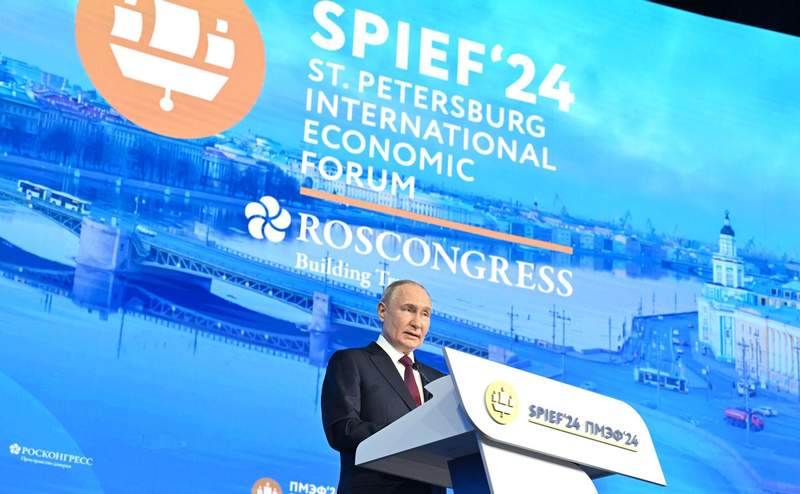
POLICY WIRE — Berlin, Germany — You could almost hear the collective sigh of exasperation across European capitals. Just as the West tries to maintain a united front against Moscow, a contingent of German corporate heavyweights and far-right political figures is gearing up to descend on Russia’s St. Petersburg International Economic Forum. It’s a move that’s less about breaking sanctions and more about breaking ranks, sending a decidedly mixed signal—a public relations coup for the Kremlin, no doubt, and a genuine headache for Berlin’s beleaguered chancellery.
This isn’t some clandestine back-channel meet-and-greet; it’s an open declaration, a calculated risk. Why would prominent business leaders and the populist right—specifically, members of the Alternative for Germany (AfD)—choose this moment to lend their legitimacy to an event so transparently designed to showcase Russia’s resilience against Western pressure? Perhaps they don’t see it as lending legitimacy, but as cold, hard pragmatism. Business is business, they’d argue, and politics—especially those that harm the bottom line—are best navigated with a dash of opportunistic disregard.
But pragmatism has its price. And it’s a price that can easily be misinterpreted, or worse, exploited. The very notion that German industrial titans and politicians whose party often champions national sovereignty would flirt with a regime widely condemned for its own expansionist ambitions—well, it certainly raises eyebrows. This forum isn’t just about economic discussion; it’s a carefully curated stage for Russia to project an image of normalcy, to say, ‘See? We’re not isolated, the world still does business with us.’
For nations like Pakistan, navigating its own delicate dance between Western alignment, Chinese investment, and Russia’s growing influence—especially in energy markets—these German forays into Russia aren’t just curious anecdotes. They’re telling. From Islamabad to Jakarta, nations in the Global South often observe these overtures with a wry, knowing gaze. They’ve long navigated their own complex relationships with Moscow, frequently leveraging Russian offers—whether discounted oil or strategic partnerships—even as the West condemns. This perceived fracturing of European resolve, particularly from an economic powerhouse like Germany, only reinforces their view that Western solidarity is less about shared values and more about shifting expediency. Russia, you can bet, will trumpet this as a victory for its narrative: that the world, including parts of Europe, isn’t buying into the unified Western stance.
“It’s deeply unfortunate to see German figures—from any sector—lending legitimacy to a regime that flagrantly violates international law and global norms,” stated Sven Giegold, State Secretary in the German Federal Ministry for Economic Affairs and Climate Action, in a thinly veiled critique. “This isn’t just about the pursuit of profits; it’s about our collective values and the security architecture of Europe. Our economic future cannot be built on eroding the very principles we claim to uphold.” His words don’t just speak to optics, they’re a lament about eroding principle. You don’t often hear a senior official being so blunt.
But the AfD, ever keen to portray themselves as champions of German self-interest against what they perceive as Berlin’s subservience to Washington or Brussels, doesn’t mince words either. Tino Chrupalla, co-leader of the AfD, is believed to have articulated the sentiment common among the attendees. “Germany’s economy isn’t built on moral grandstanding; it’s built on pragmatism and sound, independent economic policy,” he likely argues. “Isolating ourselves from a major trading player serves no one but our strategic competitors. We’re pursuing German interests, period. The German people, struggling with energy costs, deserve leaders who prioritize their well-being over ideological purity.” That’s the playbook, right?
It’s important to remember just how much was lost. Germany’s direct trade with Russia fell dramatically after the full-scale invasion. According to Germany’s Federal Statistical Office (Destatis), German exports to Russia plunged by a staggering 45.7% in 2022 compared to the previous year, with imports dropping by an even more precipitous 65.1%. Those numbers—that cratering of trade—represent lost revenue and strained relationships, ones some apparently believe are now worth patching up, even on Moscow’s terms.
And so, the stage is set. While the German government formally advises against participation, particularly for politicians, the presence of these figures provides Moscow with exactly what it wants: visual proof that despite sanctions and condemnations, the economic gears are still grinding, and certain European entities are willing to play ball. It’s a tricky game, — and Berlin isn’t amused.
What This Means
This contingent’s jaunt to St. Petersburg isn’t just a simple business trip; it’s a multi-layered political statement—or perhaps, several conflicting ones. For the German business community attending, it suggests a profound, if unspoken, weariness with the economic strictures imposed by Western policy. They’re implicitly betting that the long-term benefits of maintaining—or restarting—ties with Russia outweigh the immediate reputational damage or governmental disapproval. They’re looking for avenues, however narrow, to restart traditional supply chains — and market access. It’s a cynical calculation, but it’s a calculation nonetheless. Shadow Games: Ukraine’s Energy Gambit Ignites Global Tensions, Denials Ring Hollow is never far from this narrative, given Germany’s historical energy dependence on Russia.
But for the AfD, the motivation is purely political, domestic — and international. It allows them to position themselves as the ‘sensible’ alternative—the party that prioritizes German economic prosperity over what they portray as reckless foreign policy driven by outside interests. They’re also, importantly, aligning with a global trend among populist and far-right parties that often express sympathy, or at least understanding, for Moscow’s authoritarian bent and anti-Western rhetoric. This kind of interaction grants them an air of diplomatic legitimacy they often struggle to achieve in mainstream European circles, making it a win-win for their narrative. The implicit message: European sanctions are failing, and the ‘elites’ in Berlin are out of touch with the ‘real’ needs of German industry and energy consumers.
Economically, this sends tremors through the fragile edifice of EU unity. When Europe’s largest economy shows signs of internal dissent on Russia policy—even if officially disavowed—it emboldens others. It hints that the resolve, which seemed so ironclad post-2022, might just be starting to fray around the edges. It doesn’t signal an immediate collapse of sanctions, but it does expose a deepening rift between moral imperatives and commercial desires. And that, in a geopolitical chess match, is a substantial move for the Kremlin.
Finally, it’s a PR bonanza for Russia. Every photo op, every interview with a German dignitary or executive, becomes a potent weapon in its information warfare, designed to sow doubt and fracture Western unity. The implications ripple far beyond Europe’s borders; they resonate in the halls of power from Beijing to Brasilia, showing that even within the heart of the European project, the ‘business as usual’ impulse—or perhaps the ‘we’ve suffered enough’ impulse—is alive and kicking. The optics, for a strong — and unified European response, couldn’t be much worse. These are the uncomfortable realities, folks. And they’re not going away.