
Liberty’s Line: DOJ’s Shocking Argument Rewrites Limits of Presidential Power
POLICY WIRE — Washington D.C., United States — Forget Oval Office scandals or classified document leaks. The real absurdity of American executive power, it seems, has now been...

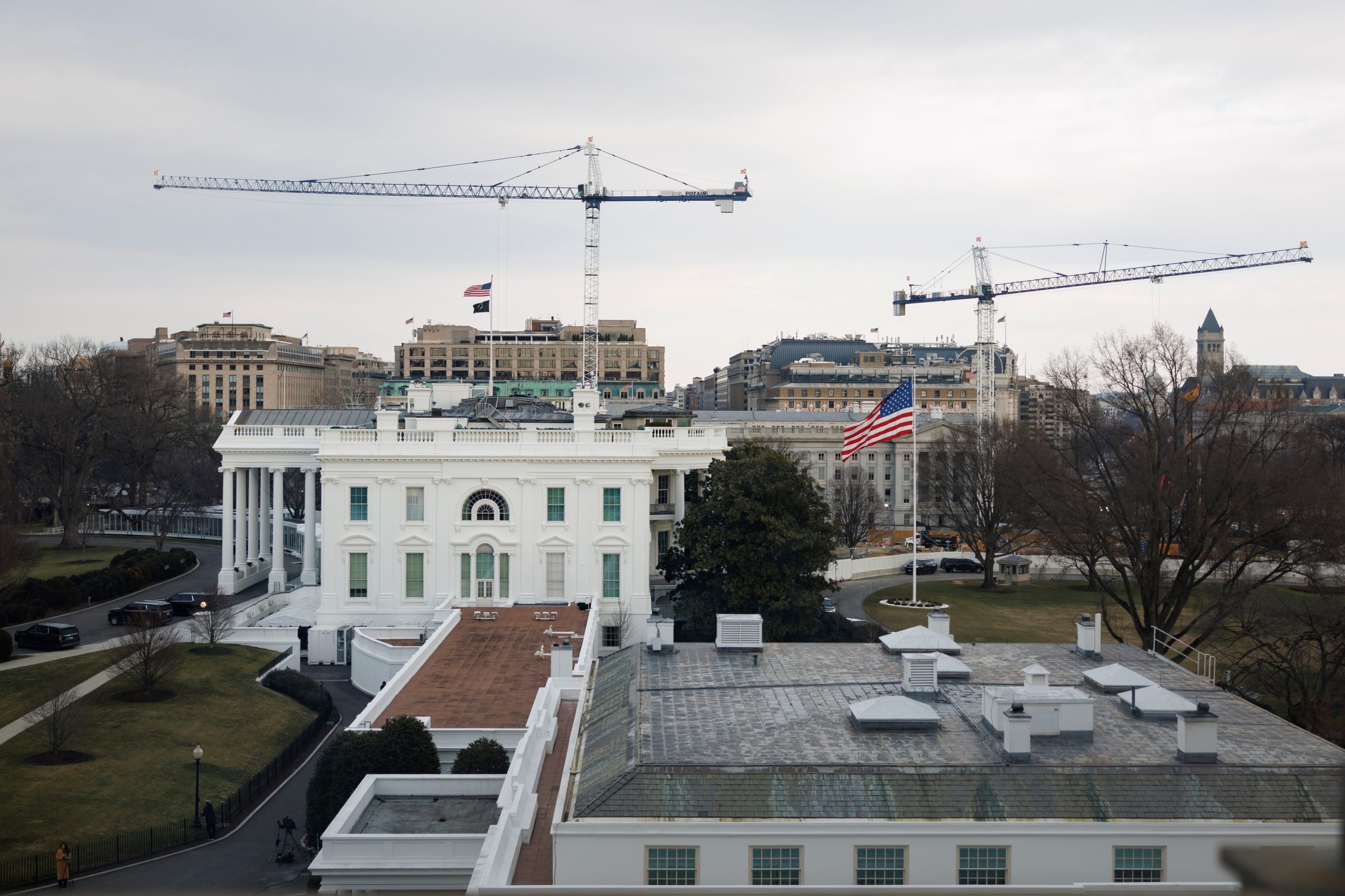
POLICY WIRE — Washington D.C., United States — Forget Oval Office scandals or classified document leaks. The real absurdity of American executive power, it seems, has now been crystallized in a legal brief defending the mundane management of a White House ballroom. Yes, you read that right. In a move that left more than a few legal observers—and likely, a good many everyday citizens—blinking in disbelief, the Department of Justice ventured into hypotheticals usually reserved for late-night political satire, not serious courtroom arguments.
The contention wasn’t about whether to repaint a wall or rehang a portrait. It reached for something far more foundational. It suggested that a president’s authority over the residence—the people’s house, remember—was so unconstrained that if challenged on something relatively small-scale like a particular historical alteration to the White House itself, the logical extreme of that challenge would extend to literally defacing American identity. It’s an exercise in rhetorical brinkmanship, or perhaps just plain exhaustion on the part of government lawyers. [QUOTE_PLACEHOLDER]
But when you’re parsing the language, the bluntness is, well, jarring. The argument presented by the “DOJ argues in defense of White House ballroom” was that a president’s unilateral authority over such properties could theoretically extend so far as to claim that a commander-in-chief “could also tear down the Statue of Liberty.” Let that sink in. Lady Liberty. A gift from France, a symbol of freedom, the first thing millions of immigrants ever saw of America. To use it as a throwaway example for extreme executive power regarding, essentially, interior design, feels almost… un-American, doesn’t it? It’s like arguing a local zoning board could permit bulldozing Mount Rushmore if they allow a shed to be moved a few feet.
This isn’t about the president’s actual desire to dismantle national monuments (one hopes), but about the unsettling boundaries—or lack thereof—being drawn by government lawyers protecting presidential prerogatives. Because the thing is, if you claim the president’s authority over White House aesthetics is untouchable, how far does that principle truly stretch? The DOJ’s argument suggests it stretches to breaking point, implying that executive will, if unimpeded, could fundamentally reshape — or dismantle — even the most sacred symbols of the nation.
For nations watching from afar, particularly those in nascent democracies or with recent experiences of authoritarian overreach, this sort of legal justification must read like an unsettling playbook. Take Pakistan, for instance. A country that’s seen its share of strongman rule, constitutional crises, — and institutional challenges. While its historical and cultural contexts are vastly different, the underlying principle of unchecked executive power—especially when juxtaposed against national heritage or democratic norms—resonates deeply. When the legal defense of a president’s authority in Washington ventures into analogies about demolishing revered landmarks, it offers a chilling reflection of the absolute power dynamics that are often, unfortunately, a reality for leaders elsewhere. The National Parks Service (NPS) recorded nearly 4.5 million visitors to the Statue of Liberty National Monument in 2023, underscoring its stature as a national and international symbol, making its hypothetical destruction an even more potent, and potentially dangerous, example.
This isn’t just about American exceptionalism or some domestic legal squabble; it’s a window into how the most powerful nation on Earth debates its own checks and balances. And it often feels messy. But messy is sometimes transparent, isn’t it? Though maybe not in the way the DOJ intended when it introduced Lady Liberty into the debate.
What This Means
This rather dramatic legal analogy isn’t merely an academic exercise. It presents a stark — and probably unintended — warning about the elasticity of presidential power. Politically, it signals a Justice Department willing to push the interpretive envelope significantly to shield the executive from challenges to its domestic management, however small. It normalizes an expansive view of presidential authority that, while technically argued in the context of property, carries echoes across policy domains. Economically, while not a direct financial threat, any perceived weakening of protections for national heritage or iconic sites could, in the long run, subtly impact international perception and tourism, albeit marginally for something like this specific case.
More broadly, this serves as a curious, almost morbid, test balloon. If such an extreme hypothetical gains any traction, what does it mean for other, perhaps less symbolic but equally meaningful, governmental decisions? It suggests that the bar for challenging executive action might be seen as much higher than previously understood, creating potential precedent for future administrations looking to stretch their authority without meaningful recourse. Think of the precedent it could set globally—if the U.S., a purported guardian of democratic institutions, offers legal defenses that, in their extreme, undermine the very essence of national preservation and collective ownership, it weakens the moral authority it wields when critiquing actions of other nations, particularly those where cultural heritage and collective identity are already under threat from state overreach. It’s an interesting tactic, but one that raises more questions than it answers about executive accountability and the durability of symbols beyond political whims. And frankly, it’s just bizarre enough to stick in your craw.
It’s also worth noting that such arguments don’t happen in a vacuum. They happen in a political climate where the erosion of democratic norms is a consistent theme. When legal counsel for the executive branch floats the idea that a president can functionally do whatever they want with state property—even to the point of hypothetically demolishing a monument like the Statue of Liberty—it makes you wonder how stable the foundational bedrock of governance truly is. Such statements aren’t just legal arguments; they become part of the political narrative, informing how both domestic and international actors perceive the balance of power within Washington and, by extension, the West as a whole. Silent signals often speak loudest, don’t they?