

Genoa’s Judgment Day: When Neglect Meets the Guillotine of Justice
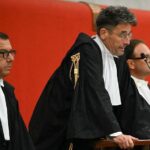
POLICY WIRE — Genoa, Italy — There’s a certain grim poetry to a 12-year sentence handed down in a courthouse built to stand for centuries, when it concerns a bridge that couldn’t even manage six...

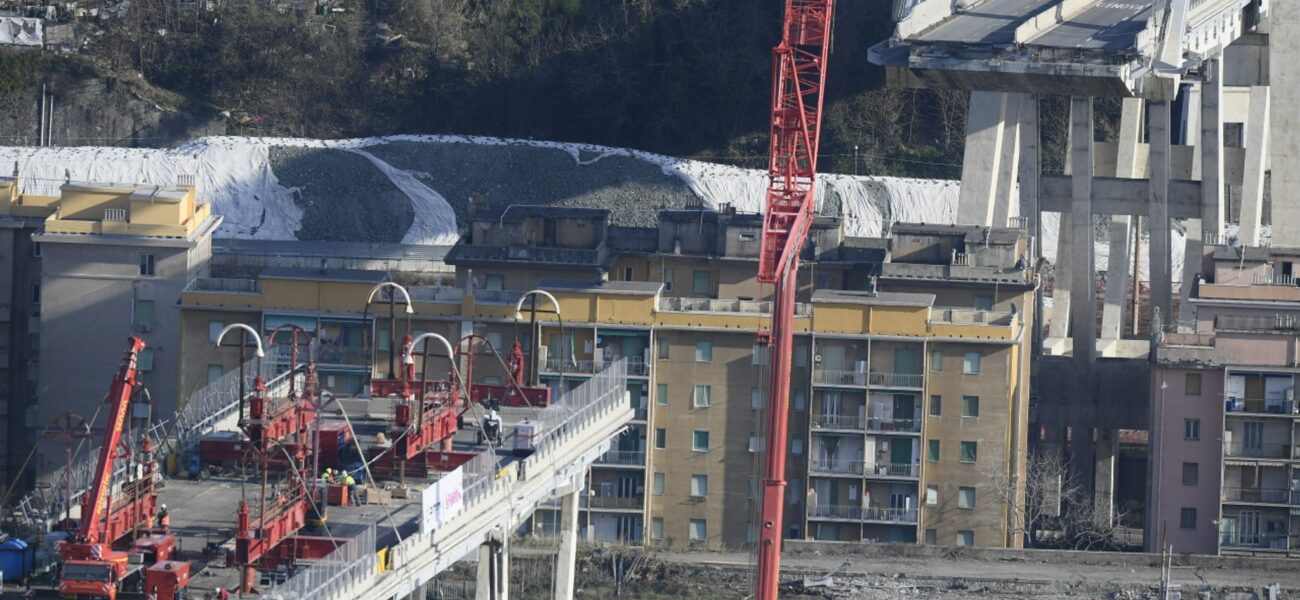
POLICY WIRE — Genoa, Italy — There’s a certain grim poetry to a 12-year sentence handed down in a courthouse built to stand for centuries, when it concerns a bridge that couldn’t even manage six decades. For years, the mangled concrete and twisted steel of Genoa’s Morandi Bridge, which collapsed on a blustery August day in 2018, symbolized a kind of unwritten promise broken—a silent pact between the state and its citizens that the very ground beneath their feet, or wheels, was sound. And today, justice, in its glacial Italian way, has finally started chiseling out names from the list of the culpable.
It wasn’t a sudden cataclysm, this judgment. It was a methodical unraveling. The man at the center, Giancarlo Laghi—a former top honcho at Autostrade per l’Italia, the company tasked with managing the doomed structure—won’t be sleeping in his own bed for a dozen years, effectively. But this isn’t just about one man. It’s about 43 lives extinguished in an instant. Forty-three individual tragedies that collectively form an indictment of systemic corporate neglect and governmental oversight (or the conspicuous lack thereof). You can’t really call it an accident, can you? Not when engineers, auditors, — and executives allegedly knew things were crumbling.
But the story doesn’t end with a Gavel’s thump. Far from it. It’s a brutal reminder, really, that corners cut in corporate boardrooms aren’t just balance sheet adjustments; they’re lives forfeit. That 2018 collapse wasn’t some natural disaster; it was man-made, fueled by an apparent disregard for routine maintenance and an obsession with the bottom line. It’s a tale told across continents, in every developing nation eyeing rapid infrastructure expansion, and in every aging industrial power struggling with the costs of upkeep. The human memory is short, but the collective scar on Genoa isn’t.
“This verdict, after years of agonizing deliberation, reminds us that corporate responsibility isn’t an abstract concept; it’s etched into the very concrete of our nation’s infrastructure,” declared Italy’s Minister of Justice, Carlo Nordio, in a statement today. “It’s a clear message: public safety isn’t a negotiable expense. Our commitment to accountability remains absolute.” His words—strong, unwavering—ring with the solemnity of the court, but one can’t help but hear the distant echo of similar pronouncements after every disaster that rips through a community.
Because let’s be honest, we’ve seen this script before. Perhaps not always with the same dramatic finality, but the underlying tensions are universal. Countries like Pakistan, for instance, are constantly balancing rapid development needs with the equally pressing, yet often overlooked, demands of maintaining what’s already built. The subcontinent is awash in stories of grand projects lauded at inauguration only to languish in disrepair. This Italian court’s stern judgment resonates deeply there, highlighting a global pattern where profits often trump precautions. You’d think we’d learn, wouldn’t you?
Consider the raw numbers, for a moment. A 2021 study by the Italian National Institute of Statistics (ISTAT) revealed that over 60% of bridges nationwide were constructed before 1970, placing them well past their original design life for optimal safety. Sixty percent! That’s not just a statistic; it’s an ticking clock. This Genoa judgment, therefore, isn’t just about one old bridge or one fallen executive; it’s about a wake-up call screaming for an audit of every crumbling overpass, every corroded column, worldwide. And yet, how many politicians actually prioritize long-term, unglamorous maintenance budgets over flashy new construction?
📄 POLICY WIRE WHITEPAPER PUBLISHED: PAKISTAN'S NATIONAL SECURITY POLICY PRIORITIES
👉 READ BY CLICKING HEREBut how do you really quantify the cost? “Twelve years. For them, it’s just a number on a spreadsheet, another victory lap for the legal system,” lamented Anna Ghersi, who lost her brother in the collapse, speaking for the victims’ families. “For us, it’s every lost birthday, every empty chair at the dinner table. You can’t put a price on forty-three lives, but today, they finally put a sentence on negligence. It’s something. It’s not everything.” Her weariness, her stark disappointment, cuts deeper than any official communiqué.
What This Means
The Genoa verdict is a potent, if belated, signal. Politically, it’ll be a win for those pushing for stricter corporate governance and an end to perceived impunity, particularly concerning public works. Governments across Europe, already struggling with deeper policy fault lines surrounding infrastructure spending, will undoubtedly feel increased pressure to not just fund new projects, but rigorously audit and maintain existing ones. Economically, the ramifications are more complex. It might spur increased liability insurance costs for construction and maintenance firms, potentially leading to higher bids for future contracts—an added burden, sure, but perhaps a necessary one for public safety.
More broadly, this decision serves as a harsh object lesson for any nation, whether it’s struggling to become an economic machine or grappling with its own aging assets, that short-sighted budgetary decisions invariably come back to haunt you. You can’t defer maintenance indefinitely without eventually paying the ultimate price. Because when bridges fall, they don’t just take asphalt and steel with them; they take lives, public trust, and a nation’s sense of collective security.