

The Brutal Calculus of Spectacle: Paul’s Reality Check as Joshua Navigates Gulf Millions and Ghostly Echoes
POLICY WIRE — London, UK — Forget the TikTok algorithms or viral sponsorships; a genuine crack to the jaw has a way of resetting priorities, even for a content titan like Jake Paul. Seven months...

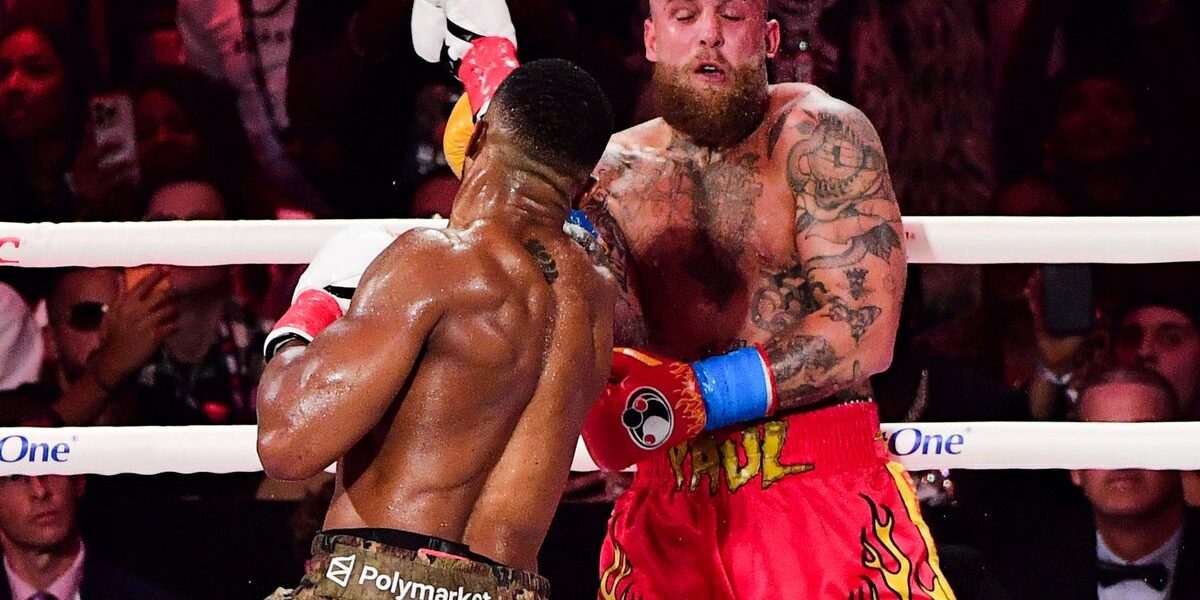
POLICY WIRE — London, UK — Forget the TikTok algorithms or viral sponsorships; a genuine crack to the jaw has a way of resetting priorities, even for a content titan like Jake Paul. Seven months after former world champion Anthony Joshua delivered that blunt physiological lesson, Paul—the YouTube sensation turned boxer—is finally charting his post-bruising comeback. But while Paul reevaluates his choice of ring adversaries, the fighter who delivered the blow is plunging deeper into a world of astronomical sums, perilous geopolitics, and, disturbingly, personal tragedy.
It’s an arena where mere millions are exchanged for a bruised ego, where the spectacle now dictates absurdities like a headline bout kicking off in the dead of night to satisfy pay-per-view markets an ocean away. This isn’t just sport; it’s a cold, hard global enterprise. But even in this glitzy, high-stakes game, a fatal car crash and whispers of boxing legacy can cut through the noise, reminding everyone what’s truly on the line.
Paul’s recovery period following the six-round drubbing by Joshua has been extensive, to put it mildly. He hadn’t fought professionally since that Miami encounter last December, which, for those keeping score, marked his second pro loss, following a prior defeat to Tommy Fury’s half-brother. It’s a career trajectory that oscillates between wildly lucrative sideshows and abrupt, painful moments of sporting reality.
“I just probably won’t fight Olympic gold-medal heavyweights anymore. I learned my lesson,” Paul reportedly confessed this week on The Pat McAfee Show, a sentiment that might strike seasoned fight fans as a touch belated—if not refreshingly honest for the typically brazen online personality. And he’s already planning his next moves, floating ideas like mixed martial arts (MMA), perhaps a long-delayed showdown with Nate Diaz. Because when one revenue stream temporarily dries up, an entrepreneur pivots.
But the true heart of boxing’s present-day power dynamic lies not in the lessons of celebrity brawlers, but in the gravitational pull of global capital, particularly from the Gulf. Joshua, the quiet giant who laid Paul low, isn’t contemplating internet-famous rivals. He’s bound for Saudi Arabia, a kingdom increasingly asserting its presence across the global sporting landscape. On July 25th, AJ is set to face Kristian Prenga there, a warm-up for a bout that could potentially unify the heavyweight division: a colossal showdown with Tyson Fury.
This prospective clash, if it happens, paints a stark picture of where boxing’s economic levers now reside. Turki Alalshikh, the Saudi General Entertainment Authority Chairman—effectively the kingdom’s chief matchmaker and wallet-bearer—recently floated a conditional offer for the fight: “This could come to fruition on one condition: that the main event begins at 2am BST on a Sunday morning.” That’s 4 AM local time in Riyadh for the host nation. That one hard data point, a dictated 2 AM BST start time for a European audience, screams volumes about the global power shift underway in premium sports broadcasting and viewership mechanics.
📄 POLICY WIRE WHITEPAPER PUBLISHED: PAKISTAN'S NATIONAL SECURITY POLICY PRIORITIES
👉 READ BY CLICKING HEREAnd then there’s the shadow looming over Joshua himself. His upcoming fight against Prenga won’t just be his first since dispatching Paul. It will also be his first professional appearance since a harrowing, fatal car accident in Nigeria last December, an incident that claimed the lives of two of his teammates. Imagine squaring off under blinding stadium lights, with millions watching, just months after such a brush with mortality. That’s a different kind of lesson learned, isn’t it?
Paul’s cheeky jab at boxing legend Floyd Mayweather, suggesting the undefeated champion ‘needs the money’ for a potential exhibition match, feels like noise in this grander symphony of ambition, capital, and survival. It’s as if one part of boxing remains firmly rooted in the meme economy, while another navigates the realpolitik of sovereign wealth funds and tragic personal losses.
What This Means
The stark juxtaposition of Jake Paul’s career recalculation and Anthony Joshua’s high-stakes trajectory underlines a deeper realignment within combat sports. We’re seeing an increasingly stratified landscape: the hyper-monetized spectacle of celebrity boxing coexists—and occasionally collides—with the brutal, old-world mechanics of elite professional fighting. But both are increasingly reliant on the largesse of nations like Saudi Arabia.
The kingdom’s willingness to invest a king’s ransom in securing major sporting events isn’t merely about sport; it’s a deliberate soft-power play, aimed at enhancing international prestige and diversifying its oil-dependent economy. This has profound economic implications, as it reroutes vast sums of advertising revenue and tourism dollars, often at the expense of traditional European or American host cities. For a region like Pakistan, or indeed the broader Muslim world, these events represent a mixed bag. On one hand, they offer high-profile sporting entertainment, sometimes on local soil or at more palatable viewing times, strengthening cultural ties through shared interest. But they also raise questions about where the commercial heart of sports truly lies, — and at what cost. This pursuit of spectacle, driven by Gulf billions and global audiences, means traditional schedules bend to accommodate new paymasters, making viewership across time zones, from London to Lahore, a complex, sometimes sleepless affair. It’s not just a fight; it’s a global economic experiment.