

Mississippi’s Agonizing Wait: Wells Family Demand Clarity in Son’s Saga
POLICY WIRE — Jackson, Mississippi — For most of us, true heartache registers as a fleeting headline—a few column inches, a soundbite, then gone. But for the families thrust into these harrowing...

POLICY WIRE — Jackson, Mississippi — For most of us, true heartache registers as a fleeting headline—a few column inches, a soundbite, then gone. But for the families thrust into these harrowing sagas, the news cycle’s capricious gaze feels like an extra layer of torment, often abandoning them mid-battle. Here, in the sleepy corners of Mississippi, that struggle plays out anew with Nolan Wells, a young man whose very absence now screams volumes louder than any statement his parents could hope to release.
It isn’t the grand declarations or the theatrical appeals that define their daily reality; it’s the quiet, gnawing wait, the Sisyphean task of nudging a bureaucratic system that sometimes seems designed for stasis. They’re navigating a labyrinth of officialese, past veiled acknowledgements, and through the corridors where silence often speaks volumes. And it’s not an isolated experience. Across oceans, from the dust-choked villages of Pakistan to the sprawling metropolises, countless families endure their own versions of this relentless quest for basic answers, their children becoming footnotes in larger, impersonal systems. One sees it with parents in Karachi whose appeals for accountability for missing persons often vanish into the official ether—a stark reminder that while geography changes, the core human agony of uncertainty remains universally poignant.
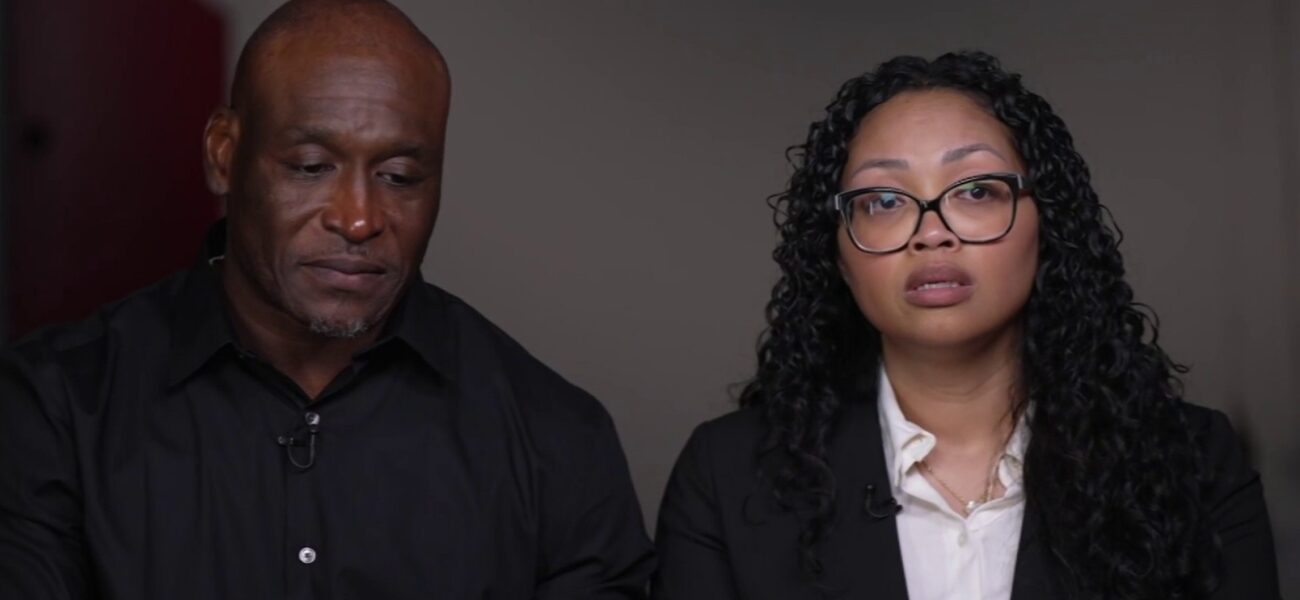
The public, it seems, has its own rhythm—a burst of attention, then an ebbing tide, leaving behind only the most resilient on the shore. Mrs. Wells, speaking recently, cut through the noise, noting: [QUOTE_PLACEHOLDER]. It’s a weary observation, a quiet condemnation of how easily narratives shift and how quickly public interest—even in deeply personal tragedies—can wane. Her husband, Mr. Wells, reinforced this sentiment with his own stark words, telling reporters [QUOTE_PLACEHOLDER]. One can’t help but perceive the strain. They’re not just grieving; they’re performing a civic duty, trying to keep a story alive in an era when attention spans are measured in seconds.
Their persistent public presence isn’t for sympathy, it seems, but for momentum. They know that without external pressure, without eyes on the situation, cases often lose their priority. But what do you do when the channels of communication are clogged, or when the message isn’t what the audience expects? You push. You plead. You don’t relent. And because they haven’t relented, the spotlight—albeit intermittently—has stayed focused, at least for some.
Law enforcement officials, as expected, offer the standard assurances, noting the complexities involved in such matters. They assert their unwavering commitment, yet specifics remain elusive, couched in the ever-present requirement for discretion. A representative stated only, [QUOTE_PLACEHOLDER]. It’s a phrase that’s meant to reassure, yet for those intimately affected, it likely translates to yet another closed door in an already long hallway. But who can truly fault them for caution? The delicate balance of investigation often demands a quiet, methodical approach. It’s just that when it’s your child, quiet feels a lot like inaction.
The emotional toll? It’s beyond quantifiable. Imagine the sheer mental fortitude required to face cameras, microphones, and probing questions, day in and day out, when every fiber of your being just wants to collapse. They’re performing, in a way, for their son, putting on a brave face not for show, but for effect—to rattle the cages, to move the machinery. They don’t have the luxury of retreat. This relentless visibility—a double-edged sword—keeps their story in circulation, but at immense personal cost. A 2022 survey by the Department of Justice’s Bureau of Justice Statistics found that 75% of families who experience a missing person case reported significant long-term psychological distress, highlighting the profound and enduring impact beyond the immediate crisis.
We see a similar, if less reported, phenomenon within judicial systems of various South Asian nations. The relentless pursuit of justice for alleged police misconduct or administrative negligence, sometimes stretching decades, showcases families with astonishing endurance—the Wells’ experience echoing across continents. Their journey here isn’t just about Nolan; it’s about a wider fight against apathy, a struggle against the entropy that can claim untold narratives. And it raises pointed questions about where our collective responsibility lies.
One might easily dismiss this as just another sad story, one of many, a drop in the ocean. But it’s these individual drops, these persistent struggles, that eventually carve canyons in our collective consciousness, challenging the fundamental tenets of trust in governance and the very systems we’ve put in place to protect the vulnerable. The Wells aren’t just looking for their son; they’re searching for faith in a process that often seems devoid of a human pulse.
What This Means
The prolonged public engagement of Nolan Wells’ parents transcends the personal tragedy, blossoming into a subtle, yet sharp, critique of institutional responsiveness and media ethics. Politically, this protracted fight exposes cracks in community-level crisis management, showcasing how individual grief can, and often must, be weaponized into public advocacy when state mechanisms feel inadequate or too sluggish. It places local authorities under an unforgiving spotlight, scrutinizing their investigative methodologies and their ability—or inability—to communicate effectively with a traumatized populace. For any administration, such a public appeal by citizens regarding an ongoing sensitive case is an implicit vote of no confidence in the swiftness and transparency of the process. It’s a political challenge wrapped in familial sorrow.
Economically, these prolonged public campaigns often demand immense resources from families—legal fees, private investigators, communications efforts—creating an unfair burden. They also indirectly highlight the social costs of unresolved issues, impacting community cohesion and trust in institutions. Should a major breakthrough occur, or if public outcry intensifies significantly, there’s potential for increased state funding into investigative resources, policy reviews on missing persons cases, and enhanced victim support programs. Conversely, a failure to provide clear answers only erodes that trust further, breeding cynicism that can seep into other aspects of governance. This Mississippi narrative, though local, resonates with a global pattern of communities demanding accountability for those who disappear, sometimes aftermaths that demand intense scrutiny.
From a media standpoint, the Wells family’s sustained effort represents a masterclass in involuntary public relations, a demonstration of how citizens must actively manage their own narrative to ensure visibility, often wrestling for airtime in a fragmented news environment. But it also raises ethical questions about how long a tragedy must remain newsworthy before public discourse moves on. Their plight reminds us that the quest for justice isn’t always quick or dramatic—it’s often a long, slow grind that demands a resilience few could ever truly muster, shaping, as it does, broader societal expectations around legal accountability and compassion. It can even become entangled in complex shadow games of attention and public sympathy.