


The Billion-Dollar Embrace: When Football’s Golden Cages Snap Shut
POLICY WIRE — Dortmund, Germany — It’s a subtle shift, perhaps, lost in the noise of transfer rumor mills and injury reports. But the expiration of a carefully worded clause in a footballer’s...

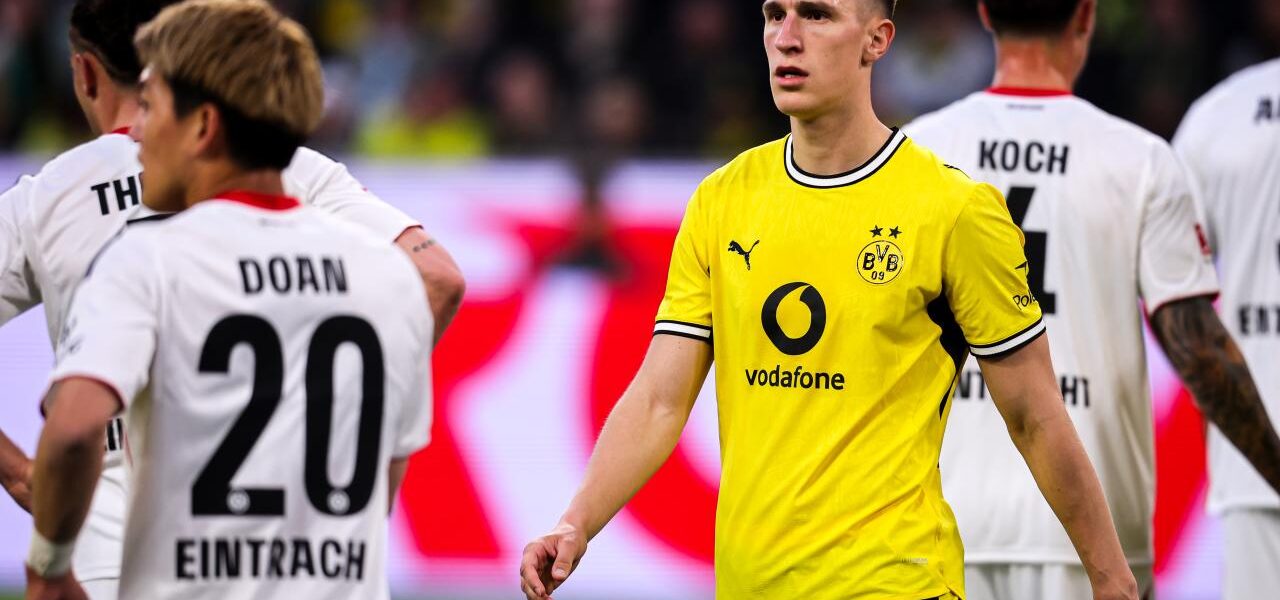
POLICY WIRE — Dortmund, Germany — It’s a subtle shift, perhaps, lost in the noise of transfer rumor mills and injury reports. But the expiration of a carefully worded clause in a footballer’s contract—a detail many might glaze over—actually reveals a chilling truth about modern global sport: player power, often trumpeted as ascendent, frequently remains an illusion. It’s a truth laid bare with Nico Schlotterbeck, the German international defender now firmly encased in Borussia Dortmund’s multi-million-euro embrace.
Yesterday, it seems, wasn’t just another Wednesday. For the titans of the Bundesliga, it marked a quiet victory, an institutional muscle-flex that speaks volumes about control in an era where talent is perhaps the most liquid asset on Earth. Schlotterbeck, you see, was under a contract extension that—like a golden parachute with an expiration date—contained a release clause. Not for just any club, mind you. Oh no. Only for the very particular, the almost mythical ‘dream clubs’ like Real Madrid, FC Barcelona, or England’s own financial powerhouse, Liverpool.
But that window, Sport BILD reports, slammed shut. The calendar clicked over, — and with it, Dortmund gained what they’d surely been strategizing for: unilateral control. No longer could a gargantuan offer from an elite few pluck their prized central defender without their absolute say. They’ve now set the price, a price that according to Transfermarkt.com, already sits at a hefty €55 million. That’s a significant chunk of change, enough to fund small nations for a good week, or at least buy a few new Ferraris. Because, let’s be real, this isn’t just about athletic performance; it’s a high-stakes commodities market, thinly veiled by athletic competition.
Sebastian Kehl, Dortmund’s sporting director, probably popped open something slightly stronger than mineral water last night. Or maybe not, given the usual poker faces these guys wear. But I bet there was a quiet sigh of relief somewhere in the BVB boardroom. “We’ve got to protect our investments,” a club insider, who spoke on condition of anonymity due to internal media protocols, likely mumbled over espresso. “These clauses, they’re part of the game, sure, but a club like ours, we can’t just be a revolving door for talent. We’re building something here, brick by brick, not just selling off parts to the highest bidder.” And that’s the cold, hard logic: assets secured.
It’s a tale as old as modern football itself, where billions change hands, often far from the gaze of national policy makers, yet impacting economies in myriad ways. The financial dexterity involved in managing these mega-salaries and market values is something governments across Europe and beyond have eyed for years, often failing to truly get a handle on. For clubs, it’s about holding the line against the super-rich—the Manchester Citys, the Real Madrids, clubs whose financial gravity bends everything in their orbit. But it’s also about extracting maximum value when one of their stars eventually moves on, funding their own billion-dollar bets on future talent. Liverpool’s recent financial maneuvers illustrate just how risky this business can be.
For Schlotterbeck, sidelined recently by a ligament injury during Germany’s 2026 World Cup campaign, the timing feels less like liberation and more like an inconvenient truth. The player himself likely sees his career trajectory tied to specific elite destinations, where glory, fame, and exponentially higher wages beckon. But his recent ailment—a stark reminder of how fragile a player’s worth truly is—just reinforces the club’s position. Who’s going to trigger a mega-clause for a recuperating star right now, unless the ‘dream club’ feels an absolutely desperate need? That’s not how these games are usually played.
📄 POLICY WIRE WHITEPAPER PUBLISHED: PAKISTAN'S NATIONAL SECURITY POLICY PRIORITIES
👉 READ BY CLICKING HEREAnd let’s not forget the sheer global footprint of these decisions. From the fervent fan bases in Indonesia, eager to see top European football, to the significant investment flowing into clubs from the Gulf states, every player movement, every contract nuance, ripples through the vast ecosystem of sports. Players from Pakistan, or elsewhere in the South Asian and Muslim world, often aspire to break into this very European ecosystem, battling not only on the pitch but against immense cultural and economic currents. For them, a contract isn’t just a legal document; it’s a passport to opportunity, often one laden with the same restrictive clauses that now bind Schlotterbeck. It’s a reminder that control often supersedes ambition, even at the highest echelons.
Another BVB teammate, Serhou Guirassy, saw his own release clause disappear yesterday too, amidst buzz from Fenerbahçe. The pattern is clear: these clubs aren’t just nurturing talent; they’re building strategic fortresses around their most valuable assets. They’re making moves. Because in modern football, freedom for the few often means iron-clad contracts for the many.
What This Means
The hardening of Dortmund’s grip on players like Schlotterbeck and Guirassy isn’t merely a piece of sports news; it’s a political economy statement, loud and clear. It signals a strategic re-entrenchment of power by traditional European footballing behemoths against the encroaching financial might of state-backed entities and ultra-wealthy owners. By letting these clauses expire, clubs like Dortmund are actively resisting the commodification of their homegrown (or, at least, long-held) talent into mere market tokens for the truly dominant few. This translates into less transfer fluidity, potentially higher player acquisition costs across the board, and a fascinating tension between individual player ambition and institutional control.
Economically, it makes sense for Dortmund to assert this control. They’re protecting intellectual property, if you will—the very skills and marketing appeal of their players. For fans in places like Pakistan, who increasingly invest emotionally and financially (through merchandise and subscriptions) in European football, this stability might offer a degree of comfort: their team’s stars aren’t simply one clause away from disappearing. But it also reinforces the hierarchical structure of global football finance, where a handful of ‘dream clubs’ can still dictate terms, albeit at a now steeper price. We’re watching the rich get richer, yes, but also the tier below them getting savvier in holding onto their gold. It’s a chess match played with billions, where every expiry date is a tactical decision.