


Silent Grunt Work: Trent Taylor’s Unsung Exit Exposes Football’s Harsh Truths
POLICY WIRE — San Francisco, USA — Seven years in the cutthroat carnival of professional football. For every highlight reel phenom etching their name in neon, there’s a phalanx of silent...

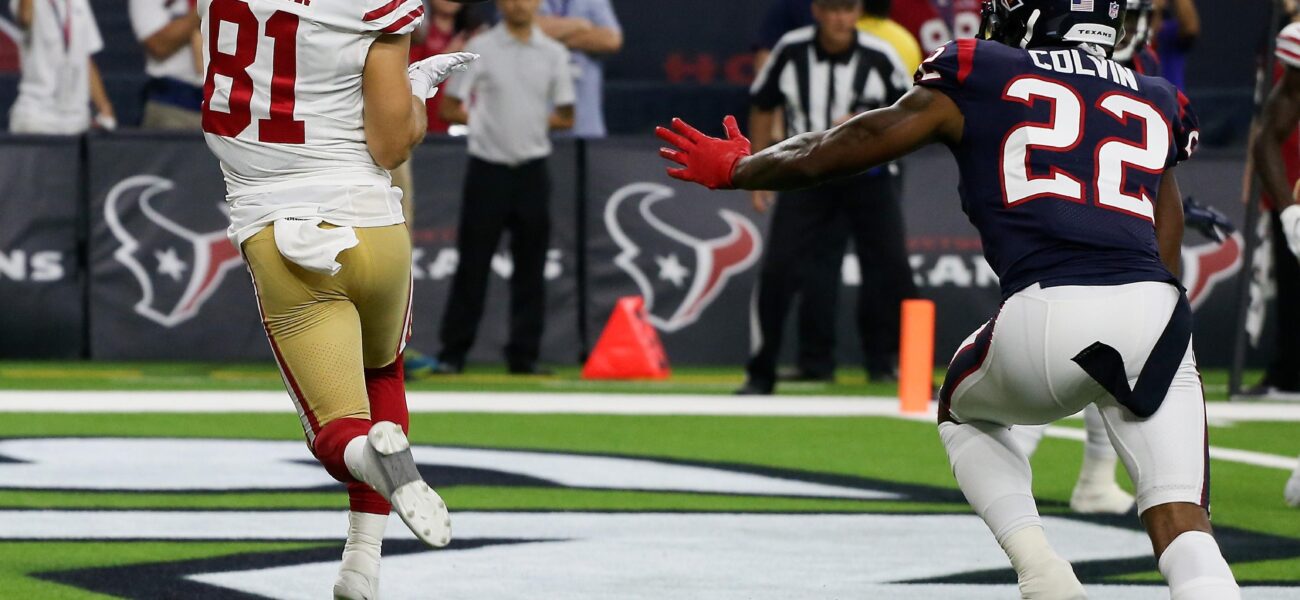
POLICY WIRE — San Francisco, USA — Seven years in the cutthroat carnival of professional football. For every highlight reel phenom etching their name in neon, there’s a phalanx of silent laborers, gritting it out, season after grinding season, often without the cheers—or even much recognition—from the cheap seats. Trent Taylor was one of those men. His recent decision to hang up his cleats, quietly, after a career predominantly with the San Francisco 49ers, isn’t just a sports footnote; it’s a stark, unvarnished look at the industrial machine of the NFL, where even success stories often end not with a bang, but a whispered goodbye.
It’s easy to forget, isn’t it, the sheer brutality of making it into the top echelons of any competitive field? Think about it. Millions aspire. Thousands try. A mere few hundred crack the NFL roster each year. And then they’re chewed up, remade, — and often discarded faster than yesterday’s headlines. Taylor, an interior target out of Louisiana Tech, arrived with little fanfare but quickly showed he could contribute. He wasn’t flashy. He didn’t court the cameras. But he did his job.
“Trent was just… dependable. You knew what you were getting, snap in, snap out. He didn’t chase headlines, he just caught balls and played his part,” remarked Kyle Shanahan, the 49ers’ head coach, offering a rare, almost poignant, assessment. “Every championship team needs guys like him, you just don’t always hear about them on SportsCenter. He was an unheralded piece of the puzzle, and we respected that.” That quiet dependability, it turns out, bought him seven seasons.
His rookie campaign in 2017 saw him snag 43 passes for 430 yards and two scores, immediately carving a role in Shanahan’s evolving offense. More tellingly, though, Taylor established himself as a reliable, if unglamorous, punt returner. According to NFL league statistics, Taylor handled 112 punt returns for 1,051 yards over his career, a consistent but often unheralded grind in a part of the game where one mistake can be devastating. That’s a lot of potential bone-jarring hits taken for mere inches, for the benefit of field position, for a team’s strategic edge.
Because, really, that’s what much of this game boils down to: leverage. Unseen players providing leverage for star players. It’s a paradigm that resonates globally. From the quiet tech engineers in Bangalore fueling Silicon Valley giants to the textile workers in Faisalabad, Pakistan, producing high-fashion labels with invisible hands—there’s an entire universe of talent operating beneath the surface, often undervalued but absolutely essential. Their stories don’t often make it to the front page, do they? But their efforts dictate the entire economy of spectacle.
John Lynch, the 49ers’ General Manager, perhaps put it best, reflecting on Taylor’s departure. “This league chews players up, spits ‘em out. Seven years, that’s a good run for a receiver who wasn’t a first-round lock. Trent earned every dime, every rep. It’s tough seeing good guys go, but that’s the nature of the beast,” he said, alluding to the perpetual cycle of turnover and renewal that defines professional sports.
📄 POLICY WIRE WHITEPAPER PUBLISHED: PAKISTAN'S NATIONAL SECURITY POLICY PRIORITIES
👉 READ BY CLICKING HEREAnd what about the price of glory for those who aren’t megastars? These aren’t just athletes; they’re walking, breathing businesses, trying to maximize short-term earnings in a career with a notorious shelf life. One bad injury, one poor season, one rookie sensation arriving to claim your spot—and you’re out. It’s an economic pressure cooker few outside the arena truly comprehend.
But his story isn’t just one of anonymity. It’s also a tale of persistence, of making the most of every opportunity. Taylor’s career, while not laden with Pro Bowl berths or record books, demonstrates the sheer willpower required just to stay afloat. He bounced between practice squads and active rosters, showcasing a resilience that’s more common—and perhaps more admirable—than the casual observer might expect.
What This Means
Taylor’s quiet exit from the NFL shines a stark light on the economic realities lurking beneath the stadium lights. It isn’t just about an athlete retiring; it’s a symptom of a broader industrial-sports complex that perpetually demands new, cheaper talent while cycling through the proven but aging. For policy-makers and economists, it’s a microcosm of the gig economy on steroids, where human capital is exploited and discarded with astonishing regularity. What long-term welfare provisions exist for these gladiators once the roar of the crowd fades, the body inevitably gives out, and the next fresh face arrives? These athletes invest their youth, health, and minds into a machine that offers incredible rewards to a few, but a finite, often harsh, reality for most. It’s a systemic challenge—how to value labor in a hyper-competitive, high-entertainment industry. For more on the severe price athletes pay, consider reading The Collapsing Colossus: Spectacle, Injury, and the Price of Belief in Combat Sports, a testament to the unvarnished truths of the game.