

Genoa’s Judgment: Italy’s Bureaucratic Labyrinth Delivers Tardy Justice for Bridge Collapse
POLICY WIRE — ROME, Italy — The wheels of Italian justice grind slowly, agonizingly so, yet sometimes they do, indeed, grind. It took nearly half a decade, a sprawling investigation, and enough legal...

POLICY WIRE — ROME, Italy — The wheels of Italian justice grind slowly, agonizingly so, yet sometimes they do, indeed, grind. It took nearly half a decade, a sprawling investigation, and enough legal maneuvering to make your head spin, but a verdict has finally landed in the calamitous collapse of Genoa’s Morandi Bridge. That wasn’t just some concrete and rebar failing; it was a structure falling apart, taking 43 lives with it, leaving an indelible scar on a city’s psyche. Now, former executives and transport officials are facing jail time, but the bigger story, as ever, isn’t just about who goes to prison, but about the deeply embedded bureaucratic inertia—the casual indifference—that allows such tragedies to germinate in the first place.
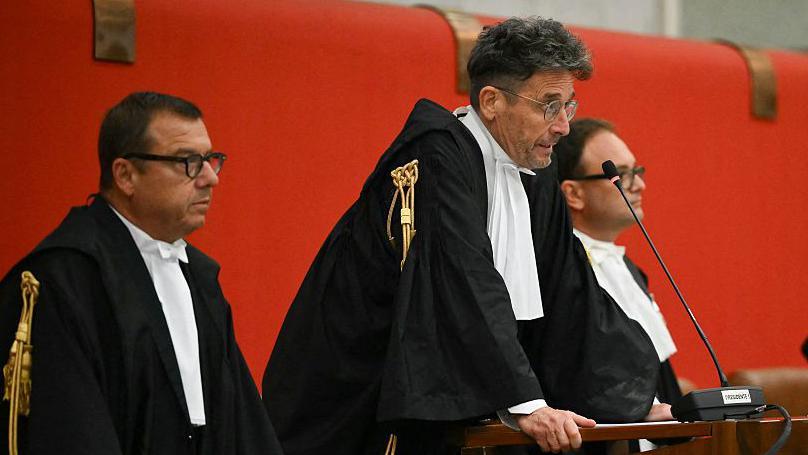
It’s not often you see senior corporate types and public servants hauled before the bench and actually convicted for negligence on this scale. They’ve been handed sentences ranging from just under five years to ten years — and seven months for the 2018 disaster. Most two former executives from Autostrade per l’Italia (ASPI), the private concessionaire that managed the highway, and two former managers from the Ministry of Infrastructure were among those receiving hefty terms. And that includes figures like Giovanni Castellucci, the former CEO of Autostrade. Remember, this isn’t some quick, American-style plea deal; this was a trial, a genuine inquisition into the heart of the corporate-state complex that often governs public assets in Europe.
The core of the prosecution’s argument? Negligence. Pure and simple. They alleged that the defendants—eighteen, initially, but many had charges dropped or settled out of court—were well aware of the structural deterioration of the 51-year-old viaduct. The Morandi Bridge, affectionately known to locals, wasn’t just old; it was tired. It needed serious care. But instead of pouring resources into crucial maintenance, these decision-makers seemingly prioritized profit and cost-cutting, letting critical repairs languish. One of the defense arguments, an almost laughable attempt, centered on claims that an unpredictable and massive cloudburst on the fateful day was the primary cause. That particular angle didn’t quite fly, as the court’s ruling now emphatically shows. The structure itself was faulty, crumbling, ignored.
For the families of the victims, this verdict is—what?—a hollow victory? A long-delayed affirmation that someone, somewhere, messed up? “This verdict, after a painful five years, sends a clear signal: accountability isn’t just a political talking point. It’s an obligation, plain and simple,” declared Andrea Orlando, Italy’s former Justice Minister, offering a rare glimpse of political satisfaction from Rome. But don’t imagine it brings back anyone. That’s not how justice works, particularly not here. Still, it provides a measure of closure, maybe even a tiny bit of hope for future infrastructure integrity.
Matteo Salvini, current Minister of Infrastructure and Transport, known for his blunt delivery, couldn’t help but weigh in on the implications. “Our infrastructure is a nation’s bloodstream. Negligence corrodes it from within. We’ve got to prevent similar catastrophes, here and abroad—the economic damage, let alone the human cost, is staggering,” he opined, surely thinking of other Italian bridges still standing (for now) with dubious structural reports. It’s a point well-taken: this isn’t solely an Italian problem. From decaying bridges in the United States, where a 2023 report by the American Society of Civil Engineers gave U.S. infrastructure a dismal C-minus, noting a multi-trillion dollar investment gap, to hastily built projects across the developing world, public works everywhere battle with age, underfunding, and—let’s be honest—corners cut. This trial shines a glaring spotlight on a universal ailment.
📄 POLICY WIRE WHITEPAPER PUBLISHED: PAKISTAN'S NATIONAL SECURITY POLICY PRIORITIES
👉 READ BY CLICKING HEREAnd then there’s the broader context, particularly if you glance towards countries wrestling with similar challenges, yet often without Italy’s relatively robust (if slow) judicial processes. Consider nations like Pakistan, where infrastructure projects frequently face accusations of shoddy workmanship and corruption, often leading to rapid deterioration or even tragic failures. The Munda Dam project in Khyber Pakhtunkhwa, for example, a critical flood control structure, has been repeatedly plagued by construction quality issues and bureaucratic hurdles. The consequences of such systemic failures, albeit on a different scale, echo Genoa’s catastrophe. But accountability? That’s often a much more elusive beast in places where official power feels less answerable.
Because ultimately, this case is about the deep, almost existential trust we place in those who build and maintain the public goods that facilitate our daily lives. That’s your morning commute, your grocery run, the ambulance racing to a hospital—all depend on sound engineering and ethical stewardship. When that trust is shattered, as it was so devastatingly in Genoa, the ramifications stretch far beyond the immediate wreckage, questioning the very competence and moral compass of the people holding the levers of power and capital.
What This Means
This verdict, drawn out and detailed, speaks volumes, not just about the specific failings in Genoa but about broader societal anxieties concerning corporate accountability and the state’s oversight—or lack thereof. Politically, it’s a tightrope walk for Rome. On one hand, the government can point to the convictions as proof of justice, satisfying a public clamor for answers. On the other hand, the sheer length of the legal process, and the initial lack of stringent oversight that permitted such a collapse, highlight systemic deficiencies in how Italy (and many other nations) manages critical infrastructure. It points to a recurring question about whether private operators, driven by profit motives, can truly be relied upon to prioritize public safety over shareholder returns. The legal precedent could encourage more vigorous scrutiny of other public-private partnerships, but it also sends shivers down the spines of executives who might find their cost-saving measures now viewed through a far more unforgiving lens. Economically, while Autostrade per l’Italia was eventually renationalized following public outcry, the entire episode casts a long shadow over Italy’s ability to attract foreign investment for public works—investors prefer stability and predictable regulation, not the specter of criminal negligence trials. This long, drawn-out process means future concessions might face even tougher scrutiny and demands for transparent maintenance protocols. And frankly, this saga reminds us all: your bridge, your power grid, your water pipes—they’re part of a larger political and economic game, one where public safety sometimes comes a distant second to budget lines and bureaucratic convenience. What was the old saying about an ounce of prevention? Well, here we’re talking tons of steel, concrete, and human lives, proving that neglect extracts the cost in the most brutal of currencies. This isn’t a world that can afford such catastrophic disengagement.