

Seoul’s Silicon Euphoria: AI’s Fragile Boom Tests a Nation’s Resolve
POLICY WIRE — Seoul, South Korea — The future, they say, is now, and for South Korea, that future gleams with the reflective sheen of silicon wafers and humming AI processors. It’s a gold rush...

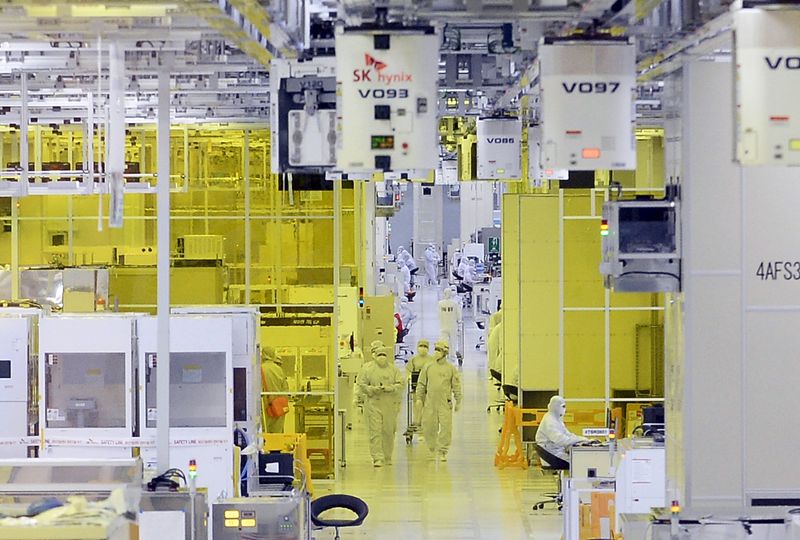
POLICY WIRE — Seoul, South Korea — The future, they say, is now, and for South Korea, that future gleams with the reflective sheen of silicon wafers and humming AI processors. It’s a gold rush of the digital age, unfolding in factories where robots probably outnumber the humans. But even as the government beams, forecasting its peppiest economic expansion in half a decade for 2026, some grizzled veterans in the policy trenches can’t quite shake a familiar unease.
It’s a peculiar spectacle, watching a nation pin its economic hopes — not for the first time, mind you — on a singular, dazzling technological leap. We’re talking about an artificial intelligence chip surge that’s expected to deliver a serious jolt to the national ledger. That’s the chatter around the water coolers in government buildings here, where economists have spent years fretting about everything from an aging populace to simmering geopolitical tensions.
“We’re witnessing a genuine, seismic shift in global industry, and South Korea, frankly, is at the vanguard,” said Finance Minister Choi Sang-mok in a recent press briefing, his voice a practiced blend of pride and measured ambition. He’s always one for understatement, but you could feel the electricity in the room. “We’ve worked damn hard to get here, to position ourselves as an indispensable node in the world’s most advanced supply chains. And we aren’t stopping now.” That’s a good line, isn’t it? Very confidence-inspiring.
And they really have. Companies like Samsung and SK Hynix? They’re practically minting money, building the computational brains that power the next iteration of everything, from your phone to self-driving tanks. The world needs these things, desperately. Consequently, South Korea’s economy is slated to expand by an estimated 2.8% in 2026, a projection from various government-backed institutes, making it the most robust performance since 2021.
But growth fuelled by a singular commodity often hides cracks, doesn’t it? The sheer dependence on one—admittedly massive—sector is enough to give any seasoned observer pause. History’s full of resource booms that eventually busted. Are AI chips immune to that cycle? Not likely. And the bigger question: what about the parts of the economy that aren’t quite so lucky to be tied to the AI juggernaut?
“Seoul’s hyper-focus on AI semiconductors, while understandable, carries distinct risks, especially in a world that’s increasingly prone to tech protectionism and trade wars,” noted Dr. Sara Ahmed, an analyst at the Singapore Institute of Strategic Affairs, when I spoke with her over a patchy video call. “What happens when the next big thing isn’t chips? Or when a major buyer—or competitor—suddenly shifts allegiance? That’s not just an economic blip; that’s an existential shudder for a small, export-driven powerhouse like South Korea.” She didn’t mince words, which I always appreciate. Plus, her concerns echoed whispers I’ve heard right here in Seoul.
📄 POLICY WIRE WHITEPAPER PUBLISHED: PAKISTAN'S NATIONAL SECURITY POLICY PRIORITIES
👉 READ BY CLICKING HEREIt’s all very exciting, no doubt, but the narrative seems a bit too neat. A soaring chip industry papering over nagging long-term demographic challenges and—let’s not forget—some sticky geopolitical issues right on its doorstep. We’re talking about a boom, but you’ve gotta wonder, how sustainable is it? How broadly are its benefits felt beyond the gilded gates of the tech giants?
What This Means
This anticipated surge, while a boon for Seoul’s coffers, introduces a complex blend of leverage and fragility on the international stage. Economically, a booming tech export sector offers significant hard currency, enhancing South Korea’s financial stability and diplomatic reach. Politically, it elevates its standing as a critical partner for nations—from Washington to Riyadh—desperate for advanced tech. But reliance, you see, can cut both ways. If the global appetite for AI chips slows, or if major customers like the U.S. or China decide to boost their own domestic production—it wouldn’t be unprecedented, would it?—South Korea finds itself precariously exposed.
For regions like the Muslim world, and specifically nations in South Asia such as Pakistan, South Korea’s tech ascendancy is a double-edged sword. On one hand, it represents a gold standard in tech innovation, providing a potential template for ambitious industrialization. On the other, it entrenches a dependency: these regions often import the advanced components that power their own, less sophisticated, tech sectors. They’re consumers of this high-tech revolution, not yet producers. And while there are efforts in places like Karachi and Lahore to foster homegrown tech industries, they’re playing catch-up to a rival that seems to invent the next race before others can finish the last one. It puts them in a tricky spot—chasing a future defined by others, but dependent on policies that may not always align with their national interests. So while Seoul cheers, others must strategize how to bridge that ever-widening tech divide, or simply adapt to a world increasingly driven by semiconductors and artificial minds concocted far from their shores. It’s an interesting moment, isn’t it? Full of both promise — and palpable anxiety.