



World Cup 2026 Semifinals: An Economic Reckoning, or Just Another Show of Force?
POLICY WIRE — Zurich, Switzerland — The ball, that humble leather sphere, has often been a metaphor for the unpredictability of life. But in the rarefied air of the FIFA World Cup 2026 semifinals,...

POLICY WIRE — Zurich, Switzerland — The ball, that humble leather sphere, has often been a metaphor for the unpredictability of life. But in the rarefied air of the FIFA World Cup 2026 semifinals, unpredictability feels decidedly… curtailed. This isn’t just about sporting dominance; it’s about a cold, hard statistical anomaly that underscores much broader economic and political realities. We’ve got the titans, all four of ’em, staring down a trophy that, let’s be honest, few others were ever really meant to touch this cycle.
It’s the kind of lineup that should make market analysts – not just football pundits – sit up — and pay attention. For the first time since FIFA rankings began – in 1992 – that the current top four sides in the world have made it to this stage. France, Argentina, Spain, and England. One, two, three, four. It’s almost too neat, isn’t it? A tidy reflection of power consolidated, talent concentrated, — and frankly, coffers overflowing. The sporting spectacle is undeniably grand, yes, but the subtext is perhaps even more telling. [QUOTE_PLACEHOLDER]
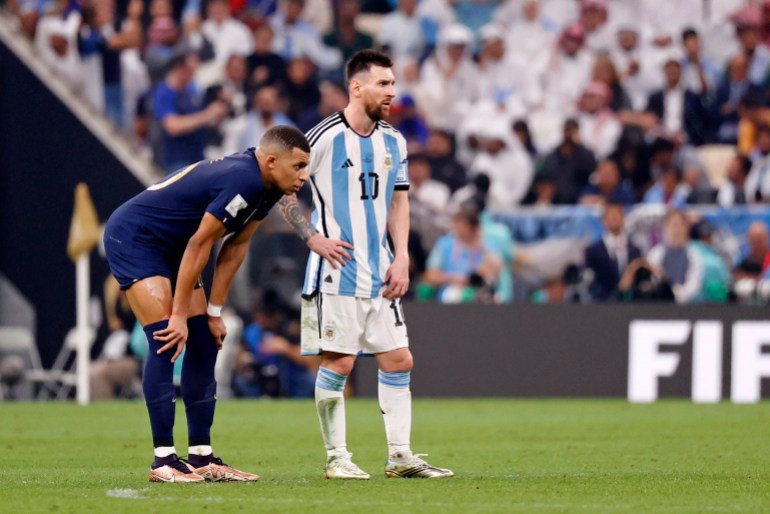
Think about it. We’re watching a rematch of sorts, with Lionel Messi, the quiet maestro of Argentina, leading his side against a French squad spearheaded by the electrifying Kylian Mbappe. These guys were just in the 2022 final. Back then, Argentina and France overcame Croatia and Morocco, respectively, in the semifinals, both surpassing expectations to reach that stage. And Morocco, for those of us tracking broader geopolitical currents, wasn’t just a football team. They were a beacon, representing the first African — and Arab nation to ever reach a World Cup semifinal. That run wasn’t just about football; it was a momentary shift in the narrative, a glimmer of a more distributed future for the sport.
This time? It’s pure, unadulterated blue-chip talent. France currently hold the number one spot, and are led by one of the most feared strikers in the world, Kylian Mbappe, while also boasting the reigning Ballon d’Or winner, Ousmane Dembele. Argentina are ranked second and led by a player in Lionel Messi who, after having helped his side become only the third to defend a World Cup, may well be acknowledged as the greatest of all time. Spain are ranked third — and boast La Liga starlet Lamine Yamal of Barcelona. The narrative suggests the stage may now be set for Yamal to fully shake off the memory of the calf injury that forced him to miss the end of the domestic season and shine much as he did in helping the Spanish to the Euro 2024 title. England are the lowest-ranked of the remaining teams but considered the second favourites to lift the title behind France. Their strength is derived from the incredible talents of not only Harry Kane, but also Jude Bellingham, who some suggest may be regarded as the greatest player to emerge from England, should he continue to drag the side all the way.
The global game often thrives on its Cinderella stories, but here, it seems Cinderella’s coach has been deliberately parked in the wrong lot. Where’s the romance of a dark horse? The grit of a smaller nation punching above its weight? We saw glimpses, oh, absolutely. Remember the buzz around DR Congo — and Cape Verde? They delighted, and have given the world a taste of things to come, especially with a 64-team tournament mooted for the 2030 edition. But these remain tantalizing tastes, not a sustained feast.
Even historic powers have faced ignominious exits. In Brazil 2014, we watched the hosts utterly collapse, with Germany stunning the tournament hosts, Brazil, with a 7-1 demolition in their last-four clash. A humbling, perhaps, but a lesson that even footballing royalty isn’t immune to a public flogging. This 2026 cohort feels almost untouchable. Not just because they’re good, but because the gulf between them and the next tier has arguably never been so starkly codified by FIFA’s own rankings.
The spectacle, of course, sells itself. Viewers across the Middle East and South Asia, including in bustling metropolises like Karachi or Dubai, will tune in en masse, drawn by the individual brilliance of Messi, Mbappe, Yamal, and Kane. They’ll spend sleepless nights, arguing, cheering, despairing, investing emotionally in clubs and nations thousands of miles away. It’s a testament to football’s truly global appeal, certainly. But it also begs the question of access, opportunity, and the very real struggle for emerging football nations to bridge the tactical and financial chasm separating them from this seemingly impregnable quartet.
Back in 1970, the world got its first glimpse at a new way of playing football: the Brazilian way. Pele debuted at the 1958 edition and was the solitary target of the boot boys – the players that spent the whole match kicking opponents as high as they could – until the 1970 edition, when he was joined by the first great international side of superstars. They were well ahead of their time — and remain one of the greatest to grace the game. They were also furlongs ahead of any opposition. But that felt like an evolution, not a lock-out. Now, we’re witnessing what appears to be a systemic consolidation at the top.
What This Means
This unprecedented alignment of footballing Goliaths in the World Cup semifinals isn’t merely a coincidence; it’s a stark indicator of global football’s accelerating stratification. Economically, the concentration of talent and success in these well-resourced European and South American nations amplifies commercial revenues, endorsement deals, and media rights for an already elite cadre. Sponsors flock to proven winners with global appeal, creating a virtuous, or perhaps vicious, cycle where money begets success, and success attracts more money. Smaller footballing nations, particularly those from Africa, Asia, or less developed parts of South America—regions like Pakistan, which harbors immense passion for the sport but struggles with infrastructure and investment—find it increasingly difficult to compete for global prominence. The economic disparity creates a chasm in coaching, training, and player development, leaving aspiring nations perpetually playing catch-up.
Politically, the dominance of these traditional powers reinforces existing hierarchies within FIFA and the broader sports landscape. While initiatives like expanding the World Cup to 64 teams in 2030 are meant to democratize access, they risk diluting the quality of earlier stages without truly fostering competitive parity at the sharp end of the tournament. It means that the narratives of hope and inclusivity that events like the World Cup often champion become harder to sell convincingly when the final stages are so predictably occupied by the usual suspects. For policy-makers in football’s developing regions, this semifinal lineup serves as a pointed reminder of the long, uphill battle to not just participate, but to genuinely contend. And for a global audience, while the quality of football on display will be unmatched, the political undertones of sporting inevitability might just dampen some of the tournament’s broader human appeal. See our earlier thoughts on the World Cup’s predictable unfold for more analysis on power dynamics.
