


Disease, Distrust, and Dry Wallets: Congo’s Ebola Fight Cracks Under Payroll Pressure
POLICY WIRE — RWAMPARA, Congo — The battlefield isn’t just viral, it’s bureaucratic. Deep in northeastern Congo, where an aggressive Ebola strain rages, a more predictable enemy emerged...

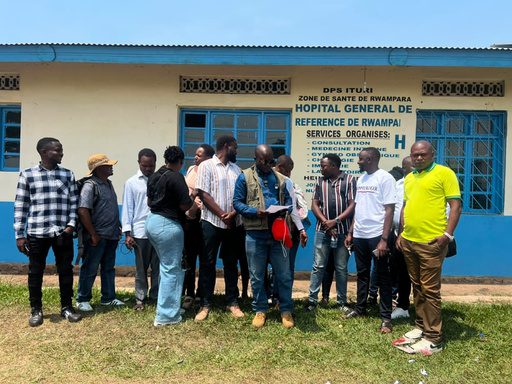
POLICY WIRE — RWAMPARA, Congo — The battlefield isn’t just viral, it’s bureaucratic. Deep in northeastern Congo, where an aggressive Ebola strain rages, a more predictable enemy emerged this week: the failure of the state to pay its front-line soldiers. It’s a bitter truth, isn’t it? Healthcare workers, people who stare down a horrific disease daily, now contend with the indignity of empty pockets, forcing a shutdown of an Ebola treatment center in Ituri province. This isn’t just about salaries; it’s about the rotten core of governance that threatens to unravel the delicate efforts against a public health catastrophe. A classic problem, really, yet consistently neglected.
Dozens of personnel, folks literally dealing with life and death—epidemiologists tracing contagion, case investigators tracking contact chains, drivers ferrying the afflicted, and even the gravediggers laying the dead to rest—have simply had enough. They downed tools Monday, closing the Rwampara General Hospital — and setting fire to a tire on the road outside. Not for want of fighting the disease, mind you. Bahati Claude, a health worker there, summed up the sentiment, saying, [QUOTE_PLACEHOLDER] It’s a poignant statement of exasperation. And it highlights how deeply frustrating it can be when you’re literally sacrificing your own safety, maybe even your life, and the government just can’t get its act together on basic finances.
But they aren’t abandoning the cause. As Claude noted, “We don’t want to give up the job.” It’s that grim resolve you find in places where everyday heroism clashes with institutional incompetence. Congo’s health minister, Roger Kamba, offered up the usual suspects: claims of payroll anomalies — and ghost workers. Speaking last week in Ituri, Kamba explained that the government is busy [QUOTE_PLACEHOLDER] And for good measure, he tacked on, [QUOTE_PLACEHOLDER] The problem, as he sees it, lies in “a few challenges, notably changes to the lists, which have led to complaints from people saying they are not being paid even though they are working.” A bureaucratic tangle of epic proportions, or a euphemism for widespread graft? Hard to say, isn’t it? Though many would argue it sounds like familiar music to ears accustomed to government explanations.
The outbreak itself is the fastest-growing Ebola crisis ever recorded on the continent. Congolese authorities, you’ll remember, declared it on May 15, after the disease had been transmitting for weeks without official detection, according to the World Health Organization. It’s the rare Bundibugyo virus causing this particular mess, and part of the initial delay came because officials tested for a more common type. It’s almost darkly poetic: even the virus manages to be an unexpected variant. As of the latest official tallies from Congolese authorities, the country is grappling with 1,926 confirmed cases and has tragically recorded 702 deaths. These aren’t just numbers; they represent shattered communities — and enduring trauma.
This localized stoppage isn’t just a Congolese problem, it’s a stark reminder of challenges echoing across many developing nations, often including those in the Muslim world like Pakistan. Where fragile governance, economic precarity, and the specter of corruption consistently hobble the state’s ability to deliver essential public services—whether that’s flood relief in Sindh or health security in Ituri—the fallout hits the most vulnerable first. You see similar struggles, the public’s eroding trust in official systems when confronted with repeated administrative failings and perceived inequities. Such incidents, small as they might seem on a global scale, contribute to a broader narrative of state fragility, making policy predicaments feel insurmountable for everyday citizens.
📄 POLICY WIRE WHITEPAPER PUBLISHED: PAKISTAN'S NATIONAL SECURITY POLICY PRIORITIES
👉 READ BY CLICKING HEREAnd the international community watches, of course. WHO Director-General Tedros Adhanom Ghebreyesus recently posted on X that a second U.S. citizen, a humanitarian worker who contracted Ebola in eastern Congo, had been flown to Germany for treatment. The first American casualty had been a doctor earlier in the outbreak. This global dimension simply layers on the pressure, demanding a robust local response that bureaucratic inertia seems intent on sabotaging. The risk, of course, is that international partners grow wary of committing resources if local structures remain this unstable and opaque.
What This Means
This strike isn’t just a temporary hiccup in Congo’s Ebola response; it’s a loud alarm bell regarding the credibility of the Congolese government and, frankly, the sustainability of humanitarian efforts in such volatile regions. Politically, the situation is disastrous. When public servants, especially those fighting a deadly disease, are forced to strike for basic pay, it screams governmental neglect. It actively undermines public trust in a context where trust is already a scarce commodity. How do you convince people to follow health guidelines, to cooperate with tracing efforts, when the very people delivering those services are treated so shabbily by the state?
Economically, it’s a short-sighted catastrophe. The supposed ‘savings’ from delaying payroll—or the money siphoned off through ghost workers—pales in comparison to the potential economic damage of an uncontrolled epidemic. A prolonged Ebola outbreak means severe disruptions to local commerce, agriculture, and general mobility, decimating already struggling communities. the lack of financial integrity discourages foreign investment — and international aid. If basic salaries can’t be managed, it suggests deeper systemic weaknesses in financial administration that make donors incredibly hesitant. It forces organizations, scrutiny often falling on how funds are actually utilized, to question their continued engagement. And so, the crisis spirals, from medical emergency to governance failure, impacting the global image and economic prospects of the entire nation.