

Seoul’s AI Reckoning: Chip Boom Sparks Fleeting Economic Euphoria Amidst Global Jitters
POLICY WIRE — Seoul, South Korea — Forget the latest K-pop chart-topper or the dizzying rush of neon-lit Gangnam; Seoul’s true headline isn’t on the billboard, but buried in dry economic...

POLICY WIRE — Seoul, South Korea — Forget the latest K-pop chart-topper or the dizzying rush of neon-lit Gangnam; Seoul’s true headline isn’t on the billboard, but buried in dry economic forecasts. It seems a peculiar sort of tech euphoria is sweeping through government ministries, conjuring visions of brisk economic winds by 2026. The whispers, you see, suggest a projected growth rate for South Korea that hasn’t graced its ledgers in half a decade—a rather pointed observation for a nation accustomed to perpetually looking forward. It’s not a resurgence of old industries, mind you. This supposed prosperity hinges almost entirely on the insatiable global hunger for artificial intelligence chips.
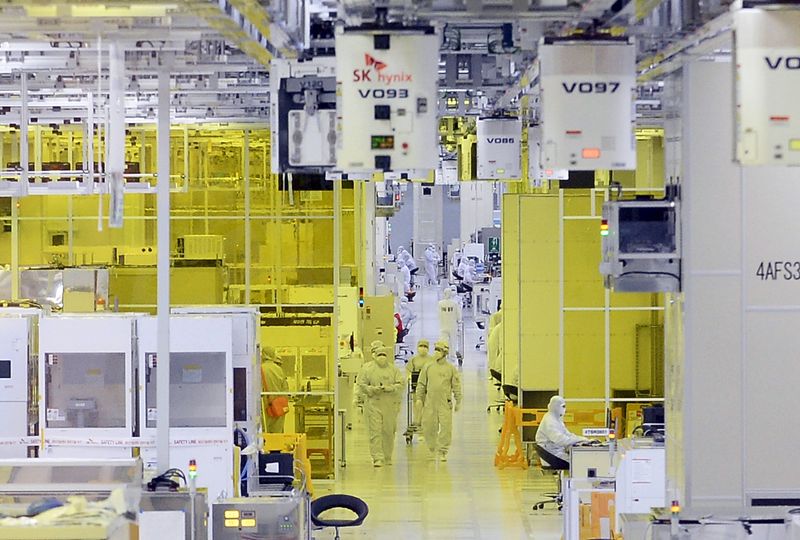
It’s an odd gambit, really, pinning so much hope on silicon slivers, but that’s precisely the mood. The government anticipates economic expansion hitting a considerable high by 2026, a direct consequence of a predicted boom in the memory chip market for AI, as [QUOTE_PLACEHOLDER]. Analysts have watched with keen interest as demand for high-bandwidth memory (HBM) and specialized logic chips skyrockets, fueling an optimism that, for some, borders on quaint. Samsung Electronics and SK Hynix, the country’s twin titans, stand to gain tremendously, with their fortunes becoming intertwined with every algorithmic leap made globally. But there’s a certain fragility to this single-minded focus; it’s like building a skyscraper on a very well-crafted toothpick, isn’t it?
The Ministry of Economy and Finance projects a real Gross Domestic Product increase of [QUOTE_PLACEHOLDER] for the year 2026, marking what it describes as the highest growth rate since [QUOTE_PLACEHOLDER]. It’s a bold declaration—almost a challenge to fate—considering the choppy international waters through which global economies must still navigate. But even the most sober assessments from Seoul concede the AI sector’s rapid ascent. They’re calling it the ‘AI chip boom,’ as if saying it aloud might make it impervious to downturns or geopolitical friction. They’ve stated [QUOTE_PLACEHOLDER]. They believe it’ll push up overall facility investment as chipmakers expand production capacity to meet this burgeoning demand.
And let’s not forget the bigger picture, shall we? This AI-driven surge, while potentially lucrative, places an even heavier weight on South Korea’s trade balance. Export reliance has always been their Achilles’ heel, or perhaps their Midas touch, depending on the season. When the chips are down, literally, so too are their prospects. The expectation is for a recovery in exports, which in turn ought to boost domestic consumption, but history offers a stark lesson in such domino effects. Sometimes, the last domino just… doesn’t fall.
Across the continent, in nations like Pakistan, where technological advancements often lag behind their East Asian counterparts, the Korean narrative feels distant, almost fantastical. While South Korea rides a speculative wave, a nation like Pakistan contends with more immediate and grounding economic realities: infrastructure deficits, currency volatility, and the constant political tug-of-war for resources. Their engagement with the global AI conversation is more about adoption—consuming technologies rather than producing the specialized hardware at its core. This dichotomy highlights a growing chasm between nations capable of innovating at the cutting edge and those struggling to modernize their basic industrial frameworks. A booming semiconductor industry in Seoul does little to alleviate Karachi’s power outages. It’s a cold, hard truth.
The International Monetary Fund, as of their October 2023 World Economic Outlook report, forecast global economic growth to be 3.0% in 2023 and 2.9% in 2024. South Korea’s ambitious forecast thus significantly outstrips the global average by 2026, signaling either tremendous optimism or a remarkably isolated assessment of their economic trajectory. But will global demand truly maintain this voracious appetite for AI chips indefinitely? Or, rather, can South Korea truly insulate its key industry from the simmering tech cold war between major global powers? It’s a question whispered in dimly lit offices, undoubtedly. Seoul isn’t just producing chips; it’s caught in the geopolitical crosscurrents that dictate who buys them and who might develop their own alternatives.
But the government, for now, remains steadfast in its economic blueprint, confident in the silicon gold rush. It points to [QUOTE_PLACEHOLDER], and even claims that a stable job market and moderate inflation will bolster household spending. One almost has to admire the resilience of official optimism in the face of so much uncertainty—or perhaps just shrug at its predictability. The financial markets, too, seem to be buying into this narrative, though their notoriously short-term memories often lead them down questionable paths. They’re banking on a global AI arms race, where more data means more chips, perpetually. It’s a heady brew.
It’s not just about chips, of course; the AI sector itself is expected to draw substantial investments, attracting both domestic and foreign capital, [QUOTE_PLACEHOLDER]. This is the government’s other pillar of hope. The digital transformation spurred by AI promises to reshape various industries, from manufacturing to healthcare, supposedly creating new revenue streams and employment opportunities. It’s a narrative that appeals to anyone tired of the usual economic gloom, but it carries a silent warning: dependence can be a double-edged sword, sharper than any microchip. One wrong move, one unexpected global event, and the whole delicate economic house could come tumbling down.
What This Means
This rosy outlook from South Korea’s financial gurus isn’t just about an expected upturn; it signals a doubling down on a specific economic identity. It’s an open declaration that their future isn’t in broad industrial diversification but in highly specialized, export-driven technological dominance—specifically, semiconductors for AI. The implications are complex. Economically, this intense focus provides potential for massive gains if the AI boom persists, but it also creates immense vulnerability. Any significant disruption to the global AI supply chain, be it geopolitical maneuvering by Washington or Beijing, or even a sudden shift in tech paradigms, could send their forecasts spiraling. This isn’t just a simple forecast; it’s a high-stakes bet.
Politically, it reinforces South Korea’s strategic importance on the world stage, especially as a swing player in the intensifying U.S.-China tech rivalry. But it also means Seoul is now more beholden than ever to these two titans, its economic health tied to their uneasy coexistence. The reliance on this single sector suggests that policymakers aren’t merely riding a wave; they’re trying to generate one, shaping industrial policy to create a captive market for their tech giants. For the broader South Asian and Muslim world, it’s a stark reminder of who’s setting the pace in the next wave of global capitalism and who’s playing catch-up. While nations like Saudi Arabia eye ambitious AI initiatives, their journey mirrors Korea’s past industrial growth, not its current bleeding-edge specialization. This gap will likely widen, fostering divergent economic priorities and perhaps even deepening geopolitical fault lines as critical resources—not just chips, but the raw materials and rare earth elements needed to make them—become ever more contentious. It’s not just about the numbers; it’s about the entire game board changing.