


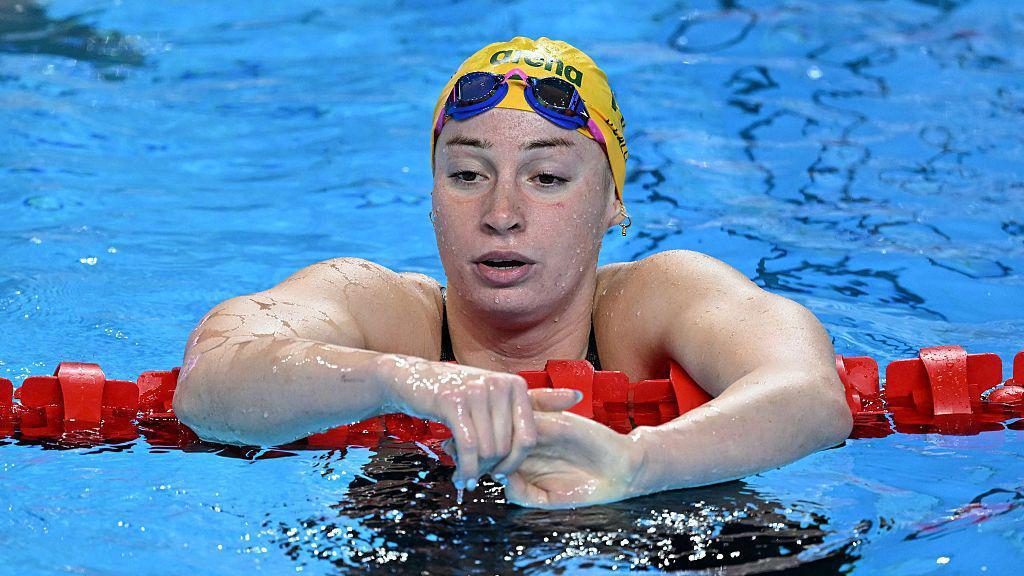
The Price of Gold: O’Callaghan’s Spinal Gamble Reignites Debate Over Elite Athlete Welfare
POLICY WIRE — Melbourne, Australia — The glint of an Olympic medal often obscures the shadow of medical reports. Mollie O’Callaghan, the prodigious Australian swimmer, is set to dive into...

POLICY WIRE — Melbourne, Australia — The glint of an Olympic medal often obscures the shadow of medical reports. Mollie O’Callaghan, the prodigious Australian swimmer, is set to dive into Glasgow’s Commonwealth Games pool, a feat that would, just weeks ago, have struck most medical professionals as wildly imprudent. Because just last month, scans showed stress fractures riddling her lumbar spine—an injury significant enough to warrant doctors instructing her to, quite bluntly, stop swimming. Immediately.
But this isn’t a story about a sidelined star; it’s about the relentless machinery of elite sport. O’Callaghan, just 22, holds the titles for 200m freestyle Olympic and world champion, not to mention a cabinet overflowing with eight Olympic medals, five of them gold. For an athlete of her caliber, ‘stop immediately’ is apparently more a suggestion than an edict, particularly with major international competitions looming. After some ‘further assessment’ (one can only imagine the nature of these follow-up consultations), she’s been cleared, not just for Glasgow but also for the Pan Pacific Championships in California, mere weeks later. It’s a dizzying turnaround.
It’s this kind of push-and-pull, this collision of medical caution with sporting ambition and national pride, that leaves you wondering where the athlete’s well-being truly ranks. Officials, of course, tread carefully. “Athlete welfare remains our paramount concern, always,” stated Brenton Davies, CEO of Australian Aquatics, in a tightly worded email to Policy Wire. “But we also understand the immense dedication — and aspirations of our champions. Our medical staff, in conjunction with Mollie and her team, have made a reasoned decision, focusing on her long-term health while recognizing her immediate readiness.” Sure, sounds perfectly balanced, doesn’t it?
But the numbers paint a starker picture. Studies suggest that over 90% of elite athletes will experience at least one significant injury during their careers, according to research compiled by the British Journal of Sports Medicine. That’s not just a statistic; it’s a testament to the brutal demands placed on these hyper-tuned bodies. And Mollie O’Callaghan’s case, with its dramatic reversal of medical advice, throws the spotlight squarely onto that brutal reality. She’s slated for a punishing schedule in Glasgow: the 100m — and 200m freestyle, the 50m backstroke, and a mixed relay. “Things might look a little different for her,” she admitted on Instagram, as if a few stress fractures were a minor costume change. One can only hope ‘different’ doesn’t mean permanent.
The relentless pursuit of gold—the fame, the glory, the endorsements—often means an athlete’s voice can be drowned out, or perhaps they simply choose to drown it out themselves. Dr. Amara Khan, a sports orthopedist with extensive experience across Asia and the Middle East, offered a more unvarnished perspective. “We, as medical professionals, give our best advice. But athletes, especially those at Mollie’s level, they’ve got this fire, this drive, often shaped since childhood. The conversation quickly shifts from ‘should they?’ to ‘how can they safely manage it?’ And that ‘safely’ is a highly subjective term when medals are on the line,” she told us, speaking from Islamabad. Her observation resonates, doesn’t it? The ethical line is a thin one, perpetually blurred by competitive instinct — and patriotic fervor. What resources, after all, could truly convince a champion to step aside when victory is so tantalizingly close?
And what if this were happening somewhere else? Imagine a promising swimmer from, say, Lahore or Karachi, facing similar lumbar issues. Would they’ve access to the rapid ‘further assessment’ that magically clears an Olympic champion? Or the extensive support network ensuring they can push through pain while managing a serious spinal injury? It’s not just about a talented individual; it’s about the disparities in opportunity, support, and medical infrastructure globally. While Australia’s athletes receive top-tier, though intensely pressured, care, many gifted individuals in South Asia and other developing regions often see careers truncated by injuries that lack proper diagnosis, rehabilitation, or the sheer financial backing needed to overcome them. That contrast, sadly, feels just as jarring as O’Callaghan’s quick recovery.
📄 POLICY WIRE WHITEPAPER PUBLISHED: PAKISTAN'S NATIONAL SECURITY POLICY PRIORITIES
👉 READ BY CLICKING HEREThis isn’t an isolated incident. We’ve seen it time — and again, across disciplines. The pressures exerted on athletes, particularly young women, by federations, sponsors, and their own formidable will, often push bodies beyond reasonable limits. It’s a recurring drama. They become engines fueled by ambition, expected to run until they simply can’t anymore.
What This Means
Mollie O’Callaghan’s controversial return to competition isn’t just a sports footnote; it’s a telling snapshot of the brutal economics and politics underpinning elite athletics. For federations, having a star athlete compete—especially one who’s an Olympic and world champion—can mean millions in sponsorship deals, national pride, and increased participation in the sport. There’s an immense financial — and cultural impetus to keep these ‘engines’ running. The initial medical warning, while perhaps clinically sound, likely collided with strategic decisions about team strength, media attention, and projected medal tallies. This dynamic highlights a continuing ethical dilemma: how do you balance athlete longevity and genuine well-being against the immediate, tangible benefits of competition?
Economically, a premature retirement from injury for an athlete like O’Callaghan isn’t just a personal loss; it’s a direct hit to the national sports economy and an athletic program’s prestige. For countries with fewer resources, a single star’s career ending early can devastate an entire sport’s development pipeline. In a world where sporting prowess can boost a nation’s soft power, the pressure to perform—even through pain—becomes an unspoken policy directive. It makes you wonder what truly motivates that ‘further assessment,’ doesn’t it?