

The Price of the India Cap: Family Sacrifice, Nehra’s Gambit, and the Crucible of South Asian Cricket Dreams
POLICY WIRE — New Delhi, India — The dreams of young men across South Asia often take flight on dusty pitches, fueled by an almost unimaginable level of ambition, a sliver of talent, and more often...

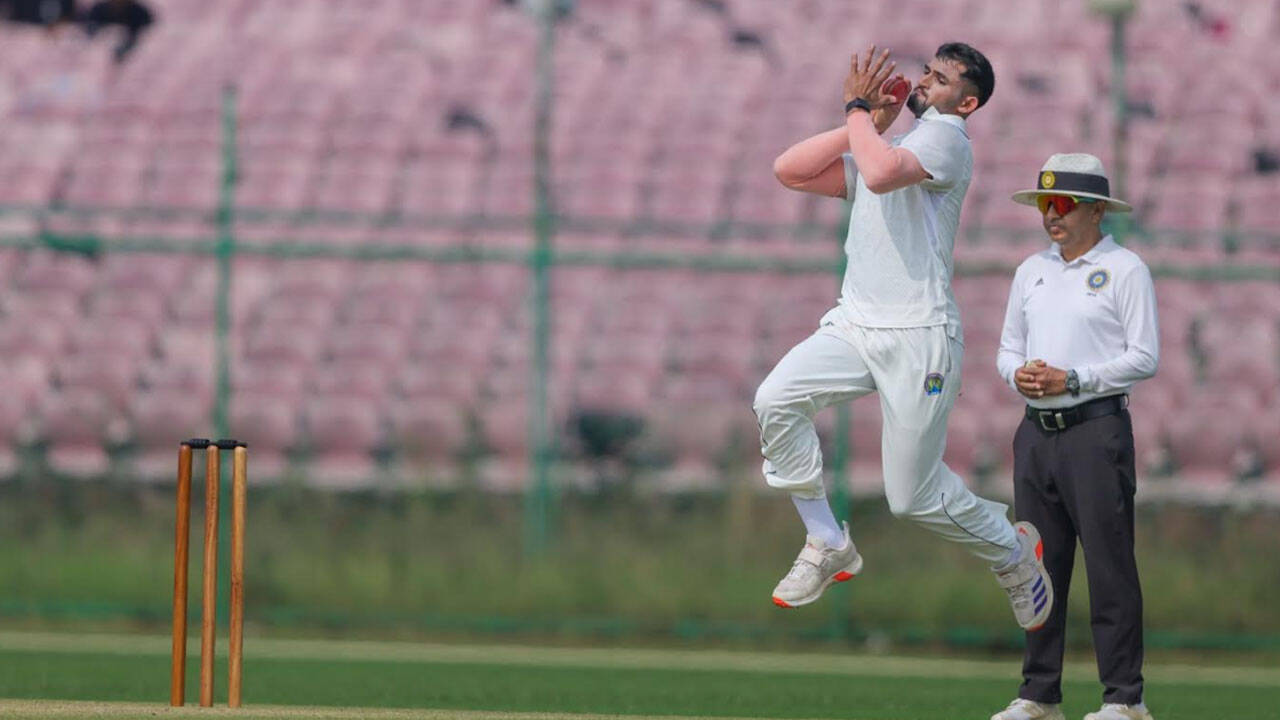
POLICY WIRE — New Delhi, India — The dreams of young men across South Asia often take flight on dusty pitches, fueled by an almost unimaginable level of ambition, a sliver of talent, and more often than not, a hefty dose of familial sacrifice. For Ashok Sharma, a pacer now on the cusp of an international debut for India, that sacrifice wasn’t merely financial; it was the relinquishing of a brother’s own aspirations, a quiet, almost anonymous deferral of destiny. His elder brother, Akshay, once nursed his own cricketing hopes, but the unforgiving economics of a farming household in rural Rajasthan dictated that only one path could be financed. Akshay stepped aside, willingly handing his ambition — and the funds for an academy — to his younger sibling. What price glory, indeed?
It’s this unseen substratum of human decision, the relentless calculations behind a glittering public facade, that truly frames Sharma’s call-up for the T20I series against Zimbabwe. Forget the gold chain. Initially, Sharma had imagined a modest reward for making the ‘India A’ squad: upgrading a silver chain to a gold one. His brother, ever the pragmatic visionary, had a colder proposition. “No gold until you get the full India cap,” he’d decreed, laying down an unspoken challenge, a heavy gauntlet dropped at the feet of a prodigious talent. And so, the shiny bauble waited. Now, with the Zimbabwe selection, that particular embargo has lifted. The metaphorical gold, though, has long since transcended mere metal.
Sharma, a 24-year-old speedster from Rajasthan, isn’t thinking about jewelry. He’s envisioning bowling plans. Imagining his first step into that hallowed Indian dressing room. “Right now, my focus is strictly on preparation,” Sharma told a leading daily, echoing the kind of disciplined detachment required to operate at this altitude. It’s a sentiment forged in the grind of domestic circuits, the often-anonymous labor of a net bowler, then the brutal competition to make an IPL playing XI. But perhaps the sharpest clarity came from the Gujarat Titans’ head coach, Ashish Nehra.
Because Nehra, a former India international himself, didn’t pull punches. At the end of the IPL season, he gave Sharma a candid assessment. “Your current age is the best age of your career,” Nehra apparently stressed, leaning in. “If these two or three years slip away, nobody will ask about you.” Then came the true gut-check, a re-calibration of ambition that redefined the entire quest. “Don’t just be satisfied with India A or things like that,” Nehra reportedly commanded. “Set a goal of playing 100 Test matches for India.” Talk about raising the bar. That’s a career-defining directive; an athlete doesn’t get much more explicit marching orders than that.
Sharma, of course, isn’t just about raw speed. He’s about precision. About a particular skill honed to an almost obsessive degree. His main strength, hitting a hard length to extract bounce, was something Pat Cummins himself—yes, that Pat Cummins—had identified and pushed him to perfect. Make that one thing so good, Cummins reportedly advised Sharma back in 2022, “that even if someone wakes me up in the middle of the night, I should be able to bowl it flawlessly.” It’s a testament to focus, to a singular, weaponized skill that elite sports demand. And it’s a lesson that clearly stuck.
But the road hasn’t been smooth. Getting released by Rajasthan Royals just before the Syed Mushtaq Ali Trophy proved a jarring setback. “That setback really stuck in my mind,” Sharma recounted, a clear flicker of that old disappointment still present. “I realised that things wouldn’t work out with just this much effort, I needed to do even better.” He channeled that very specific frustration, finishing as the joint-highest wicket-taker, snaring 22 scalps. Pressure; it makes diamonds. Or in this case, a future international pacer.
The journey from modest beginnings to international cricket reflects a larger, often unspoken narrative in India and across the subcontinent. From Lahore to Dhaka, from Karachi to Colombo, millions of youngsters dream of cricketing stardom, hoping it’s their ticket out of poverty, a family’s shot at prosperity. It’s an intoxicating prospect, with the Indian Premier League alone boasting a brand value estimated at a staggering $10.7 billion in 2022. But only a fraction—a microscopic fraction—ever break through. Many more will face a far harsher reality than an unearned gold chain.
What This Means
Sharma’s ascent, driven by familial sacrifice — and individual resolve, isn’t just a sports story. It’s a microcosm of economic aspiration in South Asia. His brother’s calculated gamble—investing resources in one talent pool, acknowledging finite funds—reflects the brutal opportunity costs faced by millions in developing economies. It also showcases the power of soft-power projection through sports. India’s cricketing dominance isn’t merely about wins; it’s a carefully curated ecosystem that draws immense investment, creates opportunities (however limited), and generates narratives of self-made success that resonate globally, especially across the Muslim world and neighboring nations who share a similar passion for the game.
This tale, frankly, highlights the harsh reality that raw talent isn’t enough. It requires not just the right mentorship, like Nehra’s audacious goal-setting, but also an unshakeable support system that understands the long game. And that means a significant, often unspoken burden placed on families and communities, turning individual success into a collective enterprise. It’s the cost of chasing a dream, paid in currencies far more precious than gold.
The final irony? That younger brother who now calls his elder for approval on an iPad purchase. Their roles, economically at least, have clearly reversed. And just like that, a golden dream, once deferred, now takes flight.