


Petrol Pumps & Paradox: Why Americans Still Drive as Global Oil Demand Stalls
POLICY WIRE — Washington D.C., USA — The global energy market is acting a bit peculiar these days. On one hand, oil demand, that relentless beast, seems to be taking a breather—its first substantial...

POLICY WIRE — Washington D.C., USA — The global energy market is acting a bit peculiar these days. On one hand, oil demand, that relentless beast, seems to be taking a breather—its first substantial pause since the COVID-19 pandemic threw the world into a fit in 2020. That’s big news, right? But then there’s the flip side, the perplexing American driver, apparently unfazed, just cruising along, burning more gas than before. It’s an odd disconnect, isn’t it, a macroeconomic trend meeting a very personal shrug.
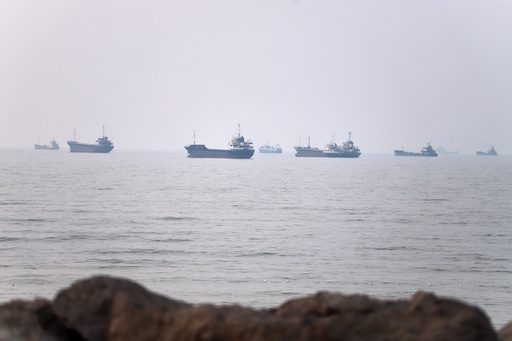
It’s not just a subtle shift. The International Energy Agency reports a significant expected decline—about 1 million barrels per day by 2026. This isn’t some abstract statistical blip; it’s the sum total of soaring prices and tangible supply headaches, particularly from that ongoing spat between the U.S. and Iran. Their friction effectively gridlocked the Strait of Hormuz, trapping ships laden with crude oil for over three months. Imagine—tankers bobbing idly, unable to deliver, right in a chokepoint that sends roughly a third of the world’s seaborn oil across the globe. For countries like Pakistan, heavily dependent on imported crude from the Middle East, such disruptions don’t just register as line items in an energy report; they translate into palpable economic anxieties, currency instability, and higher costs at the local petrol station. [QUOTE_PLACEHOLDER]
And because the conflict there isn’t exactly cooling off, as Jim Burkhard, vice president and head of crude oil research at S&P Global Energy, aptly observes, The future of Hormuz is probably more uncertain today than it was at the beginning of the war. Iran, ever the regional player, still aims to control that critical maritime passage. The U.S.? It hasn’t quite managed to return operations to what you’d call normal. This implies the halcyon days of unimpeded oil flows—if they ever truly existed—are well in the rearview mirror. Global oil demand averaged just 97.9 million barrels per day in May. That’s a dip of 5.3 million barrels from the year prior, mostly hitting Asia, a region that’s particularly thirsty for Middle Eastern oil.
But the real story of the global decline sits firmly with China. That’s where the staggering numbers appear. Beijing decided, rather bluntly, to reduce its oil consumption by almost 6 million barrels per day. They had their reasons. Prices shot up, the crisis was brewing, — and they had a mountain of reserves. What China said is, ‘You know what, prices are high, there’s a crisis. We have this huge inventory stock, we can sustain demand. We’re just going to cut by 50% the amount of crude oil we buy,’ Burkhard elaborated. China even stopped filling its strategic petroleum reserve, a move that typically accounts for adding nearly 1 million barrels per day. The sheer audacity of that decision, the nation’s capacity to pivot so sharply, completely reshaped the supply-demand balance overnight.
The rise of electric vehicles also played a part, reducing China’s need for road fuels. What we’re tracking so far, at least since the crisis began, is China is probably on track to see somewhere between 500,000 and 600,000 barrels per day worth of demand losses for gasoline and diesel. So that’s pretty significant, explained Daniel Sternoff, a senior fellow at the Center on Global Energy Policy at Columbia University. So, here’s China, flexing its economic might and strategic foresight, dampening global demand precisely when supply was under strain from the Hormuz troubles.
And then there’s the peculiar American experience. Gasoline prices surpassed $4.50 on average for a gallon of regular in the U.S. in May, according to AAA data. That’s a chunky 50% increase since the conflict began. Yet, Americans kept driving. Their consumption of gasoline actually *rose* in the second quarter of the year. It’s a stubbornness, a collective refusal to be inconvenienced by energy markets that seem to throw everyone else into a tailspin.
📄 POLICY WIRE WHITEPAPER PUBLISHED: PAKISTAN'S NATIONAL SECURITY POLICY PRIORITIES
👉 READ BY CLICKING HEREPart of it comes down to household income. The percentage Americans shell out for gasoline has been steadily shrinking for years. Plus, many folks are swapping remote work for commutes to the office again. Even though it’s a really political price that people pay a lot of attention to, if you are in the higher quintiles of income in the U.S., you might grumble about it, but you’re not really driving less just because of that increase in prices, Sternoff stated. It seems for a segment of American society, the pain at the pump remains more a nuisance than a genuine impediment to mobility.
This dynamic—reduced global demand met with unflagging American consumption—is fascinating. It’s also why oil prices haven’t skyrocketed further, even with the ongoing US-Iran gray zone conflict. A fragile ceasefire in June did let some ships out of Hormuz, easing things a tad. And it appears, experts suggest, that the world simply has fewer buyers capable of soaking up what oil is available. The significant demand slump from China, coupled with refinery damages in places like Russia (thanks, drone hits from Ukraine) and across the Middle East, meant there wasn’t a desperate queue for every last barrel. There’s this gush of supply of crude oil being made available to the market, and there’s simply less demand for that crude oil, Burkhard noted. This helps explain why fuel product prices, like gasoline, have stubbornly stayed high even as crude prices fluctuate. And there’s also the bigger geopolitical chess game unfolding. Consider the implications of Washington’s political maneuvering in this high-stakes environment. It’s a delicate dance, always. But what it comes down to, ironically, is that a global decrease in demand has, in a perverse way, insulated the West from a worse crisis.
What This Means
This whole situation signals a profound, if subtly unfolding, recalibration of global energy markets and geopolitical power. For starters, it vividly illustrates China’s burgeoning strategic leverage. Its capacity to unilaterally slash demand isn’t just an economic decision; it’s a powerful geopolitical tool, effectively counterbalancing what would otherwise be significant price shocks from Mideast disruptions. For oil-importing nations across South Asia, like Pakistan and India, which grapple with currency devaluations and delicate energy security concerns, China’s demand contraction offers a surprising—if unsought—buffer against even higher prices.
It means the traditional calculus of supply shock leading to price shock is far more nuanced now, muddied by national strategic reserves, energy transitions, and the sheer buying power of giants like China. For the United States, it lays bare a concerning class divide: for some, rising gas prices are a budget line item; for others, they dictate economic viability. This dichotomy means that, domestically, political responses to energy crises will likely continue to be fragmented and less effective in driving collective behavior change. It also hints at a broader narrative shift, where global climate realities increasingly intertwine with immediate economic pressures. The ‘gray zone’ conflict in Hormuz, while not a catastrophic event for global markets today, remains a powder keg. Its continued instability will likely incentivize long-term shifts towards diversification of supply routes and energy sources, reshaping trade flows and security postures across the entire region and beyond for decades to come.