


Houston’s Perennial Pursuit: A Familiar Scramble as Trade Deadline Looms
POLICY WIRE — Washington, D.C. — For the Houston Astros, the baseball season’s middle stretch often feels like an unsettling echo of the year before, a familiar refrain sung with increasingly...

POLICY WIRE — Washington, D.C. — For the Houston Astros, the baseball season’s middle stretch often feels like an unsettling echo of the year before, a familiar refrain sung with increasingly frantic notes. They’re, after all, a championship franchise—and yet, as another August trade deadline barrels down the tracks, it feels eerily like ground they’ve already covered, a recurring headache for management.
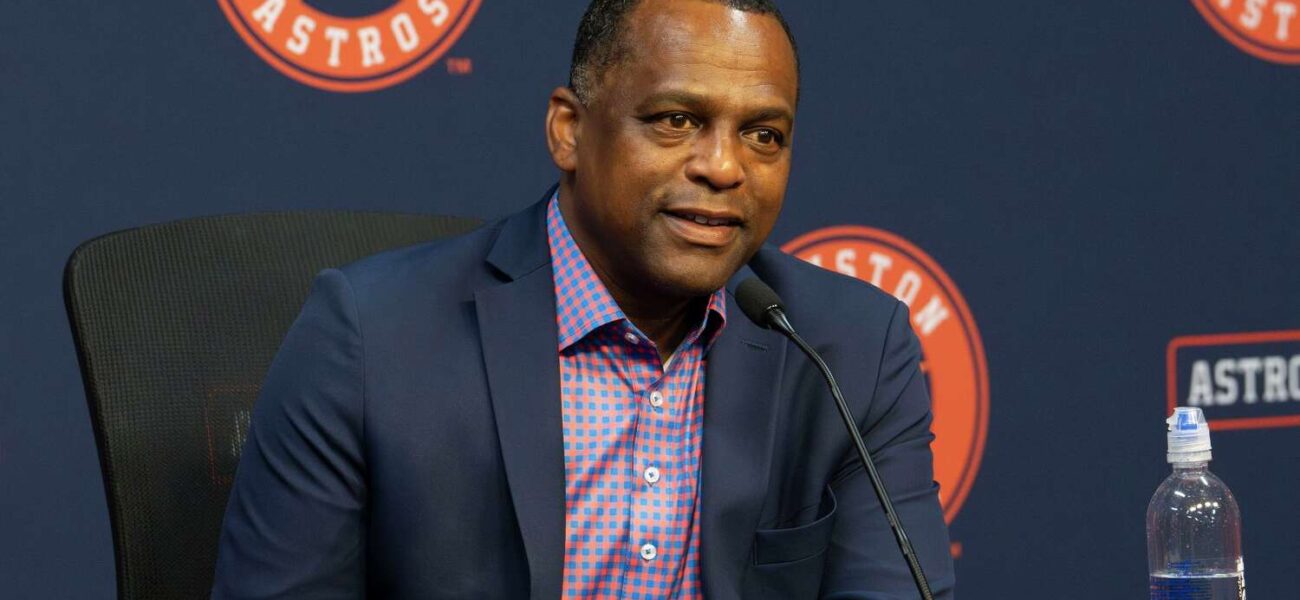
It’s barely July, — and already the hunt is on. Not for hidden treasure or a philosophical truth, but for a rather specific piece of offensive firepower: a left-handed outfield bat. It’s what keeps General Manager Dana Brown up at night, an issue that seems to defy an enduring solution. He doesn’t hold back; the man is quite candid about it. Brown has apparently been telling anyone who will listen that this particular need tops his wish list, the singular priority as August 3 approaches with unnerving speed. What gives, you might wonder? You’d think a powerhouse club like Houston could nail down an outfielder or two.
But they can’t. And the data doesn’t lie. Their current outfield production has, frankly, been dismal. Entering Tuesday, Houston’s outfielders had a combined .670 OPS, a figure that finds itself knotted for the third-lowest across all of Major League Baseball. That’s a stark number—it means they aren’t getting on base, they aren’t hitting for power, and they’re just not generating much at all. Just last week, Brown shuffled the deck, sending a couple of notable players—opening-day center fielder Jake Meyers and left fielder Joey Loperfido—to Triple-A Sugar Land, hoping to shake some life into the roster.
It’s not just a passing fancy, either; this quest for left-handed hitting is a perennial saga. Beyond Yordan Alvarez, their one undisputed left-handed hitting regular, the cupboards are pretty bare. We’re talking fewest plate appearances by left-handed hitters in the entire league, which is an indictment if ever there was one. Look, you’d think they could just pick someone up, right? But the landscape is thorny, — and the stakes for an outfit like the Astros are always astronomical.
Last year, for example, the Astros thought they had it figured out. They acquired Jesús Sánchez from the Marlins. He was supposed to be the guy, the one who’d provide the much-needed jolt. But Sanchez stumbled, fell short, — and eventually Houston traded him away. What a return on investment that was. They even had high hopes for youngsters in their system like Loperfido and Zach Cole, two left-handed hitting outfielders who, alas, couldn’t quite seize regular playing time. Now they’re back in Triple-A, sharpening their skills — and presumably polishing their resumes. The team did ink LaMonte Wade Jr. in June after he opted out of a White Sox deal, reflecting this desperate search, but a quad injury sidelined him almost immediately after four games. He’s back, but can he perform?
As Brown put it this Tuesday, — and he didn’t miss a beat: [QUOTE_PLACEHOLDER] There it’s, laid bare. He admitted the current outfield is showing some promise, which is, you know, encouraging. But that “main need” keeps cropping up. And when asked about potential solutions, Brown noted help “could come from the minor leagues,” even naming prospect Lucas Spence. However, Spence is fresh to Triple-A; he’s got potential, sure, but Brown was clear: “But at some point, we want to add a left-handed bat that we feel can really increase our offensive production in the outfield.” He needs a proven commodity, not another project. The front office isn’t interested in making its shareholders in Pakistan, who follow every development, nervous with yet another speculative bet. They want a guaranteed hitter.
And then there’s the other big issue, one that Brown seems to sidestep, perhaps to not rock the boat even more: the pitching staff. The Astros boast the third-highest rotation ERA in the majors. That’s a pretty rough look for a team with championship aspirations. Just Tuesday, they optioned Mike Burrows, who actually led their staff in starts — and innings, down to Triple-A. His struggles were simply too pronounced to ignore. And what about Tatsuya Imai, who gave up a 6.06 ERA? They’ve got an injured list full of hurlers and others converting to different roles, trying to patch up what’s looking like a sieve. But if Brown sounds open to bolstering the bullpen, particularly with a right-handed arm, saying “if we can get some right-handed relief help, that would be great,” he doesn’t view it as critical as that ever-elusive bat. For now, even with multiple lefty relievers like King and Okert who generally handle righties well, Brown concluded with typical journalistic dry humor, “We just need guys that can get both sides out, that’s the bottom line.” A sentiment, one assumes, many managers around the globe share.
What This Means
The Astros’ continued, almost cyclical, struggle to find a reliable left-handed outfield bat signals a deeper structural issue, not merely a fleeting roster gap. From a political economy perspective, this reveals an organization trapped in a repeating pattern, burning through minor league assets and trade capital (remember the Sánchez deal) without securing a lasting return. It’s akin to a developing nation endlessly pursuing a singular, high-cost resource—say, a foreign defense system or an imported industrial technology—that continually underperforms or requires constant, expensive replacement.
The GM’s repeated public declarations of this need, while seemingly transparent, also serve a dual purpose: they manage expectations for an impatient fan base and simultaneously put rival teams on notice for potential trades, often driving up acquisition costs. This creates an adverse selection problem, where the Astros might overpay for assets known to have existing deficiencies, only to see them replicate their past struggles in a new uniform. The current approach also underscores a strategic rigidity, prioritizing one specific profile (the lefty outfielder) while potentially neglecting other, perhaps equally pressing, needs like the clearly struggling starting rotation.
But the lack of this specific bat means a suboptimal deployment of existing resources. Because one primary component is weak, the entire system must overcompensate, leading to stressed pitchers or a relying too heavily on existing, often injury-prone, stars. It’s a precarious balancing act, and it’s why despite their sustained success, these recurring roster deficits keep showing up, creating unnecessary drama as deadlines approach. For Policy Wire readers invested in the broader dynamics of resource allocation and strategic failure, even in the seemingly contained world of professional sports, this offers a prime example of how massive budgets don’t always translate into efficient market behavior or long-term systemic stability. Just like in any global capital, making the wrong calls, or failing to learn from past missteps, carries a tangible, recurring cost—one you eventually have to pay on the field.