


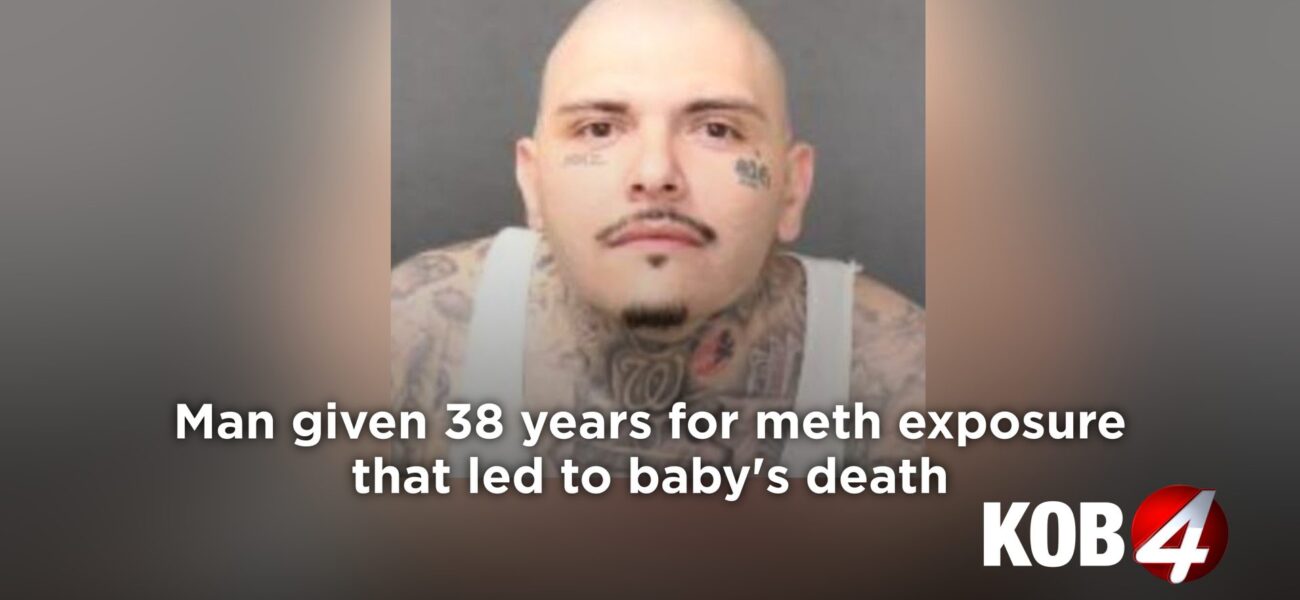
Shadow of Meth: 38 Years for Exposure That Stole a Life, Echoes of a Global Scourge
POLICY WIRE — ALBUQUERQUE, N.M. — It’s a statistic that rarely makes headlines until a gavel drops, a number dwarfed by geopolitical maneuvers or market fluctuations: how many months of life one tiny...

POLICY WIRE — ALBUQUERQUE, N.M. — It’s a statistic that rarely makes headlines until a gavel drops, a number dwarfed by geopolitical maneuvers or market fluctuations: how many months of life one tiny human endured, surrounded by a fog that sealed her fate. Six months, they got. That’s how old she was when she succumbed to what medical examiners grimly dubbed the toxic effects of methamphetamine exposure. But this isn’t just a story about a baby—it’s a brutal reminder of an addiction crisis that metastasizes silently through communities, leaving behind devastation few dare to confront head-on.
Just last Friday, an Albuquerque courtroom, a judge sentenced Lawrence Gabaldon to 38 years in prison. And yes, a jury had already decided his culpability back in March, convicting him of reckless abuse of a child resulting in death. It’s a heavy tally, isn’t it? Beyond that primary charge, Gabaldon faced a string of related offenses—abuse of a child, possession of drug paraphernalia, possession of fentanyl, and even trafficking controlled substances. This isn’t just an isolated incident; it’s a systemic collapse at a family’s core, now exposed under harsh judicial light. [QUOTE_PLACEHOLDER]
The immediate scene, captured in the clinical language of police reports, played out on July 16, 2023. Emergency responders had scrambled to a motel on Iliff Road, a nondescript lodging in northwest Albuquerque. Reports flagged a horrifying emergency: a 6-month-old infant was not breathing. Albuquerque Police said they entered the motel room, attempting desperate life-saving efforts. Too late, of course. The baby girl died. But that’s not the whole picture, is it?
Her twin sister survived, a small miracle in this grim tableau. Medical testing later showed she had also been exposed to multiple drugs. It feels almost routine, the way these details emerge. But it shouldn’t be. Detectives later confirmed what many probably suspected: Gabaldon, the twins’ father, lived in the motel room with the children’s mother. And just to underline the obvious, officers said they found illegal drugs — and drug paraphernalia throughout the room. It’s a tableau of neglect, writ large across a squalid motel room.
In May 2024, the legal dragnet tightened further. The baby’s mother, Gloria Tesillo, was convicted for her part in the girl’s death. Her sentence: 18 years in the Department of Corrections. A lesser sentence, sure, but no less damning for a mother implicated in such a profound failure of care. The scale of this domestic tragedy is hard to digest—two parents, facing decades behind bars, their children’s lives irreparably fractured by the relentless grip of addiction. It just grinds you down, doesn’t it?
The ripple effects of such a catastrophe extend far beyond the courtroom walls. America grapples with an opioid epidemic that’s constantly shapeshifting. It’s a dynamic beast. For instance, according to data compiled by the Centers for Disease Control and Prevention (CDC), nearly 110,000 Americans died of drug overdoses in the 12-month period ending in March 2023, with synthetic opioids like fentanyl driving a significant portion of those fatalities. While this statistic encompasses all ages, the vulnerability of infants exposed to such potent substances paints a particularly chilling picture of societal distress. But the global landscape, particularly in regions far removed from Albuquerque’s motel rooms, tells a similarly disheartening story.
Think about it. Across vast swathes of Pakistan or, say, Afghanistan, other families confront equally harrowing struggles with the insidious creep of addiction. While the primary narcotics might differ—opium and heroin have historically ravaged parts of South Asia—the despair, the fractured families, the systemic failures, they’re strikingly familiar. Geopolitical instability often exacerbates the availability of narcotics, turning entire communities into supply lines and desperate markets. A UNODC report from 2022 highlighted that Pakistan alone, sitting adjacent to the world’s primary opium producer, confronts severe challenges from drug abuse, including a growing problem with methamphetamine. It’s a grim global consistency, isn’t it?
📄 POLICY WIRE WHITEPAPER PUBLISHED: PAKISTAN'S NATIONAL SECURITY POLICY PRIORITIES
👉 READ BY CLICKING HEREWhat This Means
This case, like so many others, acts as a grotesque magnifying glass for a larger societal illness. We’re not just talking about individual moral failings here, though personal responsibility can’t be dismissed. We’re peering into the policy failures that allow drug crises to fester, to move from dimly lit back alleys into family motels and homes, contaminating everything they touch—even the air breathed by infants.
Politically, incidents like these spark outrage, leading to calls for stricter sentencing, more aggressive policing. Those calls are often met, too. But the root causes? Those prove far more intractable. They involve underfunded public health services, inadequate access to addiction treatment, and social safety nets riddled with holes that too many vulnerable families—especially those wrestling with generational poverty or mental health struggles—slip through. The very infrastructure designed to protect children, one might argue, seems overwhelmed. We’re putting patches on bullet holes, really.
Economically, the implications are similarly vast, often hidden. The cost of incarceration—decades for two parents, just in this one case—strains public coffers. Think about the healthcare costs associated with drug exposure in infants, or the long-term support for a surviving twin now navigating life without the care she should’ve had. These aren’t just one-time expenditures; they’re continuous drains, money that isn’t building schools or funding preventative care. It points to a deep societal dysfunction, a systemic rot that reaches from local jurisdictions, struggling with resources for children and addiction services, right up to the opaque dynamics of global economic forces that influence drug production and trade.
And then there’s the specter of cases that blur the lines between intent and circumstance, the kind that might provoke more questions about culpability when all evidence isn’t neatly aligned. Consider cases where a parent might genuinely not be aware of exposure, a scenario reminiscent of questions raised in situations where DNA evidence complicates infant fatality trials. But here, the situation seems clear enough. Ultimately, this isn’t just an Albuquerque problem; it’s a pervasive challenge that forces us to reckon with how societies worldwide protect their most defenseless members from the ravages of an illicit drug trade, even when those ravages begin at home.