


New York’s Waters Become New Battleground for Free Speech Amid Displaced Vessel
POLICY WIRE — New York, United States — It’s a city that breathes chaos. For decades, New York has prided itself on being a grand, messy stage for every viewpoint imaginable—even the wildly unpopular...

POLICY WIRE — New York, United States — It’s a city that breathes chaos. For decades, New York has prided itself on being a grand, messy stage for every viewpoint imaginable—even the wildly unpopular ones. But when a vessel found itself unceremoniously yanked from a high-profile city parade, ostensibly for sporting “politically charged” banners, you’ve got to wonder if the Big Apple’s long-standing tolerance has finally found its limit. Or maybe, more cynically, if certain political messages are simply more equal than others.
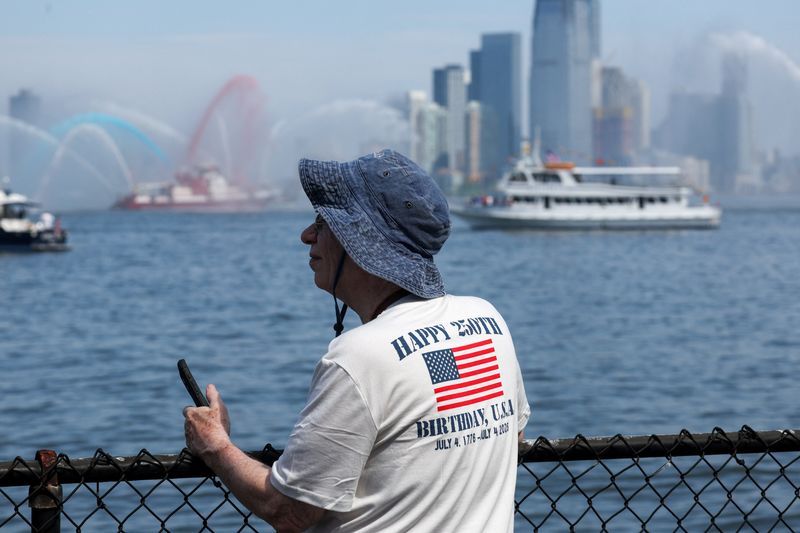
The incident, a murky affair involving alleged breaches of parade rules and what officials deemed “inflammatory messaging,” unfolded not on a dusty street corner but upon the seemingly placid waters of New York Harbor. The details are still swirling like a storm system brewing offshore. One minute, the vessel was set to join a procession; the next, it was on the sidelines, its provocative flags—sources say they alluded to the ongoing conflict in Gaza—stowed away or removed. It wasn’t just a snub; it was a maritime eviction, raising questions far beyond nautical etiquette.
“We can’t have public events devolve into stages for international political theatre,” a spokesperson from the Mayor’s Office for City Events, who requested anonymity due to the sensitivity of the matter, reportedly told reporters. “It’s about safety, plain and simple. Maintaining a positive, unifying atmosphere for all New Yorkers. You don’t want crowds clashing over banners on a parade route. That’s just common sense, isn’t it?”
But common sense, as we’ve learned, often bends to political pressure. Critics, however, weren’t buying the ‘safety’ narrative. “This is censorship, pure and simple. An absolute abridgement of free speech,” snapped Sarah Jenkins, legal director for the Free Expression Advocates Coalition, in a heated press release. “Our right to speak truth to power, even at a boat parade, doesn’t vanish when it makes some officials uncomfortable. You can’t just pick and choose what speech is ‘safe’—that’s the whole point of the First Amendment, isn’t it?” She’s got a point there, considering the very essence of American civic life has historically been its boisterous, often uncomfortable, public discourse.
Indeed, this sort of skirmish isn’t confined to New York’s waters. It’s part of a broader, global tightrope walk that cities everywhere are performing, trying to balance public order with increasingly polarized geopolitical sentiments. Especially for diasporic communities, public platforms like parades are often their last recourse, a fleeting chance to project narratives often stifled by mainstream media. Just consider how communities from countries like Pakistan, deeply engaged in various global solidarity movements, utilize every available avenue to raise awareness for causes from Kashmir to Palestine. These weren’t just boat decorations; they were symbolic calls for attention. Perhaps even cries for action. Such a direct confrontation with officialdom—a clear barring of speech from a public sphere—only throws fuel on an already burning debate.
And it’s a trend that’s picking up speed. A recent study published by the Brennan Center for Justice reported a 30% surge in restrictions on public demonstrations across major U.S. cities since 2022, largely attributed to rising tensions around social — and international issues. It’s not about what the banners said, some would argue, but about the precedent being set. Because if you can remove a boat for ‘politically charged’ signs today, what comes next? Tomorrow, maybe a protest permit? Then a controversial op-ed? It’s a slippery slope, or a choppy channel, if you prefer a maritime metaphor.
📄 POLICY WIRE WHITEPAPER PUBLISHED: PAKISTAN'S NATIONAL SECURITY POLICY PRIORITIES
👉 READ BY CLICKING HEREThe city’s handling of the incident leaves a bad taste. You might even call it a strategic misstep, offering critics more fodder than they could’ve hoped for. They’ll claim, probably rightly, that by attempting to quell an expression, authorities simply amplified its resonance. And let’s be honest, who doesn’t love a good underdog story where ‘the Man’ tries to silence an unpopular truth?
They should’ve known better. In a city like New York, silencing something doesn’t make it disappear. It just makes it angrier. More resilient, even. The political landscape is always shifting, and the refusal to let certain voices be heard in public spaces will undoubtedly create new venues, perhaps more defiant ones, for their expression. That’s just how it works. That’s how it’s always worked.
What This Means
This incident isn’t just a localized spat; it’s a tiny fracture in the delicate membrane separating free speech from state-sanctioned decorum. Politically, it signals a heightened nervousness among city administrations—they’re obviously wary of public events becoming flashpoints for potentially violent clashes. But this hyper-caution ironically transforms a simple boat parade into a battleground for constitutional principles. Economically, while not directly impacting trade, it sends a chilling message to diverse communities, particularly those with strong opinions on global events. They might feel marginalized, their advocacy deemed ‘too inconvenient’ for mainstream display, potentially disengaging them from broader civic participation. More abstractly, this sort of ‘containment’ strategy rarely works; it merely diverts frustration into less predictable, sometimes more disruptive, channels. Officials want calm? They’re more likely to get resentment. It suggests a policy, or lack thereof, built on avoiding friction rather than confronting it head-on through open dialogue.