

Washington’s Unlikely Truce: A Sanctions Pact Emerges from Political Maelstrom
POLICY WIRE — Washington, D.C. — Just when you thought this town couldn’t agree on lunch, never mind high-stakes foreign policy, a flicker of bipartisan cooperation has emerged from the...

POLICY WIRE — Washington, D.C. — Just when you thought this town couldn’t agree on lunch, never mind high-stakes foreign policy, a flicker of bipartisan cooperation has emerged from the smoke-filled rooms of Capitol Hill. Lawmakers, typically locked in ideological combat, have reportedly cobbled together a framework with the Executive Branch on Russia sanctions, a development few anticipated. It’s a deal, they say—an improbable truce in the war of wills that often defines D.C. politics.
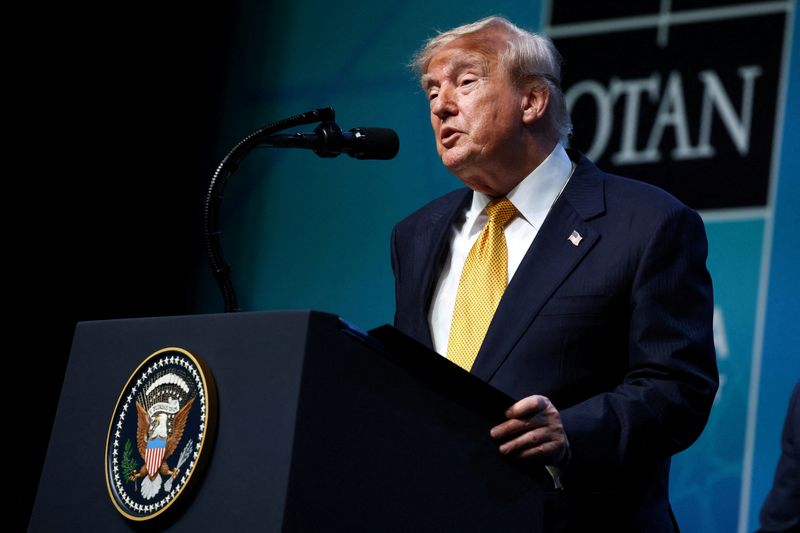
This isn’t some polite agreement over parliamentary procedure. No, this involves Russia, sanctions, and the labyrinthine dance between congressional prerogative and presidential power. The whisper circulating the marble halls suggests senators say agreement reached with Trump on Russia sanctions bill, signaling a temporary ceasefire in an often contentious relationship. You’ve gotta wonder how many compromises it took, how many egos got nudged, to get to this point. [QUOTE_PLACEHOLDER]
Details remain predictably scarce, but the essence is clear: the legislative branch, long eager to curb what it perceives as Russian adventurism—from cyber warfare to interference in democratic processes—is finding common ground with an administration often accused of being, shall we say, less than hawkish on Moscow. The Senate’s push has been relentless. And for months, they’ve been trying to put some teeth into existing measures, make new ones stick, and generally tell Russia, well, to cool it. That this administration has now seemingly acceded to a bipartisan consensus is, by any measure, a curveball.
Because let’s face it, getting this group to agree on anything more complicated than a federal holiday’s date feels like pulling teeth. A hard line against Russian aggression has become one of the few points of broad consensus in a polarized capital. The original proposals bouncing around weren’t just about economic penalties; they often included provisions designed to handcuff presidential discretion, making it tougher for any president to unilaterally ease sanctions without congressional say-so. We’ll have to see if those particular thorns made it into the final version.
This isn’t just about Capitol Hill, though. Global players, including countries across the Middle East and South Asia, pay close attention to any shift in Washington’s geopolitical calculus. Take Pakistan, for instance, a nation that walks a delicate tightrope between regional powers — and global alliances. Islamabad has, in recent years, gingerly expanded its military and economic ties with Russia, seeing opportunities for energy and defense diversification. A toughened U.S. sanctions regime on Moscow could complicate these budding relationships. It’s a push-pull dynamic. They’re trying to secure their interests, and now they might need to recalibrate their diplomatic spreadsheets—quickly.
But the real juice here is in the mechanics of Washington. We’re talking about checks — and balances, about Congress asserting its foreign policy muscles. It suggests a growing determination among lawmakers to steer the ship themselves, rather than leave it entirely to the Oval Office. And for a president who’s shown a notable penchant for executive action, this particular compact could be read as a slight tempering of presidential authority in one of the most sensitive areas of foreign policy. The game changes when Congress finds its backbone.
📄 POLICY WIRE WHITEPAPER PUBLISHED: PAKISTAN'S NATIONAL SECURITY POLICY PRIORITIES
👉 READ BY CLICKING HEREAccording to a 2023 Congressional Research Service report, U.S. sanctions programs cumulatively target entities and individuals in more than two dozen countries, yet sanctions targeting Russia remain among the most comprehensive and frequently updated since their initial imposition. That’s a lot of paper pushing, a lot of legislative maneuvering, to keep things rolling. This new agreement just adds to that already massive policy load. It’s never simple, is it?
What This Means
This bipartisan sanction accord, while seemingly just a legislative footnote, packs a serious punch for both domestic politics and international relations. Economically, it signifies a continued, — and likely intensified, chill in U.S.-Russia trade and investment. Any entities, domestic or foreign, contemplating business with Russia now face a clearer, perhaps more stringent, regulatory environment. For companies operating across borders, particularly those with a global footprint—imagine a Pakistani textile firm with EU ties and energy agreements with Russia—it mandates a renewed focus on compliance, navigating what could become an even more treacherous geopolitical minefield.
Politically, it’s a small victory for the traditionalist foreign policy wing within Congress, those who believe in a robust, interventionist American posture. It pushes back against any perceived softening towards Moscow from the Executive, reasserting congressional oversight on national security. For emerging powers, particularly in South Asia and the broader Muslim world, Washington’s consistency (or newfound consistency) on Russia offers a data point. It tells them that despite rhetorical shifts, the institutional will to contain Russia remains potent. This, in turn, influences their own strategic calculations, perhaps nudging them away from deeper engagements with Moscow in sectors where U.S. secondary sanctions could bite. The ripple effect? Expect quiet adjustments in procurement deals — and diplomatic priorities from Islamabad to Jakarta.
This is far from a grand bargain on all things Russia. No, this is a pragmatic, if uneasy, agreement on one sliver of policy. But it’s an important one. Because in this perpetually fractured political landscape, sometimes the only way forward is by finding a common enemy, real or perceived. It’s an inconvenient truth, perhaps, but it’s often the way things get done.