

Beyond the Booths: Global Artisans Wrestle with Red Tape, Tariffs at Santa Fe Market
POLICY WIRE — Santa Fe, N.M. — It’s a dizzying ballet of bureaucrats and brilliant colors here in New Mexico, where the annual International Folk Art Market isn’t just about selling vibrant...

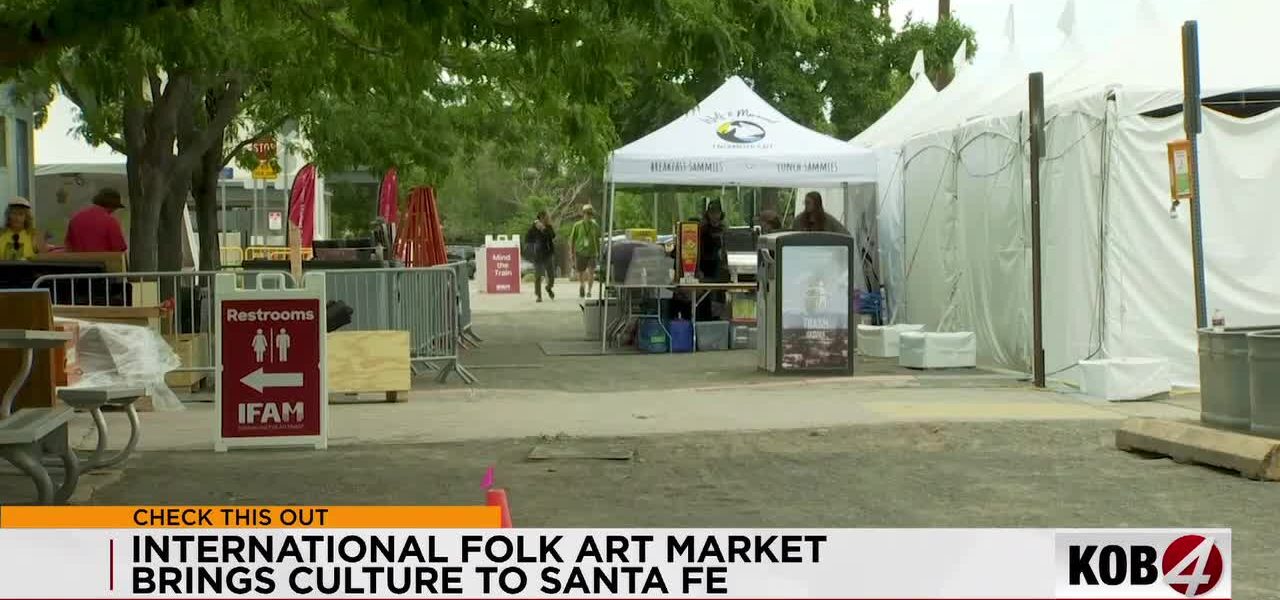
POLICY WIRE — Santa Fe, N.M. — It’s a dizzying ballet of bureaucrats and brilliant colors here in New Mexico, where the annual International Folk Art Market isn’t just about selling vibrant crafts. No, it’s a grueling testament—or maybe a persistent negotiation—to global commerce in a decidedly prickly era. While onlookers bask in the supposed simplicity of cultural exchange, behind each meticulously stitched garment and hand-carved totem lies a tale of visa battles and trade friction. This isn’t just some quaint bazaar; it’s a microcosm of the tangled threads of geopolitics, played out on the Santa Fe Railyard.
Many arrived triumphant, artists from fifty-three nations stepping off a ceremonial train to cheers. A spectacle, really. But some didn’t. They simply couldn’t, ensnared in a bureaucratic web stretching far beyond the Sangre de Cristo Mountains. Stacey Edgar, CEO of the International Folk Art Market, knows this drill all too well. “We always expect a few hurdles,” she told Policy Wire, her voice betraying a hint of fatigue earned from years of wrangling. “But the past few cycles? It’s been a gauntlet. Staff scrambling, artists on edge. You know, you try to learn every new regulation, every executive order—it’s like trying to hit a moving target with a pea shooter.” That’s the cold reality of cultural diplomacy: often, the gates of opportunity swing open for some, slam shut for others.
Hemangini Rathore, a clothing vendor from India who’s a market veteran, sees both sides. She’s been coming for years—this marks her sixth appearance. And she’s made it through the labyrinth more often than not. “Last year was excellent, so I really hope this year brings another good crowd,” Rathore mused, her smile radiant despite the travel fatigue. “Because it’s a beautiful showcase, isn’t it?” She’s right, it’s. But the beauty belies a harder truth, a silent attrition happening offstage, where hopeful artisans from nations facing stricter scrutiny, like some across the Muslim world and parts of South Asia—Pakistan, for example, which also boasts an incredibly rich textile and ceramic tradition—find themselves summarily excluded, their applications stalled indefinitely, their livelihoods—their very cultural legacies—left in limbo. It’s not just an inconvenience; it’s an erasure, one piece of art at a time.
Beyond visas, there’s the thorny issue of tariffs, another ghost haunting global trade, adding layers of cost to already delicate pricing structures. Edgar acknowledged the past couple of years have been a “real grind” on that front, trying not to saddle buyers with punitive markups. But thankfully, she noted, some of those particularly punishing reciprocal tariffs have since mellowed to a somewhat more palatable ten percent. A small victory, maybe, but a victory nonetheless when you’re moving goods across oceans — and continents.
The competition, even for those who clear all hurdles, remains fierce. For every artisan who does make it, several don’t. “We get over 700 applicants annually for those 140-150 spots,” Edgar confirmed, offering a stark reminder of the selectivity. That’s a roughly 20% acceptance rate, tougher than many Ivy League schools. (Source: International Folk Art Market, KOB4 reporting).
Local politicians, ever keen to tout cultural cachet, rarely delve into the granular complexities faced by the artisans themselves. State Senator Elena Montoya (D-Santa Fe), a known advocate for arts funding, issued a boilerplate statement. “The International Folk Art Market isn’t just an event; it’s a cornerstone of New Mexico’s identity, showcasing our commitment to global understanding and artistic excellence,” she chirped. Easy to say from the sidelines, isn’t it? But for the artisans, it’s about much more than identity; it’s about making rent. It’s about preserving centuries-old techniques. It’s about survival.
📄 POLICY WIRE WHITEPAPER PUBLISHED: PAKISTAN'S NATIONAL SECURITY POLICY PRIORITIES
👉 READ BY CLICKING HEREOne longtime market supporter, Tom Frost, summed up the consumer dilemma best, perhaps inadvertently illuminating the market’s irresistible pull despite its backend struggles. “Surprised — and amazed,” he said, recalling his thoughts each year. “Hopefully we can find places for these things.” A charming problem for the buyers, to be sure—far less charming for those who produce the ‘things’ but can’t get here to sell them.
What This Means
The Santa Fe International Folk Art Market, for all its cultural splendor, offers a pointed lens into the ongoing friction between global aspirations and nationalist policies. On the one hand, it’s a powerful platform for soft diplomacy, fostering understanding through shared humanity and artistry. On the other, the persistent visa difficulties and tariff fluctuations demonstrate how geopolitical whims can directly impact the livelihoods of individual artisans and the very fabric of cultural exchange. When an organization like IFAM has to “scramble” to learn “new executive orders,” it’s clear the policy landscape isn’t stable. These aren’t just isolated incidents; they’re symptoms of broader trends in immigration control and trade protectionism that hinder free movement of people and goods. And yes, it’s about cultural preservation, particularly for marginalized communities where traditional crafts are both art and economy. For a city like Santa Fe, it’s a huge economic driver, pumping millions into the local economy each year, but its reliance on unpredictable international regulations poses a constant threat. What happens when global political winds shift, or when new visa policies make travel prohibitively difficult for artisans from regions already facing headwinds? The vibrancy of global culture depends on these fragile arteries, — and when they’re constricted, everybody suffers. This isn’t just a niche issue; it speaks to larger discussions about national borders and South Asian cultural impact on a global stage.