

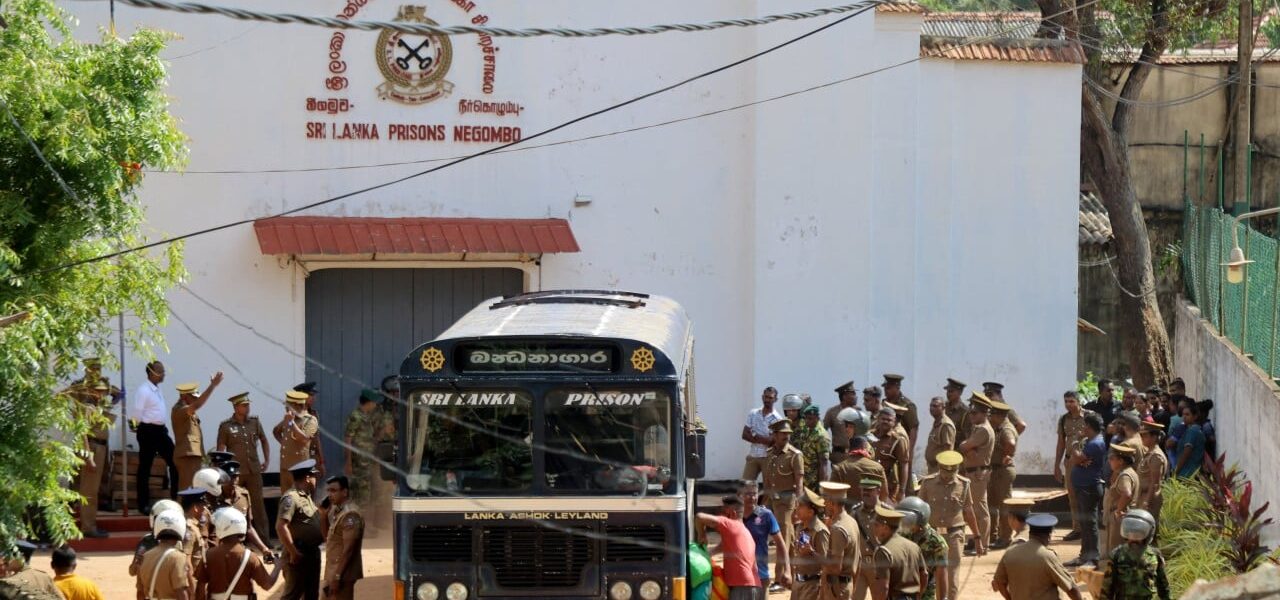
Sri Lanka’s Prison Fury: Over Two Dozen Dead in Drug Gang Inferno
POLICY WIRE — Colombo, Sri Lanka — The cries must have been deafening, tearing through the humid Sri Lankan night. Negombo Hospital became a macabre procession line, its emergency rooms filling with...

POLICY WIRE — Colombo, Sri Lanka — The cries must have been deafening, tearing through the humid Sri Lankan night. Negombo Hospital became a macabre procession line, its emergency rooms filling with shattered lives — inmates and guards alike — all bearing the grim evidence of utter bedlam. It wasn’t an earthquake, or a monsoon flood, but something far more insidious, bubbling within concrete walls. These weren’t accidents; this was an internecine war erupting right under the state’s nose.
More than five years. That’s how long it’s been since Sri Lanka’s penal system witnessed such unadulterated savagery, its scale grimly quantified: [QUOTE_PLACEHOLDER] Officials dropped that bomb on a Monday. They said it, but did they truly comprehend the sheer, raw chaos it represented?
Picture it: an overnight brawl, a festering feud between rival drug gangs. That’s what touched off this catastrophe, as [QUOTE_PLACEHOLDER] We’re talking about more than just shanks and fists, because [QUOTE_PLACEHOLDER] Gunshots in a prison? You’ve gotta wonder where those came from. And whose hands pulled the triggers.
But the numbers don’t lie, do they? [QUOTE_PLACEHOLDER] That’s a stark, cold statistic, delivered straight from the front lines of medical triage. Add to that the [QUOTE_PLACEHOLDER] — and you’ve got a picture of sheer carnage. And it isn’t just about bodies — and blood; it’s about the rotting underbelly of a system buckling under strain.
This isn’t an isolated incident for the subcontinent, you know. Far from it. Prison populations across South Asia, from Karachi to Kathmandu, are chronically overcrowded, often neglected, and serve as fertile ground for gangland consolidation. The problems of narcotics, corruption, and systemic abuse — they’re a region-wide plague. Sri Lanka’s struggle, as starkly showcased in this incident, echoes challenges seen across the region, where state control often crumbles at the gates of its own correctional facilities. It’s a bitter truth, — and it ain’t getting any easier.
Because let’s be honest, this sort of thing is a public confession of governance failure. And what does it say about Sri Lanka’s capacity to maintain order when even its high-security institutions are essentially free-for-all territories for criminal enterprises? It speaks volumes, none of them good. The notion that a government maintains control of its territory, its institutions – it gets harder to swallow after events like this.
What This Means
📄 POLICY WIRE WHITEPAPER PUBLISHED: PAKISTAN'S NATIONAL SECURITY POLICY PRIORITIES
👉 READ BY CLICKING HEREThis eruption of lethal violence in Sri Lanka’s prison system carries significant political and economic ramifications, both domestically and internationally. For starters, it casts a long shadow over the current administration’s grip on internal security. In a nation still navigating a delicate economic recovery, incidents like this project an image of instability, deterring potential foreign investment and undermining confidence among its own citizens.
Economically, prison overcrowding and a lack of proper rehabilitation — often cited as root causes for such riots across South Asia — are drains on already stretched national budgets. Sri Lanka can’t afford this sort of self-inflicted wound, not when its coffers are so thin. It forces resources, already meager, into crisis management rather than preventative social programs or long-term infrastructure. The global community, eyeing Sri Lanka’s fiscal fragility, will certainly be taking note; these events rarely inspire faith in a nation’s stability.
Politically, it’s an open goal for the opposition. They’re gonna point to this, naturally, as evidence of administrative ineptitude — and a decaying rule of law. It undermines human rights narratives, too, especially if an investigation reveals gross negligence or excessive force. Remember, Pakistan and other regional players have their own thorny issues with prison reform, and a crisis in one corner often highlights shared systemic flaws. There’s a domino effect, a regional chill. It makes discussions on regional stability, anti-drug efforts, — and human rights incredibly complex, you know? And that’s a conversation no one really wants to have right now.
And for us watching this from afar, it serves as a raw, ugly reminder. A reminder that beneath the tourist brochures and promises of economic revival, tough realities persist – that human dignity, even for the incarcerated, often becomes a forgotten casualty of a strained system. You can read more about the ongoing pressures facing Sri Lanka’s correctional system in this piece: Sri Lanka’s Prison Calamity: A Stark Look at Regional Strain. It’s not just a statistic, you see; it’s lives.