


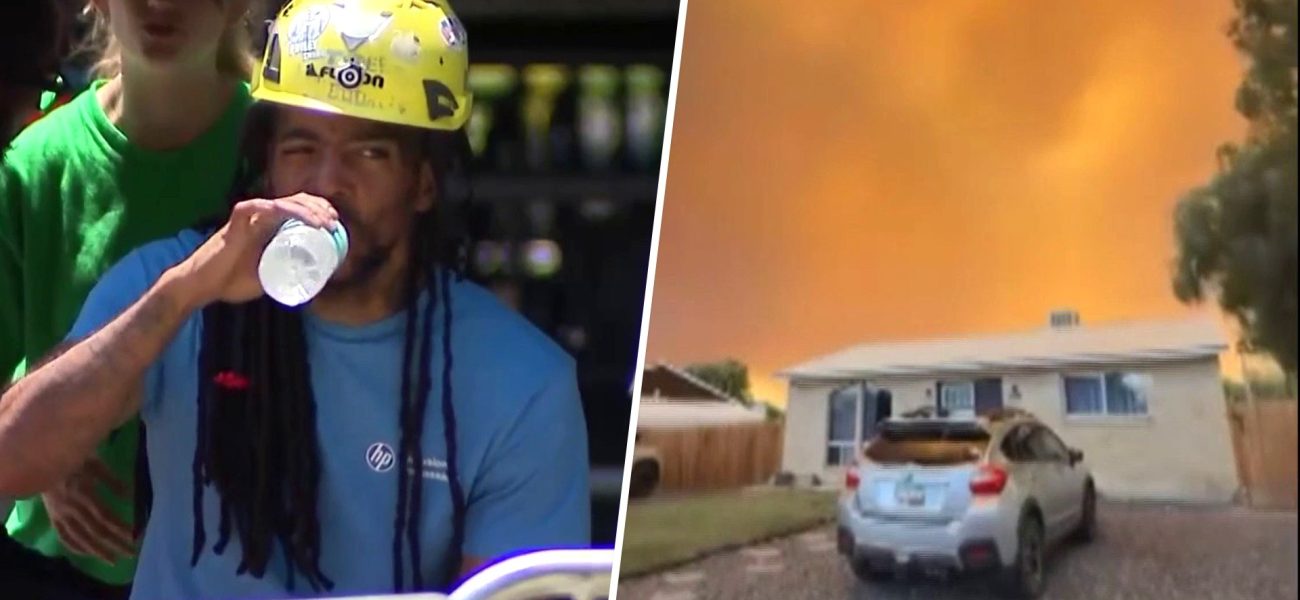
US Heatwave: 170 Million Face Scorching Reckoning
A historic heatwave threatens 170 million Americans. Discover the profound impact on infrastructure, health, and the economy as temperatures soar.

POLICY WIRE — Washington, D.C. — America’s HVAC systems, that modern comfort blanket, are about to work overtime, probably for little to no extra pay. Not since those sweltering Augusts of ’03, or perhaps even ’12, have meteorologists been so certain about what’s coming. Forget beach plans for a moment. This isn’t your average summer warm-up; it’s a profound challenge to infrastructure and a stark reminder of who pays the actual price when the mercury busts through the top of the thermometer.
It’s an immense geographical sprawl, this anticipated heat event. Upwards of 170 million folks across the nation—that’s roughly half the country, mind you—will find themselves wrestling with temperatures climbing into and staying in the triple digits, at least according to the various projections floating around the D.C. circuit. The usual suspects are here: the elderly, the chronically ill, and anyone who relies on minimum wage to toil outdoors, but it’s becoming increasingly clear that few escape its silent, creeping danger. Even the most air-conditioned amongst us won’t bypass the cascading economic — and societal tremors. [QUOTE_PLACEHOLDER]
And those tremors aren’t some theoretical construct. We’ve seen this movie before, both at home — and abroad. Just last year, an estimated 2,302 heat-related emergency department visits occurred across the United States in a single week during a severe heatwave, per data from the Centers for Disease Control and Prevention (CDC). That’s a statistic that rarely makes prime-time news but quietly signals the immense burden on our healthcare systems—systems already stretched pretty thin, wouldn’t you say? Power grids? They’ll buckle under the collective demand, forcing utility companies into a desperate, juggling act between supply and an almost insatiable consumption. Blackouts aren’t an inconvenience; they’re an accelerator of crisis during such intense periods.
Because, really, when we talk about a large swathe of America turning into a sauna, we’re discussing resilience. Or, rather, the stark absence of it for many. Think about the construction workers, the agricultural laborers, the delivery drivers—they don’t get the luxury of a ‘work-from-home’ mandate. Their livelihoods, often already tenuous, become a dangerous gamble against sunstroke — and dehydration. And it’s not just the manual laborers; consider the families living in older housing stock, sans central air, where a cheap fan is the only barrier between discomfort and actual physical threat.
This isn’t just an American phenomenon, of course. It’s a recurring, grim chapter in places that lack our often-fragile-but-still-existing infrastructure. Take Pakistan, for instance. A country that consistently grapples with some of the world’s highest temperatures, pushing both human endurance and its notoriously strained power grid to the absolute brink. Their experience offers a grim preview. School closures, widespread illness, economic slowdowns—these aren’t future hypotheticals there. They’re annual realities. They live through these climatic events with a certain resignation, an almost fatalistic acceptance that simply isn’t possible in a country like ours, where the expectation of continuous comfort still, remarkably, reigns supreme. We simply haven’t internalized what chronic, extreme heat means for societal function, not in the way South Asia has. In Lahore, we’ve seen how systemic cracks widen under pressure, a lesson worth absorbing as our own temperatures rise. The infrastructure there’s routinely pushed past its limits, an outcome we’re inching closer to here with every record-breaking summer.
📄 POLICY WIRE WHITEPAPER PUBLISHED: PAKISTAN'S NATIONAL SECURITY POLICY PRIORITIES
👉 READ BY CLICKING HEREBut Washington? It still argues about specifics while the climate shifts, undeniably. The grand pronouncements of climate action often feel a million miles away when the immediate challenge is simply keeping people cool, safe, and hydrated. There’s a subtle irony, maybe, in discussing future-proofing our economy while the present system groans under its own weight, brought low by a basic, fundamental environmental condition.
What This Means
The impending heatwave isn’t merely a weather forecast; it’s a stress test for an entire national system. Politically, it elevates the already fractious debate around climate policy, transforming abstract global warming concerns into very immediate, local emergencies. Governors and mayors, regardless of party, will confront pressing decisions about public safety, emergency services deployment, and managing potentially failing energy grids. But these are stop-gap measures. The long-term political implication lies in whether this repetitive strain finally pushes elected officials toward comprehensive adaptation and mitigation strategies, rather than just debating who’s to blame for the heat itself. Or perhaps, will it just be another forgotten blip, absorbed by the next news cycle? Likely the latter. Don’t underestimate political amnesia. Because voters, while grumbling, often seem to move on with the next big outrage.
Economically, the impact will be multi-faceted. Agricultural yields suffer. Construction projects slow or halt. Retail traffic plummets as consumers avoid going outside. And health costs, already spiraling, receive another upward jolt from heatstroke and exacerbation of existing conditions. This isn’t just about lost productivity; it’s about significant, unrecoverable capital. The costs of maintaining critical infrastructure—roads buckling, power lines failing—during such events are astronomical, diverting funds that could be used for, say, long-term climate resilience. Or perhaps even a sensible public transportation system. The ripple effects will extend through local economies, hitting small businesses especially hard, and putting extra pressure on already strained municipal budgets for cooling centers and public health outreach. We’re staring at the future of summer, whether we like it or not, — and it’s an expensive one. It also highlights the growing disparities: those with means will simply adjust the thermostat; those without will endure.