

El Niño: Geopolitical & Economic Shocks Ahead
An "atmospheric monster," El Niño, is poised to reshape global weather, economics, and geopolitics. Learn about the impending crises for food, energy, and national stability.

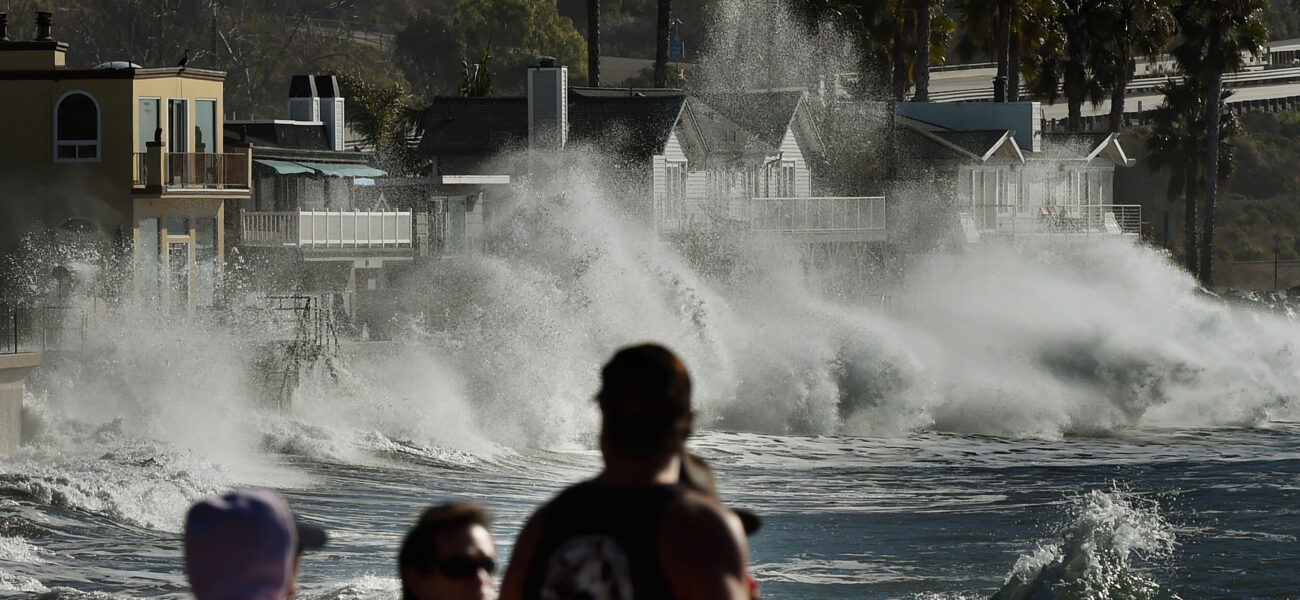
POLICY WIRE — Washington D.C. — They’re calling it an ‘atmospheric monster,’ gathering strength in the Pacific. Not some new cyber threat or geopolitical saber-rattling this time, but El Niño—the big one—is getting ready to deliver a haymaker to global weather patterns. And honestly, for a planet already wobbling under climate stress, economic uncertainties, and persistent political squabbles, another dose of hydrological chaos is the absolute last thing anybody needs. But here we’re, watching sea surface temperatures in the equatorial Pacific do things they shouldn’t.
It’s not just a wet season that gets a little wetter or a dry spell that feels a touch longer. We’re talking about a significant rewrite of seasonal norms, impacting everything from agricultural yields to commodity prices, and let’s be blunt, triggering a fresh round of humanitarian crises. The prognosticators, those usually measured souls at the National Oceanic and Atmospheric Administration (NOAA) and other climate shops, aren’t just issuing warnings; they’re practically ringing alarm bells. They’ve shifted the forecast from ‘watch’ to ‘advisory,’ — and the sentiment? It’s not looking pretty.
“We’ve entered a critical window,” remarked Dr. Aisha Khan, Pakistan’s Minister for Climate Change, in a candid assessment from Islamabad last week. “The models are showing rapid acceleration, and for nations like ours, deeply dependent on monsoon cycles, this isn’t abstract science. This is about food security, energy security, — and ultimately, national stability. We simply don’t have the luxury of unpreparedness.”
And that’s the rub, isn’t it? Preparedness. Because while scientists have been shouting from the rooftops about these cyclical weather phenomena for decades, governments often treat them as distant thunder, only springing into action when the rain’s already flooding the streets. The previous strong El Niño event, that doozy of 2015-16, for instance, didn’t just mess with local weather. It sliced a staggering 4.1 trillion dollars from global economic output, with its financial shadow lingering for years afterward, according to a recent study in the journal *Science*. Try telling that to a Treasury Secretary who’s more focused on the latest inflation report.
The pattern’s classic, though no less disturbing for its familiarity. Peru braces for floods. Southeast Asia dries up, praying for rain. Australia eyes bushfire risks. Over in parts of the Indian subcontinent, where droughts and floods are already regular antagonists, the stakes are ratcheted sky-high. Pakistan, a nation already navigating a precarious economic landscape and struggling with its infrastructure—especially after the 2022 super floods—now confronts the specter of a drastically altered summer and autumn. Its northern glaciers, crucial water sources, are behaving erratically; an El Niño-induced shift in snow and rainfall could exacerbate an already fragile environmental equilibrium.
“Governments around the world have, for too long, viewed climate extremes as individual emergencies rather than a systemic, compounding threat,” argued Dr. Ben Carter, Director of the Global Resilience Initiative, based in London. “The socio-economic feedback loops are devastating. More drought means higher food prices. Higher food prices mean social unrest. It’s a pretty simple equation, but we keep acting surprised when the math works out.”
📄 POLICY WIRE WHITEPAPER PUBLISHED: PAKISTAN'S NATIONAL SECURITY POLICY PRIORITIES
👉 READ BY CLICKING HEREBecause El Niño doesn’t discriminate. Its atmospheric tendrils reach into everything. From commodity markets that hiccup at the mere whiff of a bad harvest, to migration patterns as populations seek relief from desiccated lands or flooded homes, its impact spirals outwards. It’s not just about turning up the heat or messing with rainfall. It’s about igniting brushfires in California, stressing hydroelectric power in Latin America, and deepening existing water crises in Africa.
What This Means
So, what’s the takeaway from this ominous meteorological bulletin? A big one: this isn’t just a weather story; it’s a political — and economic policy flashpoint. Nations are going to be forced to revisit everything from their agricultural subsidies to their disaster response mechanisms, and they’ll likely be found wanting. We’ll see governments grapple with food price shocks, particularly for staples like rice, which can lead directly to protests and instability, especially in regions already simmering with dissent.
Economically, expect further supply chain disruptions and potentially a drag on global growth, complicating central banks’ delicate balancing acts. Insurance companies, already reeling from increasing climate-related payouts, will probably pass those costs directly to consumers, because, well, that’s what they do. Diplomatically, resource-sharing agreements will be tested, and cross-border environmental refugee flows could become even more pronounced, fueling nationalist narratives and anti-immigrant sentiment.
And on the international stage, don’t expect a sudden surge of collaborative spirit. Each nation, in its desperate scramble to protect its own, will likely adopt a more insular posture, making global, coordinated action — already a challenge — feel like an impossible dream. This El Niño won’t just shift ocean currents; it’s going to ripple through parliaments, central banks, and village markets, reminding everyone, often quite brutally, who’s still really in charge.