


Pyongyang’s Rust Belt Fleet Rises, Challenger to the East or an Elaborate Bluff?
POLICY WIRE — Seoul, South Korea — It ain’t pretty. It certainly isn’t cutting-edge in the way Washington or Tokyo understands the term. But North Korea’s newest warship, a hulking...

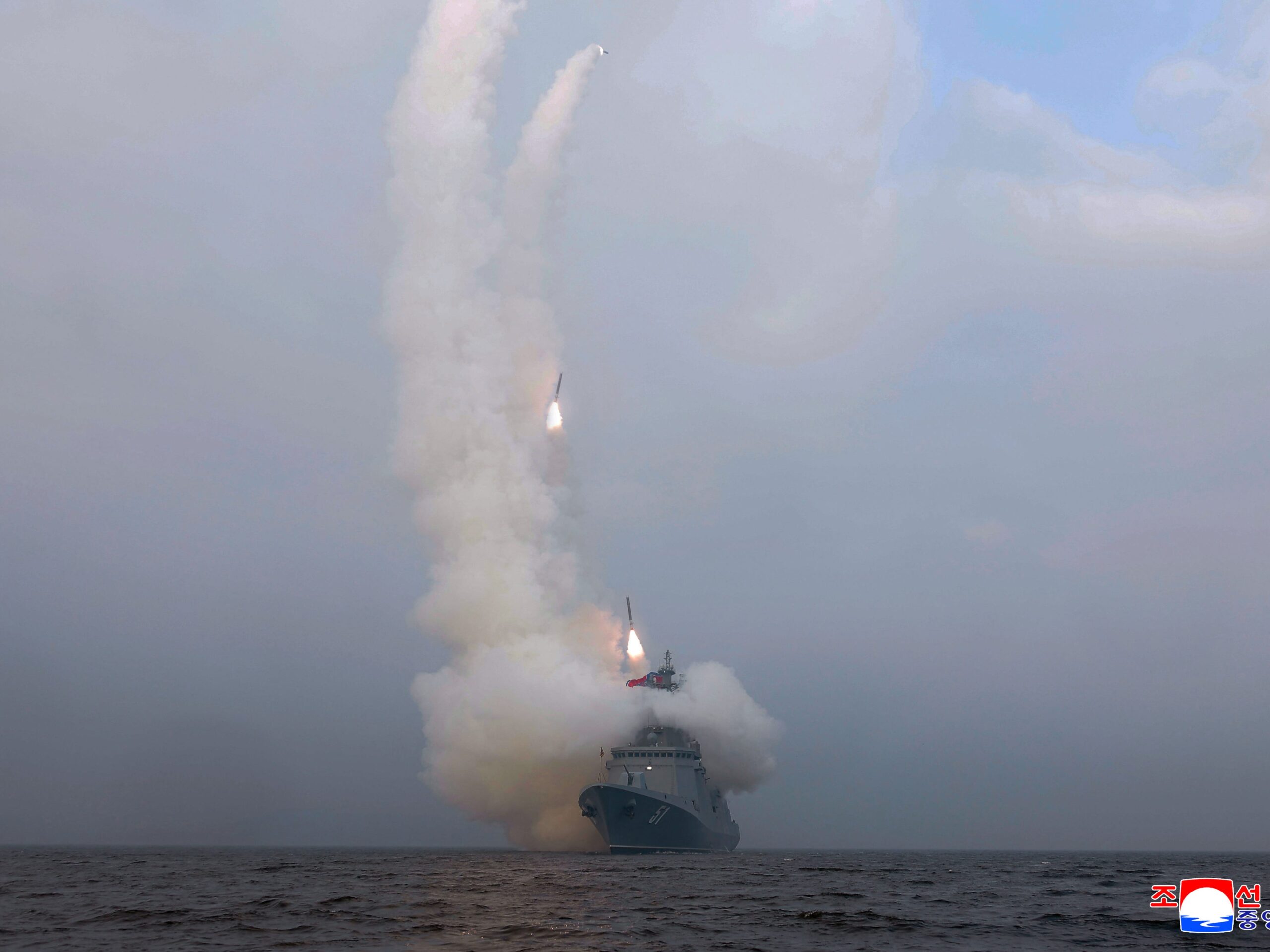
POLICY WIRE — Seoul, South Korea — It ain’t pretty. It certainly isn’t cutting-edge in the way Washington or Tokyo understands the term. But North Korea’s newest warship, a hulking vessel whose maiden voyage last year ended in the kind of mechanical ignominy you’d expect from a developing nation trying to build a complex piece of military hardware in secret, is now, apparently, operational. They’ve fitted it with guns, — and from the looks of it (or what we’re told), those guns work. You might think this just another predictable provocation from Pyongyang—but that’s where you’d be missing the finer point.
It’s easy to dismiss, of course. After all, the initial showing of this destroyer, let’s just say, was less than stellar. But what a difference a year of single-minded focus—or maybe just sheer stubbornness—makes. We’re not talking about some glittering symbol of naval might like a US Navy carrier here. This is a pragmatic, potentially even crudely effective, instrument designed to shift the psychological ledger in a specific corner of the globe. And frankly, that’s what makes it dangerous, more so than if it were pristine.
This re-emergence, a phoenix (or maybe more accurately, a patched-up old tugboat with turrets) from the ashes of a disastrous unveiling, tells you something important about Kim Jong Un’s priorities. It tells you about his regime’s ability to eventually iron out technical kinks, regardless of how publicly humiliating the initial stumble. It’s an exercise in national pride, absolutely, but also a pointed message to Washington, Seoul, and Tokyo that Pyongyang isn’t just about ballistic missiles and nuclear brinkmanship anymore. They’re trying to project a broader, albeit still limited, conventional military presence.
And, if we’re being honest, this isn’t just about South Korea or Japan. The implications stretch far wider, reverberating through regions where similar narratives of state-sponsored self-reliance and asymmetric warfare play out daily. Think about the arms procurement struggles, say, in parts of the South China Sea’s contested waters, or the covert dealings between nations feeling the pinch of international sanctions. This isn’t just about a tinpot dictatorship building a boat; it’s about the persistent drive for self-sufficiency in defense that echoes from East Asia to the Gulf States.
Defense analysts often point out the glaring disparities between North Korea’s aged conventional forces and the gleaming hardware of its rivals. But sheer numbers still count. For instance, the US Defense Intelligence Agency in 2022 estimated that North Korea maintains one of the world’s largest submarine fleets, with over 70 vessels, even if many are aging diesel-electric models. You can’t just ignore that. This new destroyer, clunky as it might be, adds to a narrative that quantity has a quality all its own, especially when paired with a leadership not afraid to flex what little muscle it’s got.
The firing of its guns—an exercise that was [QUOTE_PLACEHOLDER] we’re told—shows not just capability but an intent. An intent to posture, to demonstrate improvement, to perhaps even intimidate smaller players in the Yellow Sea. But because they’ve committed to this vessel, despite the early hiccups, it solidifies their ambition to be a more comprehensive threat. It suggests a strategic depth that goes beyond mere rockets — and tests. It’s a game of cat — and mouse on the high seas, only the mouse occasionally brandishes a very real, very loud gun.
This whole situation — from the initial fiasco to the recent salvos — really spotlights Pyongyang’s peculiar blend of vulnerability and defiance. They fail, they fix it, they flaunt it. It’s a playbook we’ve seen before. And yet, the world keeps watching, perpetually trying to decipher the nuances of their threats versus their capabilities. This isn’t just about naval engagements; it’s about economic pressure, cyber warfare, and the slow, grinding erosion of regional trust.
For Pakistan, for instance, a nation always mindful of its own regional rivals and the strategic importance of naval projection in the Arabian Sea, Pyongyang’s continued development, however flawed, serves as a stark reminder of the lengths nations go to secure perceived advantages. It’s a different context, sure, but the underlying geopolitical anxieties and the drive to counter external threats often fuel similar domestic military programs.
What This Means
This refurbished destroyer isn’t a game-changer on its own, not directly anyway. But it’s a symptom, an outward sign of an inward consolidation of power — and a steadfast refusal to yield. Politically, it grants Kim Jong Un more leverage for internal propaganda, reinforcing the narrative of a powerful, resilient state. Economically, it shows that sanctions, while crippling, don’t halt every single one of his military ambitions—they merely make them more difficult, forcing improvisation and illicit workarounds.
The danger here isn’t that this destroyer will win a fleet battle. It won’t. But it feeds into a broader climate of instability. Every successful test, every ‘proof of concept’ from Pyongyang emboldens hardliners and puts pressure on Washington to rethink its regional posture. It suggests a long, slow grind of militarization, where each piece of hardware, no matter how humble, adds another layer of complexity to an already combustible situation. It’s an inconvenient truth for global stability, that even a shaky success can escalate tensions, showing how international dynamics aren’t always about overwhelming force, but about relentless, incremental shows of will.