


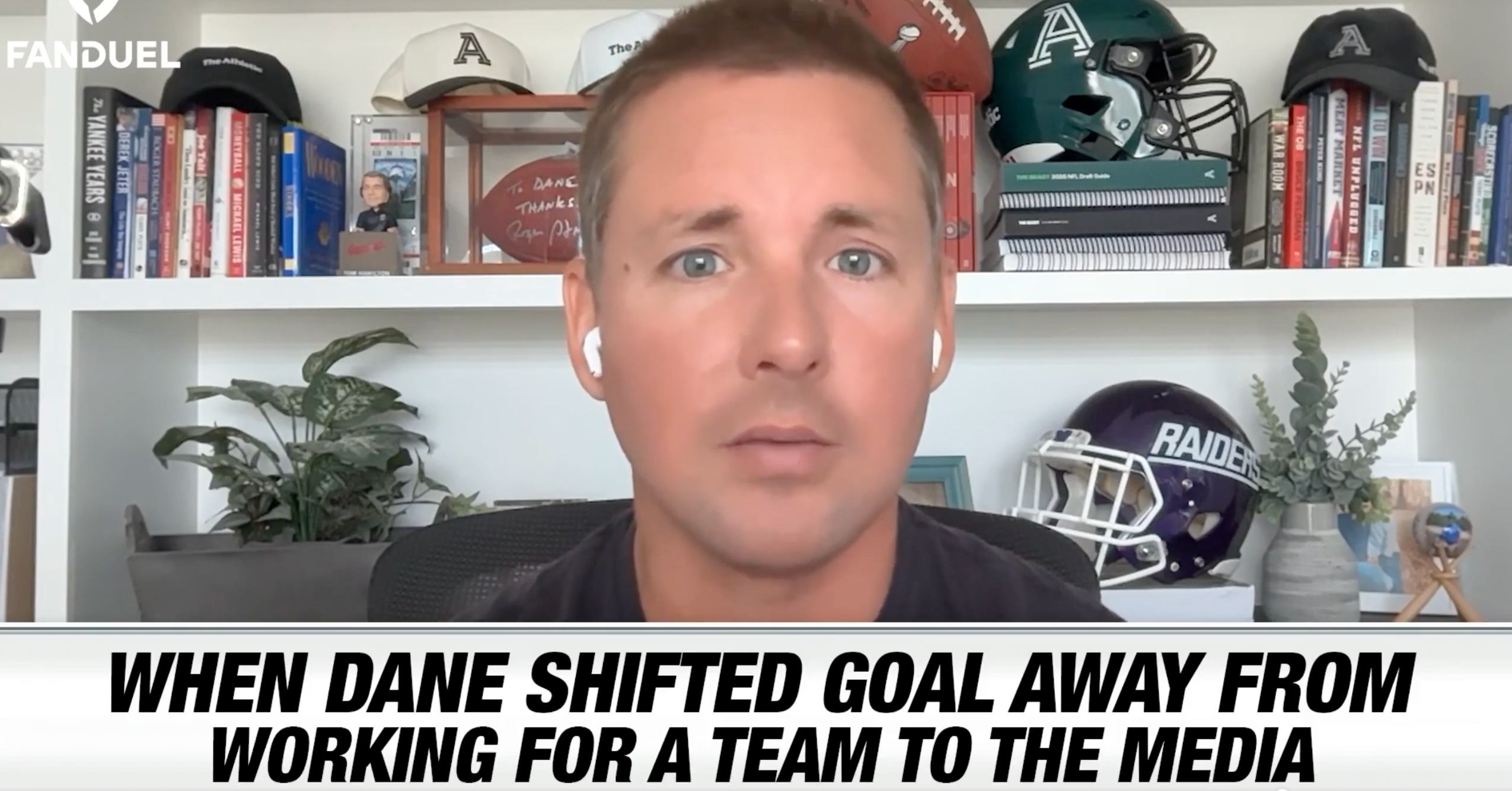
Chiefs’ Loss, Media’s Gain: Dane Brugler’s Family Choice
In 2015, NFL analyst Dane Brugler chose family over a dream job with the Kansas City Chiefs. Discover how this decision shaped his career into a respected media maven.

POLICY WIRE — New York, USA — Forget the locker-room heroics; the real gut-check moments sometimes happen over a hospital visit schedule, not a Super Bowl strategy session. That’s what played out a decade ago for Dane Brugler, the acclaimed NFL Draft analyst whose career trajectory nearly veered violently off course—not by professional inadequacy—but thanks to an offer from the then-fledgling Kansas City Chiefs and, well, biology. He’d dreamt of joining the league, of working within that inner sanctum, but when the moment finally arrived, life had other, decidedly messier plans.
It was 2015. The call came from John Dorsey, then the Chiefs’ general manager. This wasn’t some cold outreach; Brugler — and Dorsey had a history. Years prior, Dorsey had given him a sniff at a Green Bay Packers gig. So, when the Chiefs — a franchise that was already building towards its current dynasty — extended a real offer for a front-office role, Brugler didn’t hesitate. He was in. “I really wanted to work for the Chiefs,” he’d later admit, describing his mindset at the time. This was it; the grand entrance into the league’s operational trenches, a position many young, hungry sports minds would happily sell their proverbial souls for. He was offered the job. Simple as that.
But then, reality kicked him square in the gut. The Chiefs wanted him in Kansas City by late July. The wrinkle? His wife’s due date for their first child coincided precisely with that timeline. They were living in Texas, miles from family in Ohio, and the thought of relocating a very pregnant woman on six weeks’ notice? Without her doctors? Her support system? It wasn’t just impractical; it was, frankly, unthinkable. And so, a decision had to be made, one that didn’t involve parsing talent boards or scouting reports. It involved family.
“I had to make this decision about, OK, my wife’s about to have a baby in a month and a half, and I can’t leave her by herself,” Brugler recalled, painting a vivid picture of a choice far more weighty than any draft selection. He phoned Dorsey — and then-Chiefs director of player personnel, Chris Ballard. The call, understandably, was heartbreaking for him. He was turning down his dream, a real, tangible chance to ascend to the top echelon of professional football. But you make tough calls sometimes. Chris Ballard, a father himself, left him a voicemail soon after, understanding. “He simply said I’d made the right call,” Brugler revealed recently. “You know, that sort of grace, knowing what it means to be a family man, that just stuck with me.” And because sometimes empathy counts more than ambition, the sting was lessened, just a little.
John Dorsey, reflecting on the moment years later, maintains a respectful perspective. “You hate to lose good people, especially those with such a keen eye for talent as Dane,” Dorsey reportedly quipped in an off-the-record chat recently. “But I told him then, family comes first. It always does. You build good teams, — and you raise good families. Can’t do one without the other, usually.” These are the kinds of forks in the road that shape careers, not just in American sports, but in every demanding industry globally.
Brugler’s unexpected detour eventually solidified his standing in sports media. After the Chiefs’ offer fell through, he dove headfirst into analysis, building a formidable reputation first at CBS Sports, and since 2020, as a cornerstone of The Athletic’s NFL Draft coverage. While it’s common for media figures to transition to front office roles – like Mike Mayock moving from NFL Network to the Raiders’ general manager — Brugler’s choice runs counter to the prevailing current. His career decision speaks to a different kind of calculation, one where stability and passion for the craft often outweigh the unpredictable, and often brutal, economics of league employment. For instance, while entry-level scouts might earn a respectable salary, top-tier sports journalists at prominent outlets like The Athletic can command salaries often exceeding $150,000 annually, as evidenced by numerous industry reports on specialized media talent.
What This Means
Brugler’s story isn’t just a feel-good anecdote about personal choices; it highlights a quietly shifting power dynamic in professional sports. The NFL, with its billions, has always been the ultimate aspirational career for many, especially young men in sports. But as the media landscape expands and diversifies, offering direct access, broader reach, and often more stable lifestyles, the allure of the ‘inner sanctum’ job sometimes diminishes. We’re seeing more talent choose influential media positions over the unpredictable, high-burnout cycles of front offices.
Politically, it reflects a growing emphasis—at least publicly—on work-life balance, a concept increasingly championed across industries, though perhaps more rhetorical than real in high-performance sectors. But it also illuminates the immense personal sacrifices required for career ascent, particularly in fields as cutthroat as professional sports. For someone in Pakistan, for example, pursuing a similar dream in cricket — a sport deeply ingrained in the nation’s cultural fabric — the societal pressure to balance family obligations with professional ambitions would be profoundly similar, if not intensified by strong collectivist values often prevalent in South Asian cultures. Career is vital, yes, but family ties frequently dictate trajectories, making stories like Brugler’s universally resonant even in seemingly disparate professional realms. His choice wasn’t just about an NFL job; it was about defining personal success on one’s own terms, a struggle as old as ambition itself. For America’s Million-Dollar Athletes, or the scouts trying to find them, this equation changes everything. Brugler simply made his peace with it.
He hasn’t left the game, not really. He’s just observing it from a slightly different — and perhaps more comfortable — vantage point. “As much as I want to be in the NFL, the media thing has really taken off,” he conceded. “I’ve established credibility with people and there’s enough of a following where people trust what I’m doing and the work I’m putting out.” He’s still talking to scouts daily, maintaining those connections, just not with a Chiefs logo on his pay stub. He’s got a contract with The Athletic through the 2028 draft, ensuring his insights remain external, unconstrained, and (importantly) without a frantic, last-minute relocation looming. Sometimes, the path to a fulfilling career means saying no to what you thought was your ultimate destination, because something more important, something unequivocally human, came along.