

Venezuelan Calamity: Rocket City’s Minor League Ripple in Global Aid’s Bleak Reality
POLICY WIRE — Huntsville, United States — It’s often the small, improbable actions that hold a magnifying glass to larger, grittier realities. So it’s with a minor league baseball team from...

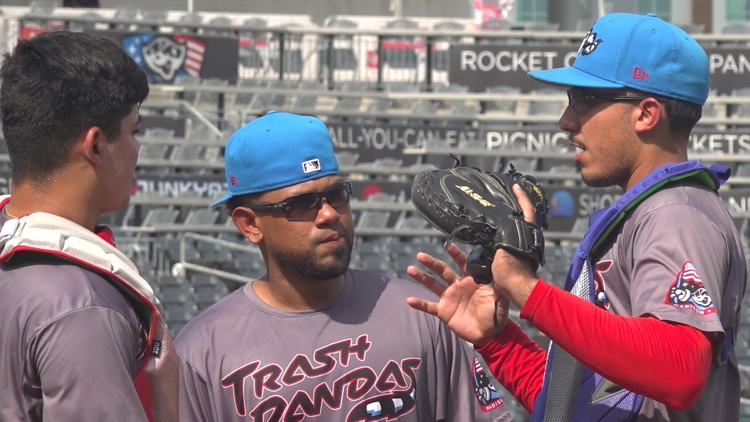
POLICY WIRE — Huntsville, United States — It’s often the small, improbable actions that hold a magnifying glass to larger, grittier realities. So it’s with a minor league baseball team from Alabama, the Rocket City Trash Pandas. Their name alone is—let’s face it—a testament to whimsical Americana. But their recent foray into international humanitarianism, ostensibly a straightforward act of charity, tells a story far more tangled than its simple premise.
Venezuela, battered by years of internal turmoil and suffocating sanctions, doesn’t typically feature on the evening news reels unless it’s about political theater or a deepening economic quagmire. Natural disasters, particularly earthquakes, compound an already horrific situation there. Imagine trying to coordinate a nationwide relief effort when your infrastructure is collapsing, your currency’s a joke, and international bodies—or even sympathetic nations—are navigating a minefield of diplomatic tensions just to send a medical supply kit. It’s a mess, really.
Against this grim backdrop, the baseball team decided to throw its weight, such as it’s, behind relief efforts. One might think, Why them? And why now? But charity, sometimes, isn’t about grand pronouncements; it’s about pockets of humanity connecting across oceans, often out of a gut feeling. The decision was simply this: The [QUOTE_PLACEHOLDER]. That’s what they’re doing. It’s not a national policy shift, it’s not a UN resolution—it’s just a ball club in a mid-sized American city acting on basic human empathy, which, in our increasingly cynical world, feels a bit quaint, doesn’t it?
The global aid landscape is complex, rife with political agendas and, quite frankly, fatigue. Crises erupt continually—from the protracted war in Ukraine to the devastating floods in Pakistan. When an earthquake rocks an already isolated nation like Venezuela, getting effective, unbiased assistance in becomes less about willingness and more about navigating bureaucratic thickets and deep-seated suspicion. It’s less of a straight line, more a dizzying labyrinth.
But how do these seemingly localized acts—a baseball team here, a church group there—actually measure up against the sheer scale of need? The World Bank reported in 2022 that natural disasters displace an average of 26 million people annually, and that figure doesn’t even account for the ongoing political and economic destabilization making countless others refugees in their own countries or across borders. This particular gesture from the Trash Pandas might be a drop in an ocean, but every drop, you know, makes a ripple. And those ripples, sometimes, catch the attention of folks who’d otherwise stay glued to their local dramas.
The team’s involvement, however modest, reminds us of how interconnected humanitarian issues are, even across disparate cultural and geographical zones. Think about it: a baseball team in Alabama raising funds for an earthquake in South America. But this type of international compassion, frankly, isn’t evenly distributed. Countries in the Global South, particularly those embroiled in persistent geopolitical tensions or internal conflicts—like parts of the Muslim world, from Syria to Afghanistan—often see aid flows curtailed or heavily politicized. Relief for a natural disaster there becomes another pawn in a larger strategic game.
📄 POLICY WIRE WHITEPAPER PUBLISHED: PAKISTAN'S NATIONAL SECURITY POLICY PRIORITIES
👉 READ BY CLICKING HEREThe struggle for people in Venezuela to recover is mirrored in various forms across Pakistan’s flood-ravaged regions, where millions continue to require assistance long after the initial news cycle faded. Or in the quiet humanitarian work being done daily for Syrian refugees. Their predicaments—separated by thousands of miles and vastly different cultural contexts—are united by the universal fact of human vulnerability to disaster and, too often, to the political winds of the day. One would think, or perhaps hope, that basic humanity would transcend national interests. Not always, apparently.
Still, for some in Venezuela, this outreach from an unlikely quarter might offer a sliver of hope, a reminder that they aren’t entirely forgotten. It’s a small victory for simple human connection, isn’t it, when governments can’t seem to get their acts together? And it provides a strange, off-kilter sort of counterpoint to the relentless grind of international policy. You can read more about geopolitical shifts and unlikely interventions in the intersection of sports and diplomacy here.
What This Means
This episode, rather than being just a feel-good story, really highlights the often-perilous journey of humanitarian aid, particularly when geopolitical sensitivities are heightened. The American sanctions on Venezuela, intended to pressure the government, often end up complicating aid delivery to ordinary citizens, creating a perverse dynamic where those most in need suffer the most. A minor league baseball team’s efforts, while genuinely benevolent, lay bare the deficiencies of a top-down, state-centric approach to disaster relief. It’s almost like an indictment, if you think about it.
It means the global community often fails to disentangle humanitarian needs from political disputes. This leaves space—and creates a desperate need—for grassroots initiatives. We see this play out time — and again, whether it’s after an earthquake in Turkey or severe drought in Somalia. Organizations and individuals often have to bypass cumbersome official channels, which, while sometimes necessary, also presents its own challenges in terms of scale and coordination. This isn’t just about charity; it’s about a workaround. And it reveals a fundamental, frustrating truth about how the world deals with its deepest pains. Consider also how other unexpected influences shape global affairs.