Victory Tastes of British Chocolate: NASCAR’s Calculated Chicagoland Return Amidst Global Ambitions
POLICY WIRE — JOLIET, Ill. — Sometimes, victory, or at least its true savor, hinges on a simple British confectionery. Just ask Chase Briscoe. On an offseason bonding trip across the Atlantic, the...

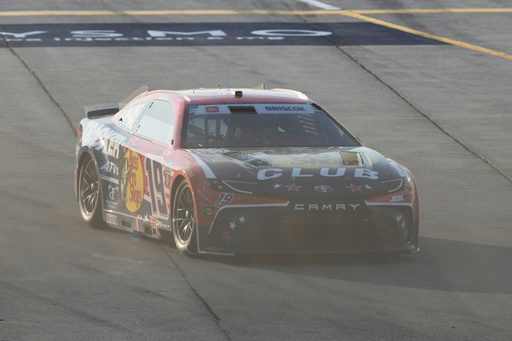
POLICY WIRE — JOLIET, Ill. — Sometimes, victory, or at least its true savor, hinges on a simple British confectionery. Just ask Chase Briscoe. On an offseason bonding trip across the Atlantic, the NASCAR driver found himself quite taken with chocolate buttons. This isn’t just a saccharine footnote; it’s a telling detail in the intricate machinery of professional sport, where personal quirks sometimes brush against the grinding gears of grand economic strategies. Briscoe’s crew chief, James Small, had a standing promise: win on Small’s birthday, and he’d bring a fresh batch back from the United Kingdom. And what do you know? Sunday night, a win arrived—with chocolate to match.
It was a sweet, if circuitous, path to the checkered flag for Briscoe at Chicagoland Speedway, a venue NASCAR had seemingly written off. After pulling the plug following the 2019 season, the circuit returned, a move that speaks volumes about the business of racing, its ebb and flow. They came back, perhaps, for that same visceral thrill a simple, hard-fought win provides. Briscoe held off Christopher Bell, clinching his first Cup Series victory this season. But Bell, who was still nursing a broken left wrist, wasn’t letting an injury—or a competitor—go without a proper fight. The man’s got a [QUOTE_PLACEHOLDER], as team owner Joe Gibbs noted, displaying a singular resolve that can often define contenders in any high-stakes arena.
And resolve, you’d think, is what NASCAR itself needed to exhibit, hauling its enterprise back to Joliet. For years, the circuit tried building interest there in a congested market, but struggled with attendance. You see, even in America, big-league motorsports isn’t always the automatic draw it once was. But the ‘Next Gen cars’ — and a rough, bumpy asphalt offered a new narrative. Rain earlier in the weekend might have dampened the tarmac, causing parking issues, but it didn’t dull the racing’s compelling edge. What was clear, though, was a new, stark imbalance: Toyota, for the first time in a Cup Series race, commanded a stunning seven of the top 10 spots. Yeah, [QUOTE_PLACEHOLDER], Bell conceded, acknowledging the palpable shift in horsepower dominance.
This manufacturer supremacy isn’t just about speed; it’s about investment. Toyota, a global powerhouse, sees brand equity in NASCAR, much like it does across myriad markets, including thriving ones like Pakistan and the broader South Asian landscape. From the busy thoroughfares of Karachi to the dusty highways outside Lahore, Toyota’s presence is inescapable, deeply embedded in the region’s burgeoning auto culture and economy. It’s a testament to the fact that while a specific race might feel insular, its participants, sponsors, and even their appetites for UK chocolate, are intricately wired into a sprawling global marketplace. And these are the subtle dynamics that even casual sports fans rarely register—that global economic currents ripple through everything, even Sunday afternoons at a repurposed track.
Consider the drivers’ fortunes that day. Denny Hamlin, the pole-sitter, stumbled, admitting, [QUOTE_PLACEHOLDER]. He settled for third. William Byron led the most laps, 94 to be precise, securing two stage wins but ultimately finishing fourth. Then there were the calamities: Tyler Reddick’s championship hopes took a massive hit, suffering an oil leak and a radiator replacement that dropped him to 36th. And Kyle Larson? He had qualified second, was running third, then spun on Lap 93, ending up in the wet infield grass and, subsequently, 34th. It’s the unpredictable nature of it all—the precise, expensive machines battling on a raw surface—that truly captivates. That’s why people, even if fewer than before in Chicagoland, still flock. The human drama, for better or worse, remains the constant. We’ve seen similar, almost operatic, reversals on international fields, where global sporting triumphs turn on a single mistake or unforeseen circumstance.
Meanwhile, the NASCAR ‘In-Season Challenge’ continued its march, a fresh economic incentive to spice up the mid-season grind. Briscoe, Bell, Hamlin, — and Ryan Blaney all advanced in the bracket-style tournament, vying for a cool $1 million prize. Byron, Chase Elliott, Todd Gilliland, — and Alex Bowman also moved on. It’s a smart business move, creating micro-narratives within the larger season, akin to the structured playoff formats that shape other international competitions. It’s a method to keep eyeballs on screens and fans in seats, providing additional hooks for engagement, especially when the main event, as it has in places like Joliet, experiences an inconsistent pulse.
What This Means
NASCAR’s decision to return to Chicagoland Speedway isn’t sentimental; it’s a cold calculation in the shifting landscape of American sports entertainment. Reintroducing races in previously abandoned markets suggests a testing of the waters, leveraging new car technologies to re-engage dormant fan bases or attract new ones where attendance previously flagged. Economically, these are events that promise a localized injection of capital, though perhaps less impactful than their peak years. The continued dominance of manufacturers like Toyota signals a competitive arms race that drives innovation but could also create an oligopoly, potentially diminishing the sport’s diversity. It also speaks to the broader brand-building exercises that global corporations undertake, investing heavily in American pastimes that still, even if subtly, project an image of power and reach worldwide, into markets like Pakistan and beyond, fostering recognition and loyalty for their core automotive products. The multi-million dollar In-Season Challenge isn’t just about driver motivation; it’s a clear strategic play to add mid-season gravitas, boosting viewership and associated revenue streams in an increasingly fragmented media environment. For regional economies, securing such events offers temporary booms but reflects a persistent struggle for legacy sports to maintain cultural — and thus financial — primacy.