


Silent Pyre: Western Wildfires Engulf Futures, Echoes in Asia’s Air
POLICY WIRE — Grand Junction, Colorado — The air hung heavy with residual smoke and an almost unbearable stillness. This past Sunday, not the roar of a wildfire, but the hushed, grief-laden cadences...

POLICY WIRE — Grand Junction, Colorado — The air hung heavy with residual smoke and an almost unbearable stillness. This past Sunday, not the roar of a wildfire, but the hushed, grief-laden cadences of memorial speakers filled a space where silence usually denotes reprieve. But reprieve wasn’t on the docket, not for three souls gone too soon, nor for a landscape continuously being remade by fire. This grim tableau unfolded as America’s West burns with an unsettling regularity, turning summer into a season of environmental anxiety and human loss. Wildland firefighters, a breed apart, gathered to reckon with a cost no one wants to pay.
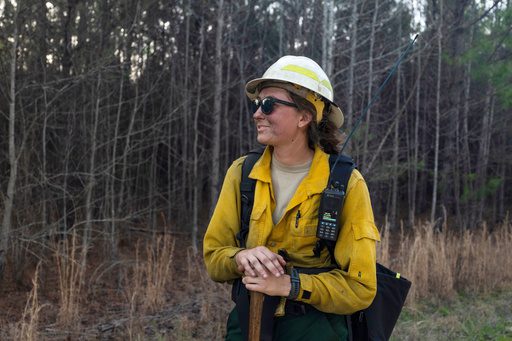
It’s about Emily Barker, Nick Hutcherson, — and Sydney Watson. They were ordinary people, really, just doing extraordinary, bone-wearying work. They left a footprint, yes, but not the one anyone desired. A week prior, on June 27, in the rugged terrain near the Colorado-Utah border, they were overwhelmed—trapped by flames—despite deploying emergency protective shelters, described as a [QUOTE_PLACEHOLDER] last resort [QUOTE_PLACEHOLDER] for firefighters. This isn’t heroism for the cameras. It’s the stark, brutal reality of a job where the only way out, sometimes, isn’t out at all. Other crew members sustained burn injuries too. It’s a cruel game, this dance with nature’s fury. The wildfire that claimed them is now mostly contained, but it’s just one pixel in a much larger, more terrifying panorama.
The numbers don’t lie, they just underscore the scale of the ongoing environmental catastrophe. Consider this: nearly 40 large fires are still going strong across the West. These aren’t flickering embers; these are monstrous blazes chewing through terrain, from the arid stretches of New Mexico to the frozen edges of Alaska. Over a holiday weekend, we saw fresh evacuation orders for Colorado’s Aspen Acres fire, a behemoth that by Sunday had already consumed about 136 square miles of land south of Colorado Springs, damaging or destroying over 200 structures as authorities reported. National Guard soldiers were deployed—not to a battlefield, but to direct traffic at checkpoints around a burning, emptying homeland. But what feeds these infernos? Months of dry weather, a winter’s stingy snowfall, — and capricious winds. It’s a perfect, tragic storm that keeps getting worse.
Brian Fennessy, the U.S. Wildland Fire Service Chief, couldn’t have put it more plainly: [QUOTE_PLACEHOLDER] The weight of this tragedy is felt way beyond our wildland fire community. [QUOTE_PLACEHOLDER] You bet it’s. Barker, a 38-year-old Michigan native, had been a trailblazer—literally. She’d taught, shaped young lives, then took on the wilderness itself. Sarah Brubeck Schnurbusch, a friend, remembered Emily saying she had never seen someone so excited to go to work. Imagine that kind of passion, pitted against such indifferent force.
Then there’s Nick Hutcherson. Twenty-seven. A Navy veteran, aiming for a physical therapy doctorate. From Glendale, Arizona, Nick was a dedicated practitioner of Muay Thai. His simple, stoic approach to hardship—[QUOTE_PLACEHOLDER] easy day [QUOTE_PLACEHOLDER] was his favored phrase—encapsulated a certain admirable grit. Because Nick had an uncommon ability to face hard things with optimism, humility — and a smile. How often do we see that anymore?
Sydney Watson, also 27, hailed from Warrior, Alabama. A University of Tennessee Southern pitcher. She wanted to see more women on the fire line. And learn from other women in the field. It makes you think. Her application for a training program spelled it out: she’d known from a very young age she wanted to be a firefighter. Her path was set, until it wasn’t. Sarah Fisher, deputy chief for fire — and aviation management at the U.S. Forest Service, succinctly summed up the profession: [QUOTE_PLACEHOLDER] The work demands long days, heavy burdens and quiet acts of bravery. [QUOTE_PLACEHOLDER] And you won’t hear many arguments there.
What This Means
This isn’t just a Colorado problem, or even solely an American West problem; it’s a global warning sign—a flickering red light in the political and economic landscape. Wildfires are a particularly unforgiving feedback loop: climate change dries out forests, creating perfect tinder, which then releases massive amounts of carbon, worsening global warming. It’s an environmental snake eating its own tail. We’re witnessing governments scramble, throwing billions at prevention and suppression, diverting resources from other pressing issues. Local economies, heavily reliant on tourism or agriculture, get savaged. Property values plummet, — and reconstruction costs strain local, state, and federal budgets. Look, it’s plain to see: the scale of these events means disaster management can’t remain siloed within specialized agencies; it’s a matter for treasury departments and legislative bodies.
But there’s a deeper, more insidious parallel here, one that resonates far beyond the Western Hemisphere. Consider the annual struggle across the Indus River Basin, where agricultural stubble burning and industrial emissions in cities like Lahore and Delhi transform winter air into a toxic soup. The source might differ—human-made pollution versus natural conflagration—but the outcome is a shared experience of communities grappling with widespread environmental hazards that endanger health and livelihoods. Both scenarios demand not just localized firefighting or pollution control, but a cohesive, often unpopular, policy push that transcends immediate economic interests. And both highlight a chronic struggle: nations, rich or poor, are continually under-prepared for the environmental reckoning now visibly underway. It’s less about a single fire, — and more about how much heat the global system can take before it simply breaks.