
Chocolate and Comebacks: NASCAR’s Risky Return to Chicagoland Sparks Broader Questions
POLICY WIRE — Joliet, Illinois — America loves a comeback story, doesn’t it? Especially when corporate interests decide that an old flame, long abandoned, is suddenly worth another shot....

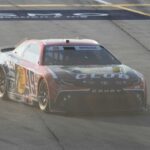
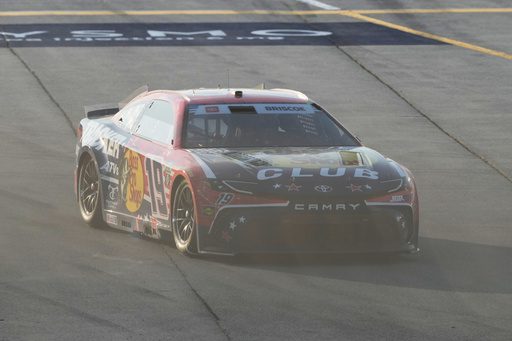
POLICY WIRE — Joliet, Illinois — America loves a comeback story, doesn’t it? Especially when corporate interests decide that an old flame, long abandoned, is suddenly worth another shot. NASCAR, having waved goodbye to Chicagoland Speedway years ago, rolled the dice last weekend, banking on nostalgia—and perhaps a revised market strategy—to revive an event that once sputtered. And while driver Chase Briscoe clinched a victory, fueled, in part, by the promise of British chocolate buttons, the real sweet triumph here might be NASCAR’s audacity to try again in a notoriously tough market.
It’s a peculiar twist, tying high-octane racing to confectionery, but there you have it: a championship driver chasing a win not just for points or glory, but for a stash of chocolate buttons. That’s what crew chief James Small promised Briscoe if he snagged the checkered flag on Small’s birthday. Briscoe delivered. “They were pretty dang good,” he reportedly mused afterwards, enjoying his hard-won sweets moments after holding off Christopher Bell at the 1.5-mile oval. But don’t get it twisted; this wasn’t just about a driver’s craving for imported cocoa.
The return to Joliet wasn’t a sentimental journey; it was a business move, plain — and simple. NASCAR, having struggled with local attendance for years before pulling out after the 2019 season—after hosting 19 Cup races there—had flirted with downtown street courses. But this return, with its ‘Next Gen’ cars pounding the very asphalt that once felt forgotten, signals a fresh look at familiar ground. They’re figuring out what sticks, what brings the casual fan back into the fold in an entertainment landscape oversaturated with options. And it seems a bit like they’re feeling around in the dark for what works.
Joe Gibbs, the legendary team owner, wasn’t just waxing poetic about his driver Christopher Bell’s resilience in his recent arm injury—he also implicitly understood the broader context. “I think he’s handled that as well as you can handle it,” Gibbs remarked, acknowledging Bell’s grit. “He’s got a burning desire to stay in there and win.” You could say the same about NASCAR itself, which clearly has a burning desire to reclaim some market share, despite past stumbles. But what does a singular race result truly signify when an entire industry is looking to reignite passion in what’s arguably a saturated market?
Because frankly, attracting new eyes to motorsport in North America is an ongoing chess match. Meanwhile, in regions like Pakistan — and other parts of South Asia, the sports market is its own wild frontier. Organizations there often grapple with different forms of infrastructural challenges and evolving fan bases—trying to establish traction for diverse sports beyond cricket, just as NASCAR seeks to re-establish its footing where it previously faltered. It’s a global quest for eyeballs and market penetration, whether it’s a re-run in Illinois or a brand-new endeavor halfway across the world.
So, Briscoe’s first Cup Series win of the season, after years of trying to get this place back on the calendar, was sweet in more ways than one. He clinched it, sealing his place in the second round of NASCAR’s In-Season Challenge—a bracket-style tournament that’ll hand out a cool $1 million to its victor. That kind of money—that incentive—certainly helps focus the mind, doesn’t it? Not just for drivers, but for the entire corporate apparatus deciding which dusty track gets a second chance, and which, well, doesn’t.
What This Means
NASCAR’s calculated revival of Chicagoland Speedway isn’t just about a race; it’s a corporate strategy play with significant implications for the broader sports economy. Its decision to revisit a market it once deemed unsustainable speaks volumes about the continuous — and often desperate — search for audience engagement in a fragmented media landscape. This isn’t merely an act of contrition; it’s a data-driven gamble. The hope, clearly, is that new car models and perhaps a refreshed marketing approach can unlock untapped fan loyalty, or at least new viewership revenue streams, that weren’t there five years ago. Economically, a successful return could mean a boost for Joliet, but sustaining that interest against Chicago’s behemoth sports scene is a challenge that’ll always hover. Policy Wire has often noted similar calculated risks by governments in emerging economies, particularly in South Asia, where grand infrastructure projects or new sports leagues are launched with hopes of boosting tourism and local economies, often with mixed results—see, for instance, the ongoing discussions about state investment in sports in Pakistan or the Gulf states, which, like NASCAR’s move, are fraught with their own political and financial risks.
The win itself, tying into the burgeoning In-Season Challenge, signals NASCAR’s pivot towards narrative-driven events beyond the championship season, aiming to inject more drama and financial stakes throughout the year. For policy makers, it’s a case study in how established entertainment entities constantly re-evaluate their portfolios, weighing legacy against commercial viability. This balancing act, whether in motorsport or urban development projects—it shapes everything. You simply can’t escape it.