

Red Card Reversal: How a Presidential Call Shook FIFA, and Maybe More Than Just Football
POLICY WIRE — Geneva, Switzerland — The bus ride felt electric, not from the usual pre-match jitters, but because smartphones across the aisle suddenly erupted. Pictures of a teammate, Folarin...

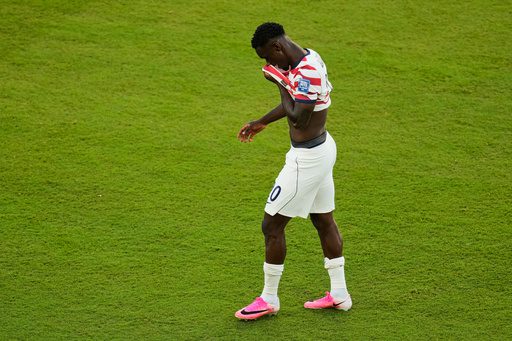
POLICY WIRE — Geneva, Switzerland — The bus ride felt electric, not from the usual pre-match jitters, but because smartphones across the aisle suddenly erupted. Pictures of a teammate, Folarin Balogun, splashed across screens — not banished, but back. This wasn’t a leaked roster. This was news of a red card, one of the World Cup’s most debated, vanishing into thin air, all thanks to some highly unconventional diplomacy.
It’s a peculiar thing, seeing a disciplinary action evaporate. Especially one for something as unambiguous as a red card. Balogun, a forward who’d really made a mark in the tournament, had earned it for a pretty awkward stomp on Tarik Muharemović of Bosnia-Herzegovina during a prior match. You’d think that’s pretty cut-and-dried: automatic one-game suspension. But then the phone rang, halfway across the world, right to FIFA’s big boss. Suddenly, the seemingly etched-in-stone rules of global football looked a lot more like a suggestion.
The call, it turns out, was from U.S. President Donald Trump, directly to FIFA President Gianni Infantino. He was just asking FIFA to review the red card, sources familiar with the matter say, doing it on condition of anonymity because, hey, it’s not exactly standard operating procedure for heads of state to get involved in foul calls. The result? FIFA’s announcement came Sunday, declaring the suspension lifted for the round of 16 clash against Belgium. This really isn’t how things typically go.
And boy, did it stir up the hornet’s nest. Trump, predictably, was thrilled, issuing a statement on social media: Thank you to FIFA for doing what was right, and reversing a great injustice! Belgium? Not so much. The Royal Belgian Football Association (RBFA) said it was [QUOTE_PLACEHOLDER] Belgian coach Rudi Garcia, his patience obviously frayed, sniped through a translator: I didn’t know that in the offices of FIFA the fifth of July was the first of April in Europe. Talk about your back-handed compliments. He went on to assert, The Belgian federation doesn’t defend itself, it doesn’t protect the national team. She defends football in general, she defends her integrity, her ethics. I think it’s the first time in the history of the World Cup that there’s this kind of decision. He’s got a point. It’s appeared to be the first time since 1962 that a red card during a World Cup didn’t result in a suspension, that’s how rare this is. That was Brazilian legend Garrincha, by the way, and that decision came with lobbying, too, including from Chile’s President at the time. So, precedent, sure, but also a glaring anachronism in modern sport.
The U.S. Soccer Federation simply got a message in FIFA’s portal at 10:31 a.m. EDT. The gist? The implementation of the match suspension is suspended for a probationary period of one year. FIFA’s Article 27 of disciplinary committee rules was trotted out to justify it, saying, The judicial body may decide to fully or partially suspend the implementation of a disciplinary measure. Which is, you know, technically true. But the optics, they’re just awful.
US coach Mauricio Pochettino, understandably, was all smiles. We were punished enough against Bosnia-Herzegovina to play with 10 men 30 minutes in a decision that was completely unfair, he mused. He wasn’t at all surprised by Trump’s intervention, either. I came from a culture, Argentina or Europe, that football, soccer is a religion, more than the religion, he noted. A sentiment widely understood across South Asia and the Muslim world, where football’s passions can dwarf political squabbles – and where institutional fairness, or the perceived lack thereof, hits particularly hard. If we go keep going, pushing on, maybe one step more tomorrow you will see that the sport is magic, that the sport is amazing, is so powerful, unite people, unite a country like us. That unifying power, however, gets tricky when a phone call seems to trump (no pun intended) transparent regulations. Because it really starts to chip away at the credibility everyone depends on, especially when the global game itself, which transcends borders and often oppressive regimes, claims to operate on principles of equity.
📄 POLICY WIRE WHITEPAPER PUBLISHED: PAKISTAN'S NATIONAL SECURITY POLICY PRIORITIES
👉 READ BY CLICKING HEREAnd. Folarin Balogun himself, for what it’s worth, scored 13 Ligue 1 goals last season for Monaco and has 12 goals in 30 international appearances. This season, he’s bagged three goals in the World Cup, matching Landon Donovan’s 2010 record, just shy of Bert Patenaude’s four from way back in 1930. He’s good, everyone knows it. His teammate Christian Pulisic put it bluntly: If you look at the foul, it was just zero intent at all. I felt like there was much worse ones that went on this tournament. But intention isn’t really the question here, is it? It’s about rules. And, frankly, who gets to bend ’em. But sometimes rules, like reputations, just don’t bend. They break. And it just makes you wonder, doesn’t it, about the big picture here.
What This Means
This whole fracas, well, it’s not just a footnote in World Cup history. It’s a pretty stark object lesson in how soft power and, let’s be honest, raw political clout can play out even in the seemingly neutral arena of international sports. FIFA, an organization that constantly grapples with its own image problems, just got a fresh dose of skepticism sloshing all over it. This decision won’t exactly endear it to nations that already eye Western influence and global bodies with a healthy dose of suspicion—countries that are home to millions upon millions of fervent football fans, from Lahore to Jakarta.
It opens a Pandora’s box. Every coach from here on out will be thinking: What about the next red card? What happens then? Norway coach Ståle Solbakken hit it right on the head, asking precisely that: Is there going to be some committee somewhere that’s going to take that card away? It’s a bad, bad, bad, bad, bad decision that will hurt the World Cup. He’s not wrong. It really erodes the perceived integrity, you see. When rules can be overwritten by a phone call from a major political figure, it cheapens the game for everyone, but particularly for smaller nations without that kind of geopolitical pull. It sends a message, whether intended or not, that some players — and teams are more equal than others. And that’s a dangerous game for any international organization, especially one trying to project global fairness and inclusivity.