


Liberty Flames: From Fiesta Flash to Fallow Field? The Reckoning of ’26
POLICY WIRE — Lynchburg, USA — For an outfit that claims just eight years of FBS eligibility, Liberty University’s football program has a curious way of feeling entrenched. It’s almost as if its...

POLICY WIRE — Lynchburg, USA — For an outfit that claims just eight years of FBS eligibility, Liberty University’s football program has a curious way of feeling entrenched. It’s almost as if its presence has been etched into the Group of Five consciousness for ages longer than the calendar suggests. But that’s the rub, isn’t it? Perception rarely aligns neatly with stark facts. Take, for instance, the recent past: Has it, truly, only been three years since these very Flames sported a gleaming 13-0 record, staring down Oregon in a New Year’s Six Fiesta Bowl? Seems a lifetime ago, particularly after last year’s sobering reversal.
Following a business-as-usual, almost clinical, 5-0 launch in 2024, the edifice began to crack. Not gradually, but decisively. The ensuing record, a grim 7-11 run, wiped the shine right off that initial burst. It made you wonder. Made you ask: Was the dream simply too fragile? Was the earlier success more an anomaly than an establishing shot? [QUOTE_PLACEHOLDER]
Last season, you see, was no mere slump. A 4-8 ledger marked its worst finish across eight years, worse by a significant margin of two wins. The campaign never found its footing—it simply expired with a whimper. But you can’t count Liberty out, not yet. Its mechanism for attracting talent, for instance, operates at a level most other Conference USA contenders can’t even dream about. They’ve got money, sure. And a savvy knack for leveraging the transfer portal, too. There’s also an undeniable heap of returning experience that ought to provide some bedrock. And now, the narrative insists, everything’s supposed to crank right back up, good as new.
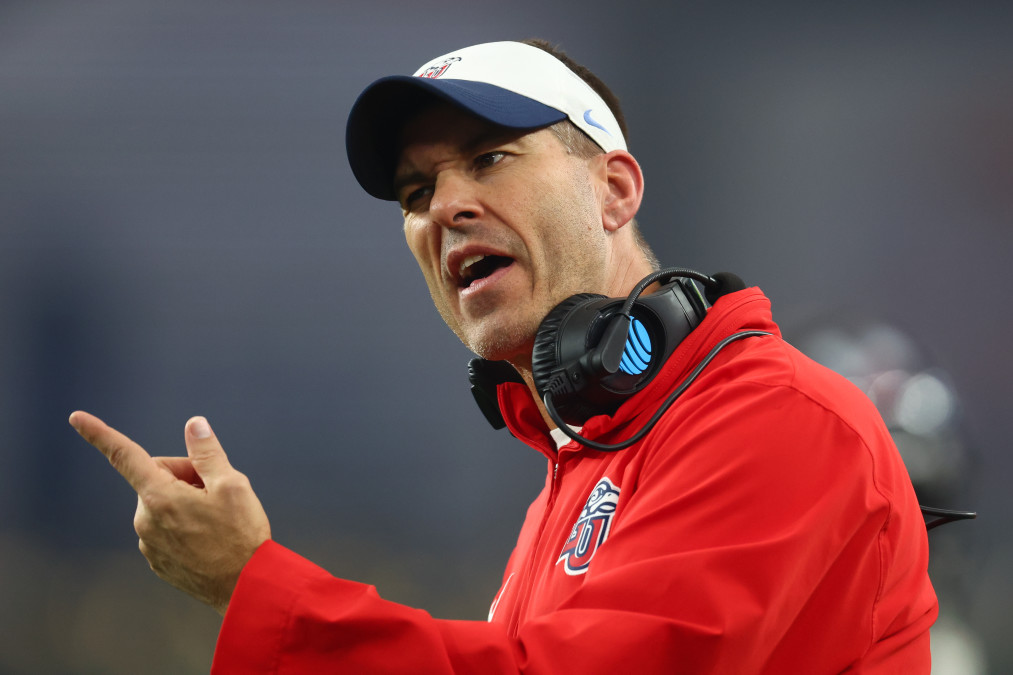
Head Coach Jamey Chadwell, entering his fourth year, boasts a 25-13 record with the Flames, 64-35 overall. Those aren’t bad numbers. Yet, the question gnaws: Can this roster, with its overhauled quarterback room and defensive scheme, deliver the kind of high-standard football it once promised? Can the program secure a Conference USA title and perhaps, just perhaps, jostle for a College Football Playoff spot, or will it find itself scrapping just to qualify for a minor bowl game? That’s a significant chasm to bridge.
Offensively, coordinator Newland Isaac inherits an attack that, while accumulating yards (4,674 total offense yards versus 4,510 for opponents), often lacked a scoring punch. The Flames went 1-6 when failing to get past 27 points. But the expectation now is for a unit brimming with experience — and a far higher upside. Four starting offensive linemen are back, fortified by the addition of Alex Birchmeier, a guard poached from Penn State. And because of this beefed-up front, the running back stable looks especially loaded. Sure, top rusher Evan Dickens and his 1,339 yards and 16 touchdowns packed up for Boston College, but a parade of proven talent — Kanye Udoh from Arizona State, Kam Davis from Florida State, Peyton Jones from Duke, and Terron Kellman from Wyoming — means the ground game shouldn’t miss a beat.
Where the aerial attack struggles, or struggled last year, was accuracy. Quarterback Ethan Vasko, a Coastal Carolina import, notched close to 2,000 yards and ten scores but completed only 57% of his passes and tossed a regrettable 12 interceptions. Now, the battle for QB supremacy includes Deshawn Purdie from Wake Forest and the mobile Jaylen Henderson, both looking to inject some consistent downfield action. Turnovers were another millstone. The Flames committed 21 of them, yes, but the real issue was the bulk errors. They turned it over three or more times in four games, tallying a dismal 1-7 record in those contests. Conversely, they managed a solid 3-1 when playing clean.
On the other side of the ball, the defense, an even more uneven proposition, now operates under former Virginia Tech assistant Shawn Quinn. The front six appears sturdy with returning veterans. But it’s the secondary, almost entirely a confection of transfers, that raises an eyebrow. Yet, even here, pieces like Boston College cornerback Ashton McShane and safeties Ashton Whitner (Ball State) and D-Icey Hopkins (Georgia State) are slotted in for immediate impact. And the pass rush? It’s slated for significant improvement. This isn’t merely hopeful chatter; the data suggests the Flames were 120th in the nation with 16 sacks and 126th in tackles for loss, with ten of those sacks clustered in just three games. You don’t get much worse than that.
But the biggest defensive killer? Third-down stops. Or rather, the abject lack thereof. Opponents converted 50% or more of their tries against Liberty in six games, including the last three losses. You just can’t stay competitive operating like that. But now, with veterans like Derrell Farrar, who spent three years at App State and led the team with 71 tackles and a sack last season, providing leadership, perhaps a corner is turned. Farrar’s experience — four years under his belt — combined with rising stars like Aidan Vaughan could be the adhesive this defense badly needs.
And speaking of adhesives, the transfer portal is Liberty’s glue, isn’t it? The program once again landed Power Four-level talent eager for more playing time. This isn’t common. In a league where most lament losses, Liberty, usually, wins the portal. No truly crippling departures this year, they claim, and new additions like wideout Makai Jackson (Indiana), with his 1,163 yards and seven scores at App State before his Indiana stint, and offensive lineman Alex Birchmeier (Penn State) are expected to hit the ground running. It’s a talent influx, pure and simple.
What This Means
The arc of Liberty’s program, fluctuating between a dream season and a dismal return, isn’t merely a sporting curiosity. It’s a mirror, albeit a distorting one, to the volatile dynamics shaping economies and political landscapes across the globe—especially in regions like South Asia. Consider Pakistan, for example: a nation wrestling with cyclical economic booms and busts, struggling to convert potential into sustained prosperity. Just like a football program riding a transient wave of talent and then facing the hard reality of inconsistent performance, developing nations frequently encounter external pressures and internal inefficiencies that disrupt progress. The transfer portal, for instance, reflects a modern reality of talent mobility—a ‘brain drain’ in economic terms. Highly skilled individuals, like promising players seeking greener pastures, migrate to institutions or nations offering better opportunities. Pakistan, like many emerging economies, faces a constant battle to retain its educated elite, losing scientists, doctors, and engineers to wealthier nations. Liberty’s ability to attract ‘Power Four-level talents’ underscores the gravitational pull of resources, reputation, and opportunity, a challenge governments globally, but acutely in the Muslim world, constantly contend with in trying to foster homegrown success.
So, the prevailing wisdom suggests last year was just a blip. Head coach Jamey Chadwell, we’re told, grappled with private health issues—matters far eclipsing anything football-related, obviously—and now everything appears settled. On the field? The offense, initially sluggish, should emerge sharper. The defense, prone to late-season collapses, looks deeper — and wiser. Expect an 8-4 season, they say. But in the unpredictable realm of collegiate athletics, much like international policy, ‘blips’ have an unsettling habit of transforming into troubling patterns.