

Omani Waters Turn Deadly: Three Indian Sailors Perish in US Strike on Commercial Vessel
POLICY WIRE — Dubai, UAE — It’s not the thud of waves against a hull that sends shivers down a captain’s spine these days. No, it’s the increasingly frequent thud of geopolitical maneuvering on what...

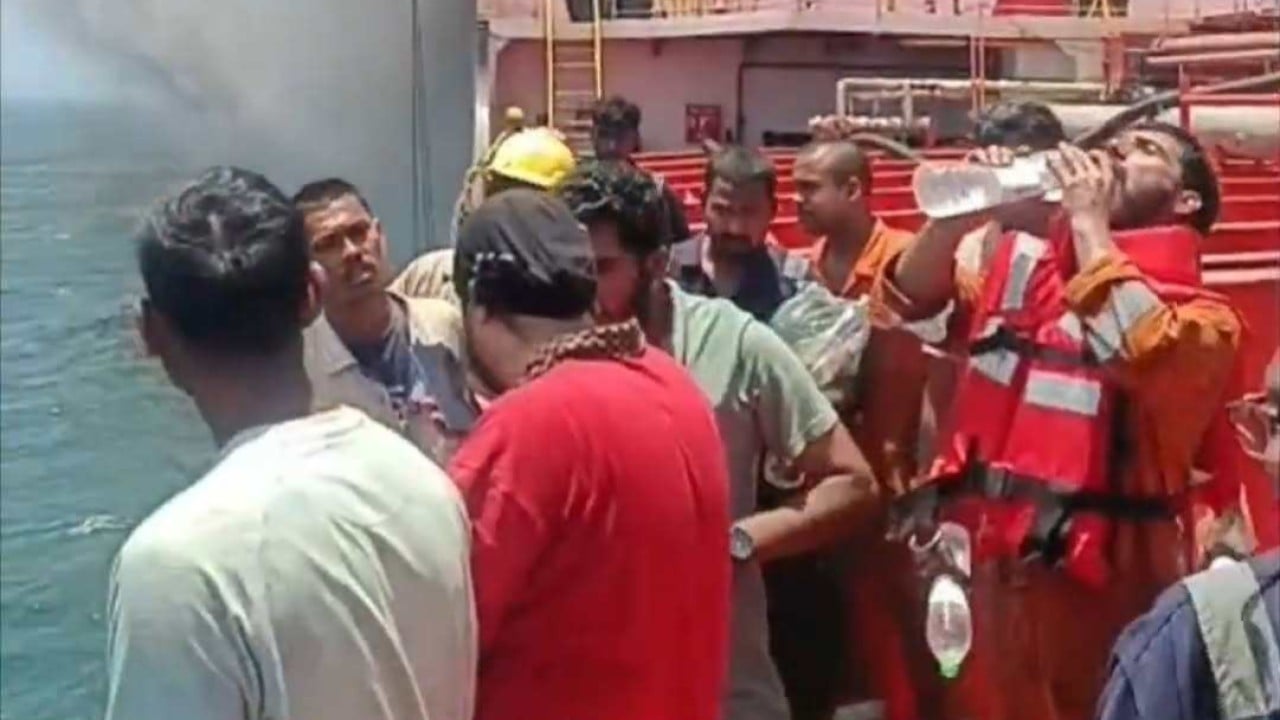
POLICY WIRE — Dubai, UAE — It’s not the thud of waves against a hull that sends shivers down a captain’s spine these days. No, it’s the increasingly frequent thud of geopolitical maneuvering on what were once quiet shipping lanes. This week, those abstract power plays got brutally concrete. Three Indian sailors, mere cogs in the global trade machine, lost their lives following a strike by the United States against a commercial vessel operating off the coast of Oman.
Think about it for a minute. Ordinary men, making an extraordinary living on the high seas, caught squarely in the crosshairs of regional animosities. New Delhi’s shipping minister delivered the grim update on Thursday. This wasn’t some remote, high-altitude drone strike on an unidentifiable target. This was a direct hit on a commercial ship, the Palau-flagged MT Settebello, confirmed by the minister himself. What does that mean for the thousands of South Asian seafarers who ply these volatile routes? It means danger, stark and immediate. And it means the delicate balance of maritime commerce is now wobbling precariously, one unlucky voyage at a time.
The minister offered words that barely glossed over the tragedy’s sharp edges, a standard diplomatic nicety in the face of absolute loss. Sarbananda Sonowal, the shipping minister, stated: [QUOTE_PLACEHOLDER] But unfortunate barely covers it, does it? We’re talking lives here. We’re talking families suddenly stripped of their main providers back home. It’s a jolt for Delhi, absolutely, but also for Karachi and Chittagong—any port city where livelihoods depend on those cargo ships.
Because maritime trade isn’t just a quaint footnote in international relations. It’s the very artery of global supply chains, particularly for nations heavily reliant on exports — and imports. Pakistan, for instance, a nation often grappling with its own economic fragility, watches these events in the Strait of Hormuz and Gulf of Oman with an almost primal anxiety. Its entire energy supply — and a massive portion of its trade transit these same troubled waters. Any sustained disruption here would hit economies like theirs—and Bangladesh’s and Sri Lanka’s—with crippling force.
And let’s not pretend these are isolated incidents. We’ve seen Gulf Waters Turn Ominous more than once lately. This isn’t just about three individuals, horrific as that loss is. It’s about a pattern, a disturbing escalation in what were already tense shipping lanes. A day before the announcement, the strike occurred. Initially, the three men were listed as missing, a gut-wrenching limbo for those back home, but that agonizing uncertainty ended with the worst possible news.
The minister confirmed the finality: “Sadly, three Indian seafarers initially reported missing are now confirmed dead after bodies have been located and identified.” It’s a short, clinical sentence for an unspeakable sorrow. The names of those men, their stories, their dreams? Lost in the shuffle, reduced to a terse official statement. India’s foreign ministry—which often acts as the de facto guardian for its immense diaspora—is likely grappling with the broader implications, knowing full well that a significant chunk of the world’s merchant marine hails from their shores. Roughly 14% of the world’s seafarers are Indian citizens, according to reports by the International Chamber of Shipping and BIMCO (the largest international shipping association), making their safety a non-negotiable foreign policy concern.
What this incident really brings to light isn’t just the human toll, though that’s substantial enough. It’s the sheer indifference—or perhaps just the unintended consequences—of major powers asserting dominance in strategically crucial areas. The Persian Gulf, and the adjacent Gulf of Oman, represents arguably the most sensitive chokepoint for global oil transit. It’s where superpowers flex, where regional players posture, and where commercial vessels, often with crews from places like Kerala or Sindh, become collateral damage.
You can bet countries throughout the Muslim world, from Riyadh to Jakarta, are watching this with increasing discomfort. They too rely heavily on these sea lanes for trade, for energy. The economic ripple effects of increased insurance premiums, diverted routes, or outright cessation of services would be catastrophic, not just for them, but for the entire global economy. But honestly, it’s the personal cost, isn’t it, that really cuts deep? One day you’re on the job, the next you’re a casualty of someone else’s conflict.
What This Means
This incident—a commercial vessel, foreign flag, US action, Indian casualties—screams proxy warfare’s insidious reach. Economically, this pushes marine insurance rates in the Gulf sky-high, forcing shipping companies to recalculate risk versus reward. Smaller shipping outfits, often ferrying goods to and from South Asian and Middle Eastern ports, will struggle to absorb these escalating costs. It directly translates into higher consumer prices for everything from oil to electronics, especially for import-dependent nations like Pakistan. Politically, New Delhi is in a tight spot. It needs to condemn the deaths of its citizens—and it has, somewhat delicately—but also maintain complex relations with Washington and crucial energy partners in the Gulf. This kind of event can stir considerable anti-American sentiment among a population highly sensitive to the perceived neglect of its expatriate workers, particularly those on the frontline of global commerce. It forces Delhi to choose between economic pragmatism — and nationalist outcry. That’s a tough needle to thread. it shines a harsh light on the vulnerability of the global maritime workforce—a workforce disproportionately made up of economic migrants from the Indian subcontinent and Southeast Asia. Their lives, unfortunately, become statistics in a larger geopolitical game. Expect increased pressure on all naval forces in the region—US, Iranian, and others—to better protect civilian shipping. Or, at the very least, to stop inadvertently turning them into targets. The implications here for supply chain stability, human rights, and the balance of power in the Arabian Sea are frankly unsettling. These waters aren’t just an invisible casualty zone anymore; they’re a stage for a tragic, deadly drama.