


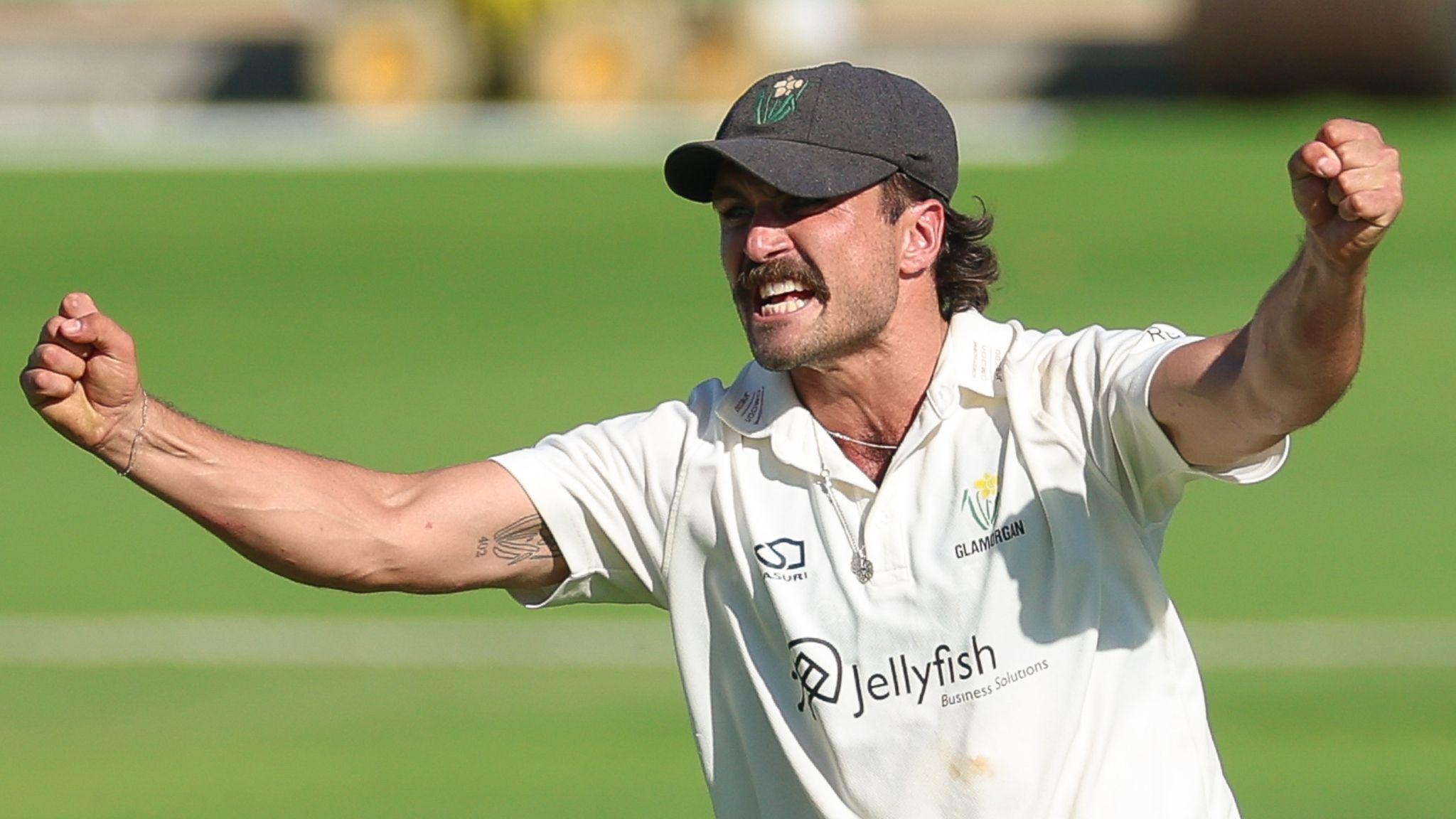
Welsh Whirlwind: Glamorgan’s Shock Division One Ascent Jolts English Cricket Establishment
POLICY WIRE — Cardiff, Wales — For years, English county cricket’s Division One has been a familiar, if somewhat ossified, landscape. A polite rotation of seasoned Goliaths, occasionally disturbed by...

POLICY WIRE — Cardiff, Wales — For years, English county cricket’s Division One has been a familiar, if somewhat ossified, landscape. A polite rotation of seasoned Goliaths, occasionally disturbed by an ambitious newcomer destined to flounder. Then Glamorgan arrived. Nobody, truly, expected this.
It’s not just that they’ve held their own; it’s the sheer audacity with which they’ve carved out a space amongst the sport’s entrenched elite. This isn’t just about winning a few games; it’s about a club, long relegated to the purgatory of Division Two, showing up the punditry—and arguably, the financial logic—that dictates the hierarchy of the sport.
The Welsh outfit, fresh from their lower-tier dominance, found themselves catapulted into the shark tank of Division One for the first time since 2005. Most forecasts had them clinging by their fingernails, if not outright plummeting back down. Yet, as the red-ball fixtures concluded their latest block, Glamorgan wasn’t just surviving; they were thriving. They clobbered Surrey, of all teams, by seven wickets at home. And just like that, they’d cemented a startling fourth place in the league table, according to ECB data. Fourth!
Team captain Kiran Carlson, a man now appointed first-class skipper for 2026, seems to wear the surprise—and the burden of expectation—with an understated grin. “Look, we came up, didn’t we? Knew it’d be a brutal grind, every single match,” Carlson muttered, a slight weariness in his voice that belied the team’s stellar run. “But the lads, they don’t back down. We keep things pretty simple. And yeah, there’s a real good vibe. You feel it in the room.” He isn’t wrong. This isn’t a team built on star power; it’s a cohesive unit where contributions ripple across the squad, often from unexpected corners. That’s a dangerous kind of momentum, particularly when nobody’s predicting it.
And now, the focus shifts. From the grinding tactical chess of four-day matches, it’s all about the dizzying T20 format. Glamorgan now face Middlesex on Friday in Cardiff, kicking off a block of six rapid-fire Vitality Blast games. These shorter contests have been, shall we say, dramatic. Four of their six T20 outings so far have been decided on the final ball. Talk about drama—it’s not for the faint of heart.
Assistant coach David Harrison, who was part of that ill-fated 2005 squad that slipped from the top flight, views the current chaos with a veteran’s bemusement. “Honestly? The amount of last-ball finishes? It’s not great for your blood pressure, is it? As a coach, you’re constantly on the edge,” Harrison confessed, a wry chuckle escaping him. “But it tells you something. It says the lads are fighting. And that’s what matters, doesn’t it?” Harrison, clearly a man who’s seen the game’s tides turn, maintains a stoic confidence that borders on quiet defiance. He’s not surprised, he insists, remembering the raw talent bubbling in their Division Two season. And he knows his team isn’t just surviving the big league, they’re playing “really good stuff.”
Because Glamorgan’s journey speaks to a broader, unspoken narrative within global cricket: the rise of regional pride, even against the homogenizing forces of massive franchise leagues. In a world where talent markets are increasingly commodified and drawn to the flash and cash of events like the IPL or the PSL (Pakistan Super League), Glamorgan’s grounded, collective effort is an outlier. It reminds us that there’s still a beating heart in the local game, a community bond stronger than big contracts or global viewership. While many eye the glitzy stages abroad, this Welsh squad is quietly proving that solid, unyielding county cricket can still produce fireworks.
They’ve put up some big individual numbers, sure, with Carlson’s 209 runs against Hampshire and a T20 century against Somerset standing out. But don’t misunderstand—this isn’t a one-man show. That’s the whole point. Every player seems to step up exactly when the pressure’s highest. It’s a grit-and-guts ethos, a refusal to roll over. And for the casual observer, that’s pretty entertaining.
What This Means
Glamorgan’s surprising rise isn’t just a heartwarming sporting yarn; it carries genuine political and economic ramifications within the English cricket establishment. Their continued presence, and indeed their strong showing, in Division One directly challenges the unspoken assumption that clubs from historically less wealthy or prominent regions — like Wales — are inherently subordinate. This isn’t merely about cricket; it’s about representation, regional identity, — and the fair distribution of resources.
A successful Glamorgan elevates Welsh sporting pride and potentially opens doors for more investment into grassroots cricket outside England’s traditional heartlands. Economically, staying in Division One means access to better broadcast deals, higher gate receipts, and crucially, an enhanced draw for future talent, including those from global sports economies where cricket is king. It puts them in direct competition for skilled players who might otherwise gravitate towards bigger, historically wealthier clubs or more glamorous international T20 stints.
If Glamorgan keeps this up, they aren’t just disrupting the league table; they’re making a compelling case for a more decentralized, meritocratic approach to cricket development, potentially forcing a recalibration of how power and money flow through the English and Welsh cricketing landscape. It suggests that good management, astute scouting, and sheer determination can, at times, triumph over deep pockets and entrenched advantage. That’s a message worth hearing, whether you’re a fan of cricket or a policy analyst watching market dynamics.