


The Invisible Casualty: Red Sea Turmoil Claims Indian Lives, Stirs Delhi’s Fury
POLICY WIRE — New Delhi, India — The unforgiving churn of global shipping, a system often cloaked in economic abstractions, sometimes — always — spits out names, faces, and unspeakable sorrow. It’s...

POLICY WIRE — New Delhi, India — The unforgiving churn of global shipping, a system often cloaked in economic abstractions, sometimes — always — spits out names, faces, and unspeakable sorrow. It’s an inconvenient truth for capitals far removed from the ship’s keel. The brutal arithmetic of international trade, especially in contested maritime thoroughfares, frequently calculates its cost not just in barrels of oil or delayed cargo, but in human lives, families left utterly broken, and the silent economic backbone of entire nations. Far from the sterile map rooms where strategists debate shipping lanes, real homes collapse under the weight of news.
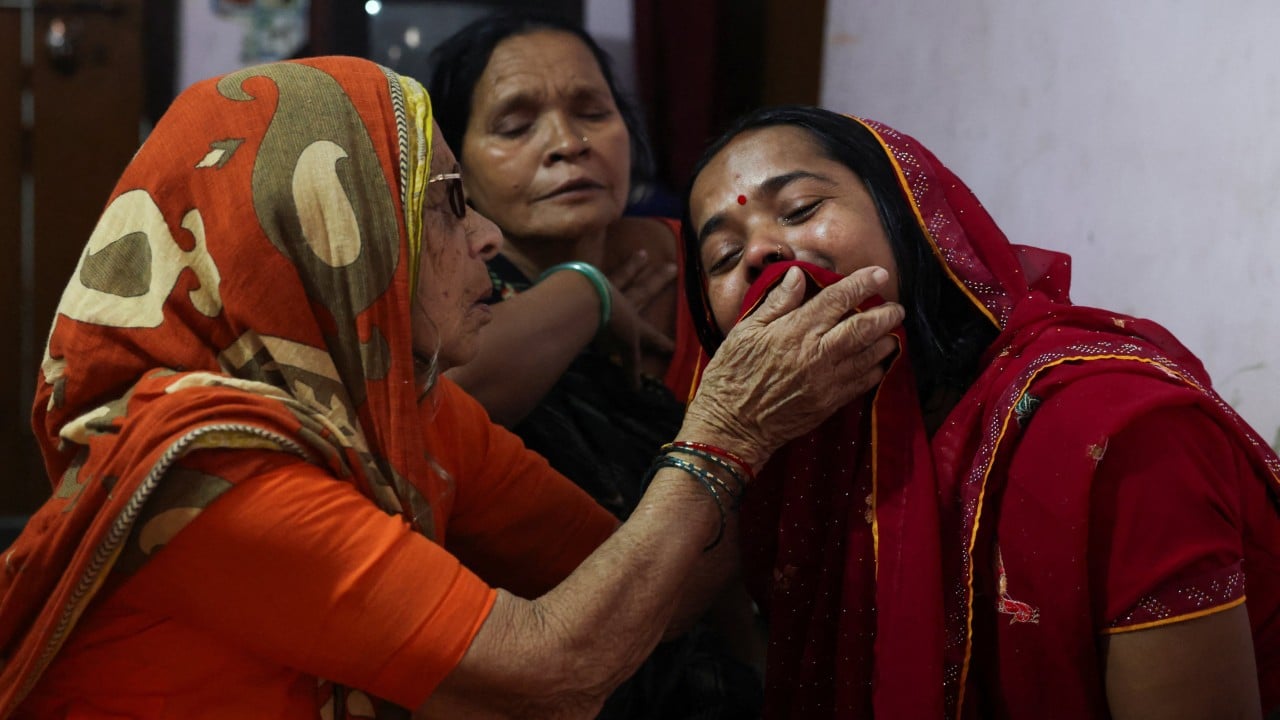
Down in Deoria, that raw grief is as palpable as the north Indian dust. Sushila Devi sat sobbing on the floor of her house in Deoria, northern India after authorities told her that her husband was one of three sailors killed in a US attack on a ship off Oman. And her sorrow, echoed by the murmuring cluster of women around her, wasn’t just personal. It’s a collective lament, a piercing query lobbed from a dirt-floored village into the labyrinthine corridors of power. [QUOTE_PLACEHOLDER]
It isn’t some abstract policy paper that hurts here; it’s the sudden, irreversible absence of a provider, a husband. If he had told us about the dangers, I would have called him back, she cried out. It’s a cry many in her position could’ve — would’ve — uttered. Because for families like the Devi’s, sending loved ones halfway across the world to crew oil tankers or merchant vessels isn’t an adventure; it’s an economic necessity, a high-stakes gamble against poverty. But it also means submitting their fortunes to the capricious tides of distant geopolitics, an uncontrollable, terrifying lottery.
The immediate response from New Delhi speaks volumes, louder than usual diplomatic niceties allow. India on Friday took the rare step of lodging a second protest with the US over the strike that took place more than… It suggests a deeper current of exasperation, doesn’t it? A superpower’s actions—even if indirect or unintentional in their full scope—carry an enormous wake. But this incident isn’t just a two-party spat. It peels back the fragile veneer protecting a vast, silent army of South Asian migrant workers. They’re everywhere, staffing the Gulf’s gleaming towers, manning its vital shipping arteries, sending billions in remittances back home, propping up national economies from Dhaka to Islamabad.
The Red Sea and its surrounding waters—including off Oman—have morphed into a volatile chess board. Houthi aggressions, US counter-actions, and the complex interplay of regional powers have created an environmental minefield. The crew on a merchant vessel—often comprised of these intrepid workers from India, Pakistan, Bangladesh, and the Philippines—become collateral in conflicts not their own. Their low wages hardly compensate for such elevated risk, do they?
Consider the data: India receives over $125 billion annually in remittances, the highest globally, much of it from its diaspora in the Gulf and maritime sector, according to the World Bank’s Migration and Development Brief 2023. This isn’t just money; it’s the lifeblood for millions, enabling education, healthcare, — and basic sustenance. It’s also why Sushila Devi’s subsequent plea cuts to the quick: The government shouldn’t allow people to go there. A simple statement, yet loaded with the agonizing choice between hunger at home and peril abroad. It’s a demand that’s both impossibly impractical — and entirely understandable.
India’s repeated protests, uncommon for a nation usually keen to maintain strategic alignments, point to the deep political sensitivity of such deaths. These aren’t just unfortunate casualties; they’re symbols of a profound imbalance, a reflection of the perilous bargain struck by those pursuing livelihoods in precarious zones. The vulnerability of these migrant workers in places like the Red Sea corridor has prompted increased calls for international attention to worker protections and maritime security protocols—or frankly, their glaring absence. For more on this, one might look at the growing debate surrounding Indian Deaths Spark Diplomatic Fire, Unveil Migrant Worker Vulnerability in such contested waters. But diplomacy’s slow wheel grinds on, often lagging behind the brutal pace of current events.
But beyond the diplomatic sparring, the incident forces a hard look at the social contracts at play. Governments rely on these remittances; families rely on their overseas breadwinners. Yet, who truly shoulders the burden when global tensions flare? It’s rarely the policy-makers; it’s almost always those least equipped to protect themselves. Pakistan and Bangladesh face similar dilemmas, their own economies similarly sustained by legions of expatriate workers often enduring far greater risks than those encountered in comfortable offices back home.
What This Means
This tragic incident isn’t an isolated event; it’s a stark reminder of several thorny realities that policy wonks and strategists often conveniently overlook. First, it vividly highlights the disproportionate impact of geopolitical skirmishes on a silent class of workers from developing nations. When a tanker traversing the Gulf or Arabian Sea becomes a target or collateral damage, it’s rarely the CEOs or state ministers whose families bear the ultimate cost. It’s almost always Sushila Devi — and those like her, waiting anxiously for remittances that now will never arrive. This reality — this very concrete loss — will likely strain US-India relations, if only subtly, despite New Delhi’s broader strategic tilt towards Washington as a hedge against other regional powers. New Delhi isn’t just protesting for the sake of it; it’s responding to a very real, very public pressure from a population demanding answers and accountability, questions that transcend diplomatic protocols.
Economically, such tragedies don’t just hit individual families; they ripple through local communities reliant on a migrant-driven economy. And politically, India’s government, currently eyeing a national election, can’t afford to appear weak or indifferent to its citizens’ plight abroad. It forces a recalibration of how aggressively nations like India, Pakistan, and Bangladesh will advocate for their citizens’ safety in high-risk zones, potentially leading to tougher regulations on recruitment agencies, or—perhaps more aspirationally—stronger international protections for maritime laborers. It also raises the uncomfortable question of whether nations should — or could — restrict their citizens from working in such volatile areas, effectively sacrificing a critical income stream for safety. It’s a devil’s bargain, with human lives at its core, a chilling echo across the waters from Oil’s False Peace to actual peace.