
Caracas Aftershocks: Global Diplomacy’s Uneven Tremor in Venezuela
POLICY WIRE — Washington D.C. — When the earth really shakes, people, they look up. They look to their leaders, their celebrities, and—quite often—beyond their borders for a sliver of hope or a...

POLICY WIRE — Washington D.C. — When the earth really shakes, people, they look up. They look to their leaders, their celebrities, and—quite often—beyond their borders for a sliver of hope or a simple nod of shared sorrow. It’s an instinctive reach, a moment where the often-fractured world is supposed to cohere, if only for a beat. What unfolds in the aftermath, though, isn’t always as straightforward as the pictures of crumbled concrete might suggest.
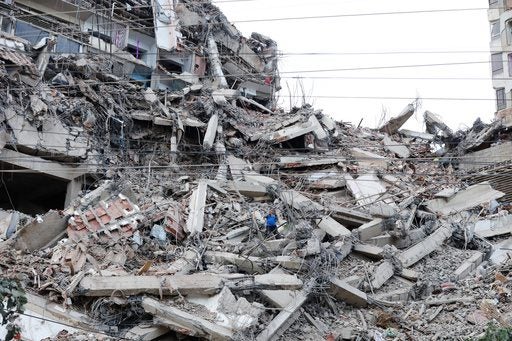
Venezuela, already navigating a particularly rocky path (politically speaking, for years now), just took a literal hammering. Two brutal quakes—a 7.2 and a 7.5 on the Richter scale, mind you—tore through the South American nation. These weren’t your everyday tremors; they were, in fact, some of the strongest to wallop the country in over a century, leaving destruction in their wake that could be felt across the wider region. Officials, local teams really, scrambling like mad, racing against the sun to pull folks out from beneath the concrete jaws of collapsed buildings. The official tally? A staggering 164 lives claimed, with more than 1,000 injured, according to Venezuelan authorities. Grim statistics, those.
But beyond the immediate human tragedy, there’s another kind of aftershock, a quieter reverberation through the halls of power and celebrity mansions: the global response. It’s a fascinating, sometimes stark, study in realpolitik dressed up as empathy. Because for some, it’s about actual bodies — and immediate medical needs. For others, it’s a stage, an opportune moment to reiterate allegiances, settle scores, or—even—just stay relevant.
Take the U.S., for instance. Secretary of State Marco Rubio, taking to social platform X, declared, [QUOTE_PLACEHOLDER] Not exactly revolutionary. But wait, there’s more. “America stands with the Venezuelan people during this difficult time and at the direction of President Trump, the State Department is immediately deploying search and rescue teams, medical resources, and humanitarian assistance to Venezuela.” It’s a sentiment delivered with the heft of a superpower, even if that superpower’s relationship with Caracas has, shall we say, been rather chilly for quite some time.
And then there’s the U.N. humanitarian chief, Tom Fletcher, with a pronouncement that Venezuela would need “all hands on deck” from the international community. Which, you know, makes sense. But Fletcher, in his statement, also emphasized, [QUOTE_PLACEHOLDER] It’s all very coordinated on paper, very by-the-book. One hopes the reality on the ground matches the neat press releases.
Over in Paris, French President Emmanuel Macron chimed in, saying a crack team of 85 French rescue workers specializing in search and clearance operations is “being deployed immediately.” That’s quick work. “France stands ready, alongside its European partners, to provide assistance to the affected populations in response to the needs identified by the Venezuelan authorities,” he added. Because diplomacy, even in crisis, demands identifying those needs through proper channels.
But the calls for unity weren’t solely emanating from government edifices. Celebrities got in on it too. Former Miss Universe, Alicia Machado, who actually hails from Maracay, used her Instagram pulpit to give [QUOTE_PLACEHOLDER] She also plugged Global Empowerment Mission for aid. “Venezuela needs us united more than ever! We are waiting for you here,” she posted. Meanwhile, Emmy Award-winning actor Edgar Ramírez, a San Cristobal native himself, leveraged his Instagram account into a veritable missing persons bulletin, sharing upwards of 20 messages by Thursday morning. He even re-posted an image of the Venezuelan flag originally shared by Oscar winner Jamie Lee Curtis. These folks, you know, they’re not just reading lines; it’s personal for them.
The Latin American brethren, naturally, stepped up. Brazil’s President Luiz Inácio Lula da Silva, a voice of regional pragmatism, spoke directly with his Venezuelan counterpart. “We will send Friday morning a humanitarian search and urban rescue mission in a KC-390 plane,” he said, complete with 36 firefighters — and eight specialists. “With them, we are sending nine tonnes of equipment to help.” Lula also promised a second flight loaded with a field hospital and water purifiers for Saturday. Mexico’s President Claudia Sheinbaum likewise committed military rescue workers — and medical staff. “We will determine tomorrow exactly what additional personnel are needed to continue helping the communities that need it,” she commented. It’s practical assistance, devoid of much rhetorical fluff, just aid hitting the ground.
Even China, ever watchful on the global stage, conveyed its concern. Foreign Ministry spokesperson Guo Jiakun noted, [QUOTE_PLACEHOLDER] He quickly added that “China is willing to provide assistance to Venezuela to the best of its ability, according to Venezuela’s needs.” This highlights Beijing’s consistent approach: offer help, but make sure it’s tailored to local requirements—and perhaps, geopolitically strategic, if you’re reading between the lines.
Spanish Prime Minister Pedro Sánchez had a chat with the Venezuelan president too, promising a plane with two government-sponsored search-and-rescue teams. And Colombia’s President-elect Abelardo de la Espriella tweeted, [QUOTE_PLACEHOLDER] Because sometimes, a simple prayer is what they’ve got.
What This Means
This cascade of condolence and commitment, while seemingly straightforward humanitarianism, functions as a finely calibrated barometer of international relations. The immediate tragedy provides an unexpected opening—a chance for nations to mend fences, or at least perform the diplomatic equivalent of offering a hand-wrought condolence card, even if underlying tensions persist. For regimes facing external pressure or internal strife (and Venezuela is both), any perceived global outreach, however tepid, is a win. It softens the image, legitimizes governance, — and chips away at isolation narratives. The diverse array of responders, from geopolitical rivals like the U.S. and China to regional partners like Brazil and Colombia, shows a complex web where disaster temporarily trumps dogma, but only at the surface level.
Consider the contrast to other catastrophes. In Pakistan, a country with its own chronic susceptibility to natural disasters—remember the devastating floods that routinely displace millions?—the response isn’t always so immediately orchestrated by A-list celebrities or top-tier U.S. diplomats with precisely worded messages on X. But this difference, well, it’s not just about perceived geopolitical importance. It’s also about the media’s focus — and the prevailing narrative around a nation. For Venezuela, the current political environment means every outreach is scrutinized. For Pakistan, a different, perhaps more jaded, set of assumptions often applies.
Ultimately, these quick reactions and the dispatch of rescue teams or aid aren’t just about the humanitarian imperative—as much as we’d all like to believe they’re. They’re also about soft power, about public image, — and about the quiet calculus of international influence. Even in sorrow, the chessboard is still very much in play. For the people trapped under rubble, though, none of that matters much; they just need help, yesterday.