


Postal Service’s Data Play: Federal Grab or Electoral Integrity?
POLICY WIRE — Washington, D.C. — Not all battlefields boast grand monuments or thundering rhetoric. Sometimes, the dust-up is over a list—a particularly dry, bureaucratic list, mind you, but one now...

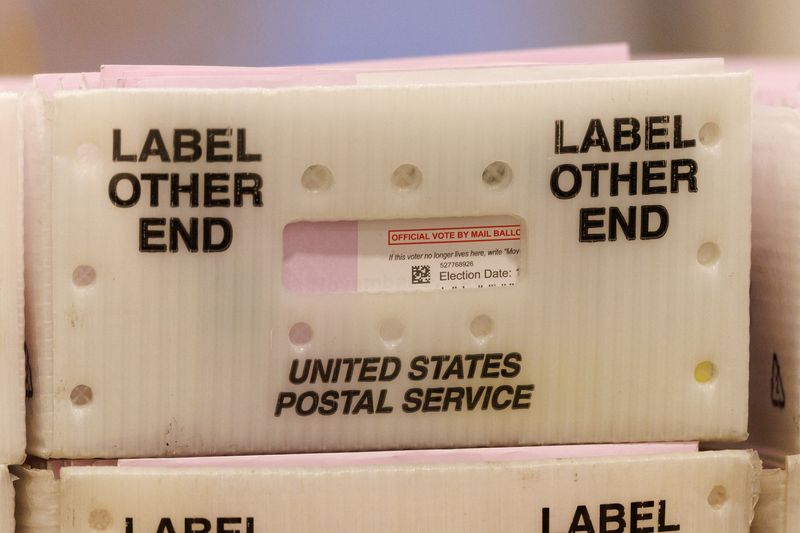
POLICY WIRE — Washington, D.C. — Not all battlefields boast grand monuments or thundering rhetoric. Sometimes, the dust-up is over a list—a particularly dry, bureaucratic list, mind you, but one now sitting at the heart of a quiet yet tenacious skirmish between federal overreach and states rights. It’s the U.S. Postal Service, a venerable, often beleaguered institution, asserting its right—or its need, depending on your view—to access state-managed mail voting records.
It sounds mundane. Postal routes — and registered voters, two seemingly disparate concepts, are tangling. But don’t let the banality fool you; this isn’t just about making sure your mail-in ballot gets to the right mailbox. Oh no, it’s about a deeply rooted debate on who holds the keys to democratic processes, and where the boundaries of government information-sharing lie.
For months, the USPS has been pitching its case, arguing that it’s merely trying to keep voter rolls tidy. You know, make sure deceased individuals aren’t getting ballots, or folks who’ve moved states. It’s a standard operational concern, they say—an efficiency play for the sprawling federal agency, which reportedly lost 6.5 billion USD in its fiscal year 2023. Think about it: a significant chunk of change, and a good reason to prune any dead weight, literal or metaphorical, from their extensive logistical efforts. And this push isn’t happening in a vacuum; it echoes wider national discussions around election integrity, a conversation that’s been heating up considerably over recent cycles. States, however, aren’t exactly rolling out the red carpet.
The argument from state election officials isn’t about hiding bad data; it’s about control. They’ve been telling anyone who’ll listen that their lists are secure. They’re saying [QUOTE_PLACEHOLDER]. Many are pointing to their existing state-level efforts, like participation in the Electronic Registration Information Center (ERIC), a bipartisan, multi-state data sharing initiative designed to maintain accurate voter rolls. And it’s quite a program; more than half of U.S. states use it to keep things accurate — and updated. So why the new demand from a mail delivery service?
Because, well, trust is a commodity. In today’s charged political environment, federal demands for state-level data often spark immediate skepticism, especially when election systems are involved. There’s a worry—a legitimate one for some—that centralizing such data might lead to vulnerabilities, either through inadvertent exposure or, worse, weaponization. Who, exactly, would control access to this aggregated information? That’s the unspoken question hanging in the air like an insistent humidity.
And let’s be candid, this isn’t just an American provincial squabble. The dynamics here resonate far beyond U.S. borders. Consider nations like Pakistan, where election transparency and data integrity have long been sources of intense public debate and political unrest. The Election Commission of Pakistan has faced perpetual challenges in ensuring accurate voter lists and addressing concerns about electoral manipulation. The integrity of voter databases, the verification process for eligible voters, and public trust in these systems are perennial hot topics there, just as they’re now in the U.S. when the federal arm comes knocking on state data doors. For many developing democracies, particularly across South Asia and the wider Muslim world, robust, transparent, and trusted election infrastructure remains a foundational, yet frequently contested, cornerstone of political legitimacy. Any perception of data being held or controlled without sufficient oversight—even for logistical reasons—can erode an already fragile trust, making it [QUOTE_PLACEHOLDER].
The Postal Service, for its part, says it’s simply trying to optimize its mail delivery for democratic processes. It needs [QUOTE_PLACEHOLDER]. But state officials have pushed back hard. They insist the disclosure requirement is an unnecessary imposition — and that they’ve already got it covered. They feel it’s an end-run around state sovereignty on election matters. And they’ve suggested that the move lacks proper legal authority and represents an overstep into areas traditionally reserved for state governments.
This federal agency isn’t backing down. Not yet, anyway. They maintain that cooperation is key to an efficient and secure mail voting system, regardless of what individual states believe their internal practices are. They’ve framed it as a public service, an enhancement to election security rather than a threat to it. They also said that what they’re asking for is [QUOTE_PLACEHOLDER]. But getting states to voluntarily surrender sensitive election data to a federal entity—even a mail carrier—is proving to be an uphill slog.
This fight over a list, while perhaps not dramatic enough for prime-time news, hints at deeper ideological divides and structural frictions within America’s federal system. It’s about data, sure, but it’s more about authority—who has it, who should exercise it, and to what extent. You see these same kinds of tensions play out on many fronts, from environmental regulations to housing crises, demonstrating that America’s decentralized government is constantly negotiating its boundaries.
What This Means
This skirmish is a classic federal-versus-state power struggle dressed in a Postal Service uniform. Politically, if the USPS ultimately succeeds, it could set a precedent for greater federal access to state-managed electoral data, shifting some power from statehouses to Washington. Expect significant legal challenges if the USPS tries to force the issue, possibly elevating it to higher courts. There’s also the economic angle: accurate voter rolls mean fewer misdirected ballots and less wasted postage—a marginal but real saving for an agency trying desperately to reduce its colossal debts.
For voters, the implications are two-sided: proponents argue it will clean up lists and bolster confidence in mail-in voting’s accuracy. Opponents worry about potential for federal databases to be mishandled, or to facilitate voter suppression by making it easier to challenge eligibility based on centralized, possibly flawed, information. It’s a battle where even the most bureaucratic proposals carry serious weight, often dictating who can, and can’t, have their say at the ballot box. This sort of detailed data control can influence everything, right down to the demographics an entity targets—a quiet mechanism in the loud engine of democracy. It’s a testament to the idea that even the smallest details can have cascading political ripple effects across electoral landscapes—sometimes even to places like the global talent markets discussed in football, where data, albeit different, is also fiercely controlled and leveraged.