
New Mexico’s Deluge: A Policy Wire Deep Dive into Unseen Cracks
POLICY WIRE — Albuquerque, United States — For a land defined by its parched landscapes, an excess of anything — especially water — often spells trouble rather than respite. New Mexico, it seems,...

POLICY WIRE — Albuquerque, United States — For a land defined by its parched landscapes, an excess of anything — especially water — often spells trouble rather than respite. New Mexico, it seems, can’t catch a break; even its rainfall arrives with a cruel caveat. It’s not just a weather report, you see, it’s a stress test on aging infrastructure, a policy debate playing out in real-time across sun-baked canyons and vulnerable burn scars.
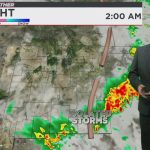
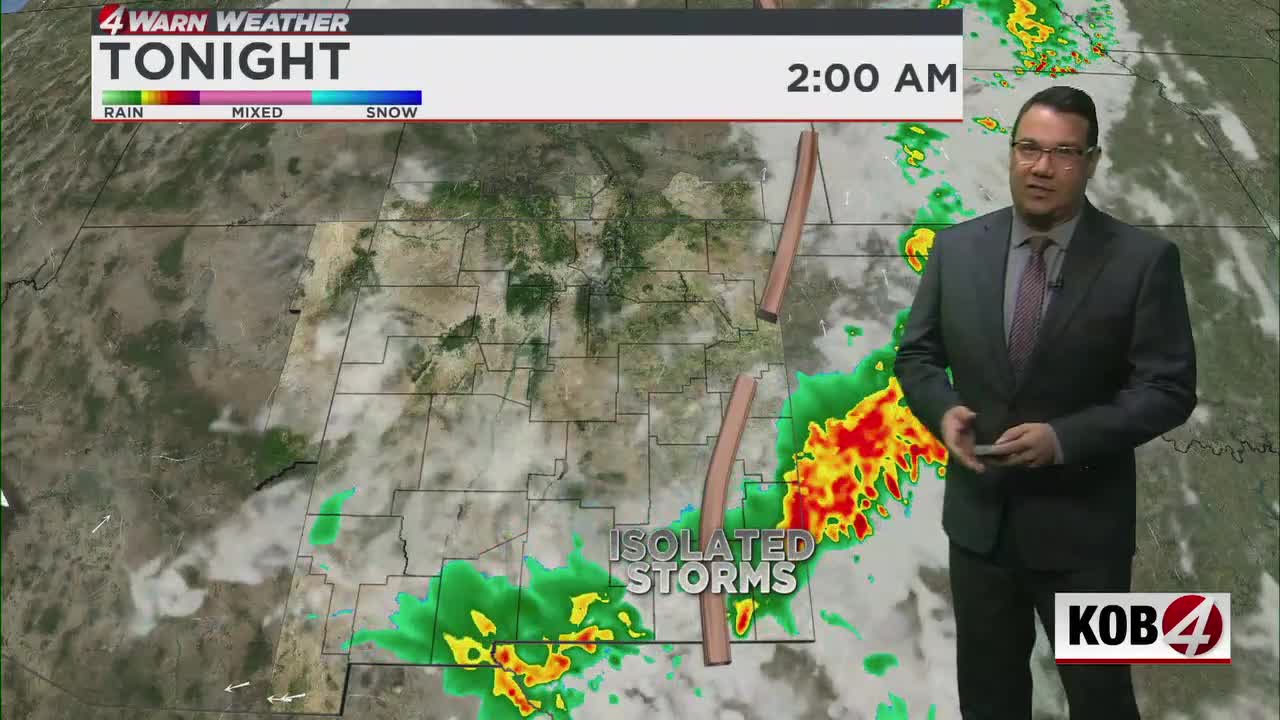
As slow-moving storms bore down, primarily impacting central and eastern sections, the local populace found themselves contemplating more than just the immediate inconvenience. How many roads would wash out this time? What new pressures would emerge on already strained municipal services? The forecast from Eddie Garcia painted a picture of localized, if not widespread, disruption. [QUOTE_PLACEHOLDER]
Forecasters noted that showers and thunderstorms will gradually decrease through the evening across central and eastern New Mexico, a phrase offering little solace to those contending with current deluge. But, like so many environmental challenges these days, the aftermath often outlasts the event itself. Some storms may linger until around midnight in Roswell, Artesia, Clovis, Portales, Tucumcari — and Clayton. A temporary reprieve, maybe, but the deeper issues persist. Already, parts of Chaves, Roosevelt, Curry and Quay counties have picked up between one and three inches of rainfall, according to KOB.com, which is a significant figure for an area where sudden downpours are more common than prolonged, gentle rain.
But the problem, folks, extends beyond mere inches. This kind of concentrated rainfall on already-vulnerable land — particularly over burn scars — can be devastating. Think of what happens when parched earth meets a sudden torrent: it doesn’t absorb; it erodes. The specter of rapid runoff, debris flows — and dangerous flash flooding becomes all too real. This isn’t merely Mother Nature’s caprice; it’s a symptom, or perhaps a consequence, of larger, less tractable policy challenges regarding land management, fire suppression strategies, and ultimately, a changing climate that amplifies every vulnerability.
The state’s capital region, the Albuquerque metro, also faces a risk of locally heavy rainfall if storms drift westward or form along outflow boundaries. That’s always the kicker, isn’t it? The cascading uncertainty, the probabilistic anxiety over whether the weather, just like policy decisions, will swing your way or deliver another headache. The system often feels reactive, constantly bracing for the next inevitable, rather than proactive. They’ve been talking about the drying trend continues Friday and Saturday, with storm chances shifting farther east, but one dry weekend doesn’t erase a summer of infrastructural wear-and-tear.
Consider the stark parallel, for instance, with nations perpetually at the mercy of unpredictable weather patterns. Pakistan, a country that understands perhaps better than most the brute force of water — often too little, then far too much — grapples annually with monsoons that reshape its landscape and challenge its foundational infrastructure. What New Mexico experiences locally, as scattered storms are expected from Farmington, Gallup, Grants and the Continental Divide, becomes a nationwide existential crisis for South Asian countries. Both regions, albeit on vastly different scales, are confronted with the immediate, overwhelming cost of climate-influenced events, whether it’s flash flooding in the American Southwest or catastrophic floods displacing millions in the Indus River plains. The difference often lies in the resilience — economic, social, and governmental — available to absorb these shocks. One community suffers property damage, another faces widespread famine. The raw material — the water — acts as a universal stressor.
And so, as the region anticipates that storm coverage begins to decrease Thursday, building to a drier pattern by Friday and Saturday, the reprieve feels temporary. Because it often is. The underlying patterns of moisture — where deep moisture spread farther west by Wednesday, with overnight dewpoints climbing into the 40s as far west as Farmington — tell a story of an unpredictable atmosphere, of climatic instability that demands more than short-term fixes. It needs foresight; it needs hard choices.
What This Means
This localized weather event, seemingly benign to outsiders, serves as a sharp microcosm of broader governance challenges and policy oversights. It exposes the ongoing tension between short-term public demands — and long-term infrastructure investment. When heavy rainfall remains the main concern, as thunderstorms develop along the central mountain chain and spread eastward, it’s not just a weather anomaly; it’s a call for accountability in urban planning and emergency preparedness. The recurring cycle of fires followed by floods creates an economic burden on a state where resources are finite, and the appetite for expensive, preemptive measures often lags behind the more politically palatable post-disaster aid packages.
Politically, the continuous strain on municipal services — from rapid runoff debris management to emergency evacuations — eats away at public trust and budgets alike. The economic implications are obvious: disrupted commerce, damaged property, and the constant siphoning of funds from other sectors towards repair and mitigation. We’re witnessing here a direct outcome of policy decisions, or indeed, the lack thereof, regarding how a growing population adapts to a landscape increasingly volatile due to climate shifts. Just as the global community struggles with coherent strategies to support countries like Pakistan in managing monsoon-induced humanitarian crises, the U.S. states are left to devise their own resilience plans against their version of extreme weather. It underscores the universal need for better climate adaptation strategies, robust public works investment, and cross-border learning — a continuous negotiation with an environment that waits for no political cycle.
This localized drama in New Mexico offers a blunt assessment of what happens when the natural world meets human development without sufficient foresight. It’s, perhaps, a reminder of New Mexico’s Cycle of Scorched Earth and Sudden Deluge, or even a Separating Strategic Reality from Manufactured Crisis Narratives in a time when localized natural events have massive policy ramifications. A.V. ramifications. You get the picture.