

Load Shedding’s Irony: Off-Grid Chargers Emerge as South Africa’s Real Grid
POLICY WIRE — Johannesburg, South Africa — There’s a particular kind of resignation that settles across South Africa every time the lights blink out. It’s not just an inconvenience; it’s...

POLICY WIRE — Johannesburg, South Africa — There’s a particular kind of resignation that settles across South Africa every time the lights blink out. It’s not just an inconvenience; it’s a national malaise, a palpable drain on productivity — and morale. Eskom’s managed decline has turned rolling blackouts, euphemistically called ‘load shedding,’ into an unshakeable fixture of daily existence. And it’s into this pervasive gloom that a curious counter-narrative has begun to hum, quite literally: electric vehicle charging stations operating with stubborn indifference to the national grid.
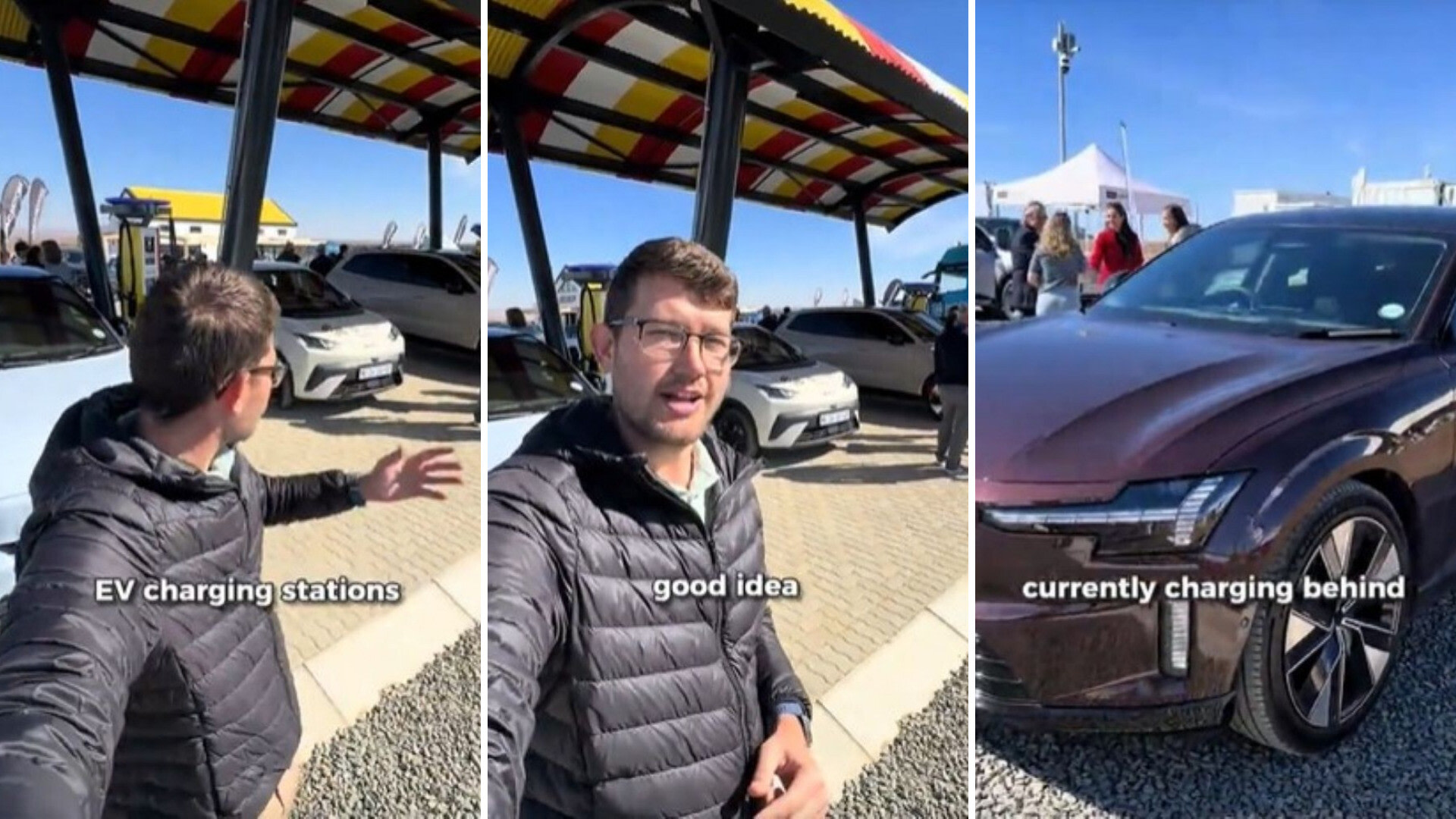
It sounds like science fiction for a country held hostage by crumbling infrastructure, doesn’t it? But it’s true. An enterprising, entirely off-grid solar-powered EV charging station has quietly appeared near a bustling freeway, offering a defiant middle finger—or perhaps a silent promise—to Eskom’s perpetually struggling network. This isn’t some experimental prototype; it’s a functioning, consumer-ready facility, showcased recently by a local driver who simply pulled up, plugged in, and charged up, all while large swathes of the country remained plunged into scheduled darkness. No drama. Just power, harvested straight from the sun.
The facility itself isn’t a grand governmental undertaking. No, it’s a private venture, a localized pocket of resilience demonstrating what’s possible when innovation steps into the vacuum left by systemic failure. Its very existence is an indictment, but also a glimmer of strategic adaptation. For years, politicians have promised a brighter energy future. But for electric vehicle owners, that future just pulled into a parking lot, untethered from bureaucratic inefficiency and ancient coal plants.
“We’ve been clear,” stated Sipho Ndlovu, the Deputy Minister for Energy, in a recent Policy Wire exclusive, acknowledging the dire state of affairs. “The energy transition isn’t merely about environmental imperatives; it’s a matter of national survival. While the government pursues large-scale generation projects, these distributed, localized solutions—they represent the nimbleness our system desperately lacks. It’s what our citizens are doing, and frankly, what we *need* them to do.” His tone was one of weary optimism, a politician tasked with selling a perpetually deferred dream.
But building an energy ecosystem completely separate from the public utility? That’s a concept almost unthinkable in other, more stable parts of the world. Here, it’s increasingly presented as the most logical, perhaps even the only, sensible path forward for sectors like transportation that demand constant, reliable energy. It creates a curious duality: the official narrative pushing grand, centralized solutions, while the pragmatic reality pushes citizens to find their own pockets of independent prosperity. It’s a harsh truth about what happens when public services buckle.
“People aren’t waiting for parliamentary debates to power their cars, or their lives,” said Dr. Zahra Khan, an energy policy analyst with the Centre for Future Studies in Islamabad, offering a rare perspective from outside the immediate African context. She notes that Pakistan, facing its own intermittent power crises, could learn a lot from such decentralized efforts. “When the national grid can’t deliver, self-sufficiency stops being an ideological choice and becomes a matter of pure economics. From Karachi to Cape Town, the playbook is similar: protect your assets, whatever it takes. And if it’s solar, well, you’ve hit two birds with one stone, haven’t you?” It’s an astute observation that links seemingly disparate energy woes across continents, hinting at a shared roadmap for the developing world.
And the economics? They’re becoming harder to ignore. With electricity prices continuing their relentless climb—a 2023 report from the South African Bureau of Economic Research highlighted average tariff increases exceeding inflation for over a decade—the long-term appeal of solar independence becomes less of an environmental luxury and more of a fiscal imperative. A recent estimate, sourced from local industry analyses, suggests that an average South African household with sufficient rooftop solar can shave 30-50% off their electricity bill annually, once initial installation costs are recouped. This isn’t just about charging cars; it’s about rebuilding local economies, one resilient circuit at a time.
What This Means
This localized energy oasis isn’t just a quirky novelty; it’s a significant policy bellwether. First, it accelerates the decentralization of South Africa’s energy landscape. The official line from government has always been to bolster Eskom, but private actors are increasingly —and visibly— taking matters into their own hands, demonstrating capabilities that rival, if not surpass, national utilities in terms of reliability. This forces the state’s hand, compelling a pivot from monopoly protection to enabling market solutions, perhaps even acknowledging the need for more relaxed regulations around independent power production and distribution.
Second, it chips away at the electric vehicle adoption dilemma in emerging markets. One of the primary hesitations for EV uptake isn’t just upfront cost, but charging anxiety, particularly in regions plagued by grid instability. Off-grid stations like this directly address that fear, effectively creating islands of reliability. For a country attempting to green its transport sector, such independent nodes are no longer ‘alternative’; they’re quickly becoming foundational.
Finally, there’s a strong geopolitical resonance. The lesson here—of bypassing a failing central grid with distributed, renewable generation—isn’t lost on nations grappling with similar infrastructure deficits, corruption, or resource distribution challenges. From parts of Pakistan to Indonesia, the blueprint of localized energy self-reliance is beginning to look like a viable, even superior, pathway to national energy security, challenging traditional assumptions about centralized state control over utilities. The shift, slow — and incremental as it seems, is undeniably underway. The question isn’t if more off-grid solutions will emerge, but how quickly, and what seismic shifts they’ll force on power structures that have long defined developing economies.