


Heightened Perceptions: How the Taos Gorge Bridge Epitomizes Engineered Dread
POLICY WIRE — Taos, New Mexico — It’s not often a man-made structure, designed specifically for seamless transit, manages to induce such profound unease that it earns a national reputation for...

POLICY WIRE — Taos, New Mexico — It’s not often a man-made structure, designed specifically for seamless transit, manages to induce such profound unease that it earns a national reputation for fear. Forget creaking floorboards in an old mansion; we’re talking about tons of steel and concrete, humming with modern engineering, yet capable of chilling riders to their bones. And no, it isn’t some decrepit, forgotten relic from another age; it’s a bridge, here in the American Southwest.
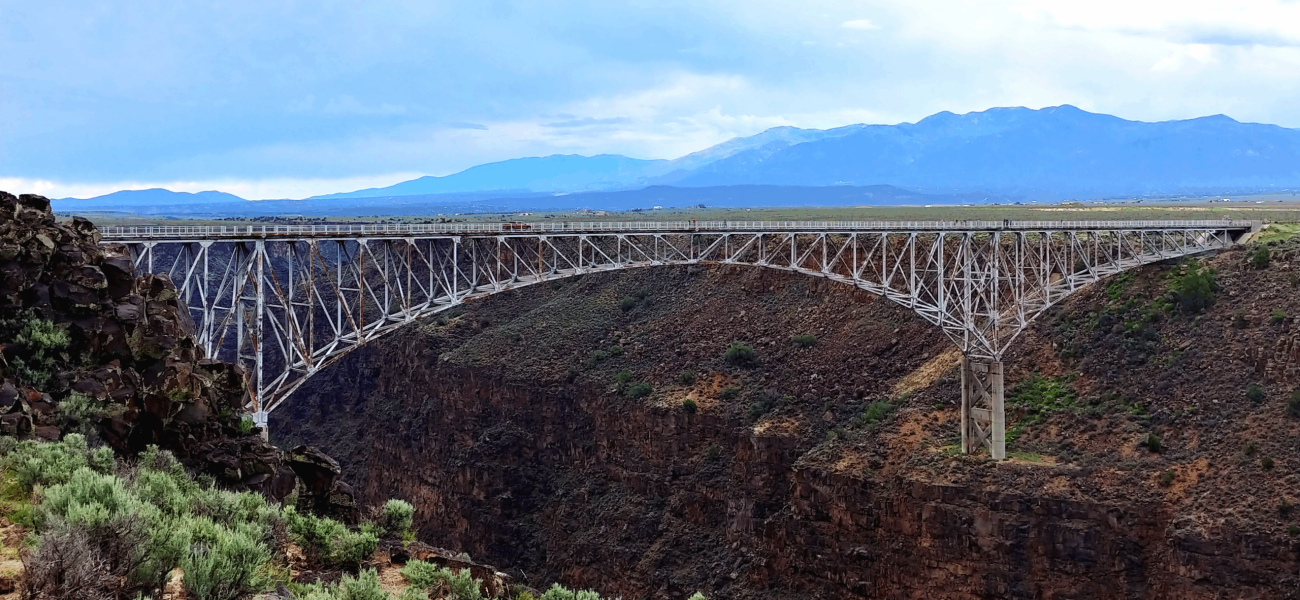
For decades, the Rio Grande Gorge Bridge has served as an unavoidable landmark in northern New Mexico. It’s an imposing, albeit functional, span connecting disparate desertscapes. But its functional prowess, it seems, has become overshadowed by an almost existential dread, at least for a vocal subset of the population: cyclists. A recent survey, one commissioned not by an infrastructure firm, but by California-based injury lawyers, placed this very bridge as the third scariest nationwide. Because, apparently, even a spectacular vista isn’t worth feeling your stomach drop into the abyss.
The survey polled over 3,000 cyclists, dissecting their most harrowing transit experiences. And what they found regarding the Taos Gorge structure was rather telling. One excerpt, attributed directly to the findings, noted: [QUOTE_PLACEHOLDER] It’s a statement that hints at a fundamental paradox; beauty and terror, twin serpents coiled around the same magnificent object. The same text adds it “stands around 600 feet above the Rio Grande and is described as the second-highest bridge on the U.S. Highway System.” That’s nearly the height of a 60-story skyscraper, stretching across a void, with only the desert wind for company.
But it’s more than just raw height that spooks these riders, isn’t it? The physical description is compelling, a vivid snapshot of unsettling proportions. “From a bicycle, the appeal and the fear are almost the same thing: huge sky, high desert wind, steel underfoot, and the gorge opening far below. Even if the road itself looks straightforward, the vertical drama makes this one of New Mexico’s most nerve-testing crossings.” One can almost hear the low hum of the wind whipping across the chasm, feel the minute vibrations of the structure under two wheels. It’s less about a bridge’s structural integrity, you see, and more about the raw, unfiltered confrontation with sheer, terrifying space.
This widespread trepidation hasn’t gone unnoticed by the powers that be. Or rather, it finally seems to have registered after considerable prodding. Changes are, at last, coming. The New Mexico Department of Transportation (NMDOT), apparently roused from its bureaucratic slumber, plans to install an 8-foot fence and higher railings. This, after what families describe as [QUOTE_PLACEHOLDER]—a rather stark, devastating assessment of government inaction. Because it takes more than just cyclists’ anxieties to spur the state into action, it often takes outright tragedy. The department, perhaps weighing its options, is even [QUOTE_PLACEHOLDER] a cautious hedge against further grim statistics.
But then, this dance between human engineering, breathtaking natural challenge, and inherent public fear isn’t unique to a New Mexico gorge. Cast your mind eastward, for instance, to the towering mountains that flank Pakistan’s Karakoram Highway—the so-called Eighth Wonder of the World. There, engineers have battled far more brutal terrain, constructing bridges and roads through landscapes where a misplaced rock could trigger an avalanche. Structures cling to cliff faces thousands of feet high. Fear is a constant companion on such journeys, an unspoken cost of progress — and connection. But the public’s perception of risk — and the governmental response to it often take different forms there. Litigation isn’t always the immediate trigger for safety upgrades; rather, the threat is more often natural catastrophe, or direct community pressure, and the response is frequently reactive rather than proactive. It’s a study in contrasting cultural frameworks around public safety and engineering audacity.
📄 POLICY WIRE WHITEPAPER PUBLISHED: PAKISTAN'S NATIONAL SECURITY POLICY PRIORITIES
👉 READ BY CLICKING HEREOne wonders, doesn’t one, how many surveys commissioned by lawyers it would take to prompt similar measures along treacherous mountain passes in Azad Kashmir or Gilgit-Baltistan. And frankly, the idea of American injury lawyers even contemplating such a market comparison is a wry, if telling, thought. Here, in the US, legal jeopardy has become as powerful a policy driver as — sometimes even more powerful than — altruistic intent or preventative wisdom.
What This Means
This seemingly localized issue on a New Mexico bridge actually throws a sharp light on broader political and economic currents. First, it confirms that in America, safety innovations for existing infrastructure often follow — rather than precede — human misfortune or the credible threat of expensive lawsuits. The intervention of injury lawyers and their survey data highlights a litigation-driven policymaking cycle; government agencies like NMDOT only seem to commit significant resources after being publicly shamed or faced with legal precedent stemming from what a specific source describes as [QUOTE_PLACEHOLDER] The economic cost of these belated interventions, both in human terms and fiscal terms (litigation, retroactive upgrades), can be considerable. Politically, it’s an indictment of bureaucratic inertia; it suggests agencies aren’t acting on inherent ethical responsibilities alone, but need a strong push from external pressures, which sometimes unfortunately implies a body count or looming legal action.
there’s an interesting tourism angle here. Could a bridge renowned for its terror also draw thrill-seekers? Like some modern, high-altitude pilgrimage, one filled with more dread than devotion? Policy makers must balance safety imperatives with the unintended allure of perceived danger, however macabre. It creates a subtle tension for state coffers, attracting certain visitors while attempting to protect others. The fact is, in a nation where liability often dictates design, this bridge’s saga shows how engineering feats become intertwined with the intricate, often frustrating, dance between public perception, fiscal reality, and legislative action.