

The Brutal Politics of Fandom: When a Star Falls, So Does Civility
POLICY WIRE — New York, USA — A collective gasp, then a roar of digital fury. The ritual is as old as sport itself, only now amplified to a discordant screech across social media’s public...

POLICY WIRE — New York, USA — A collective gasp, then a roar of digital fury. The ritual is as old as sport itself, only now amplified to a discordant screech across social media’s public squares. It wasn’t a contentious referee call or a buzzer-beating betrayal that set the New York sports world aflame this past week; it was the almost imperceptible tumble of a journeyman basketball player onto the ankle of a beloved star. An accident, you’d think. But for the devotees of the New York Knicks, it was nothing short of an act of sporting terrorism, demanding immediate, disproportionate retribution against the unfortunate culprit, Harrison Barnes.
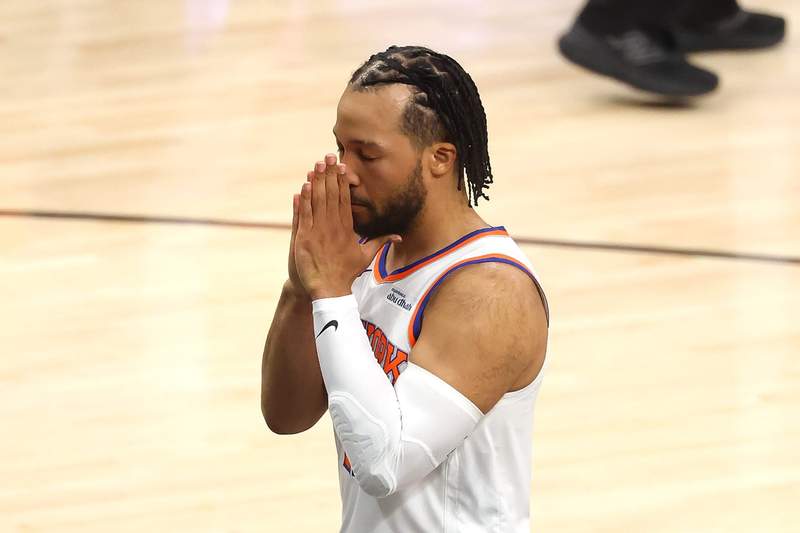
It’s a peculiar thing, this passionate devotion. It can turn an otherwise reasonable adult into a Twitter-thumb-blazing vigilante. The particular incident in question unfolded early in the high-stakes drama of the NBA Finals. Picture it: late in the initial quarter, during what was ostensibly a routine tussle for a rebound. Barnes, it seemed, just lost his footing, collapsing awkwardly into Jalen Brunson’s lower leg. One moment, the future was bright, the next, Brunson was clutching at his knee, hobbling toward the locker room’s quiet dread. It’s the kind of brief, agonizing uncertainty that drains the oxygen from a stadium, let alone an entire city.
And what followed wasn’t calm deliberation. Nope. But Brunson’s somewhat swift return in the second quarter did alleviate some of the immediate, stomach-churning panic, though the concern around New York’s most important player didn’t completely evaporate. Even back on the court, he seemed to be managing the issue. He was moving, sure, but the faithful—their hearts having performed a high-wire act of relief—were now primed for indignation. They’d weathered the fear; now it was time for some good old-fashioned digital condemnation. After all, Brunson is far too important to their postseason run for any contact around his knee to feel routine. This was supposed to be a triumphant settling into the first Finals stage in decades, not a morbid vigil watching a superstar test his mobility.
The online sphere, particularly platforms like X, erupted. It’s here, in the immediate, unedited echo chamber of tweets and comments, that the primal fear morphs into collective rage. And don’t think for a second this is solely an American phenomenon. Think about cricket in Karachi, for instance. A controversial dismissal of a key Pakistani batsman in a high-stakes match against India can incite passions just as raw, sparking debates that transcend sport and sometimes spill into broader national identity and honor. The mechanisms are eerily similar, fueled by an almost spiritual investment in symbols — and heroes.
One aggrieved fan, clearly exercising some colorful hyperbole, asserted, [QUOTE_PLACEHOLDER] Another, adopting a distinctly possessive tone about municipal boundaries, declared, “Harrison Barnes, you’re not safe in my city.” The sentiment escalated into outright cartoonish threats; one comment read, “Harrison Barnes will end up on the FBI’s most wanted list,” while a rival conspiracy theorist suggested, “Barnes flopped into him.” This fury reflects the exquisite fragility of championship hopes when an entire team’s offensive engine is tied to one player. As another observer mused, “Spurs the luckiest team ever,” capturing that bitter, unfair sense of relief felt by the opposing camp. According to a 2023 report from Statista, over 556 million tweets are sent every single day, creating a virtually endless forum for such rapid-fire emotional eruptions and collective grievance-sharing.
📄 POLICY WIRE WHITEPAPER PUBLISHED: PAKISTAN'S NATIONAL SECURITY POLICY PRIORITIES
👉 READ BY CLICKING HEREYes, Brunson’s check-back-in changed the temperature. But it didn’t erase the gnawing anxiety. The Knicks’ title hopes, let’s face it, still run through him. And because of that, every slight grimace, every tentative plant, every cut, felt monumental — far larger than the actual play that caused the initial kerfuffle.
What This Means
This incident, seemingly trivial in the grand scheme of geopolitical maneuvers or economic indices, lays bare the startling politics and economics embedded within elite sports fandom. For a team like the Knicks, making their first significant Finals splash in what feels like an eternity, the health of a marquee player like Jalen Brunson isn’t just about athletic performance; it’s a multi-million-dollar economic lynchpin. Brunson’s perceived vulnerability, even momentary, sends ripples through everything from ticket sales and merchandise revenue to potential broadcasting deals and, frankly, the city’s collective morale. An injury could crater playoff revenues by millions, destabilize sponsorships, and depress the long-term market value of the franchise itself. The fan outcry, however unhinged it may appear on its surface, is a direct, if unpolished, reflection of this deep financial and emotional investment. It’s a brutal theater, indeed.
Politically, the instantaneous, vitriolic backlash against Harrison Barnes serves as a microcosm of our hyper-connected, easily aggrieved society. In a world where platforms like X allow for anonymous, unmoderated outpourings of sentiment, minor incidents become flashpoints. We see this not just in sports, but in local elections, international disputes, — and corporate crises. The ability of a vocal, digitally-enabled minority to define a narrative, to demand accountability (however misdirected), and to even issue quasi-threats against an individual for a perceived transgression—accidental or otherwise—highlights a chilling trend. It underscores how fragile reputations can be — and how swiftly public sentiment can turn into a weaponized force. The immediate, collective impulse to assign blame and demand satisfaction, often without all the facts or an ounce of empathy, has become a predictable and, frankly, disturbing feature of the contemporary public discourse. This kind of intense, often unreasoned, loyalty and sudden betrayal echoes deeply in how political figures or policies are received, often with similarly exaggerated condemnations and celebratory salvos. The stakes, like the temperature in Texas, are always rising.