


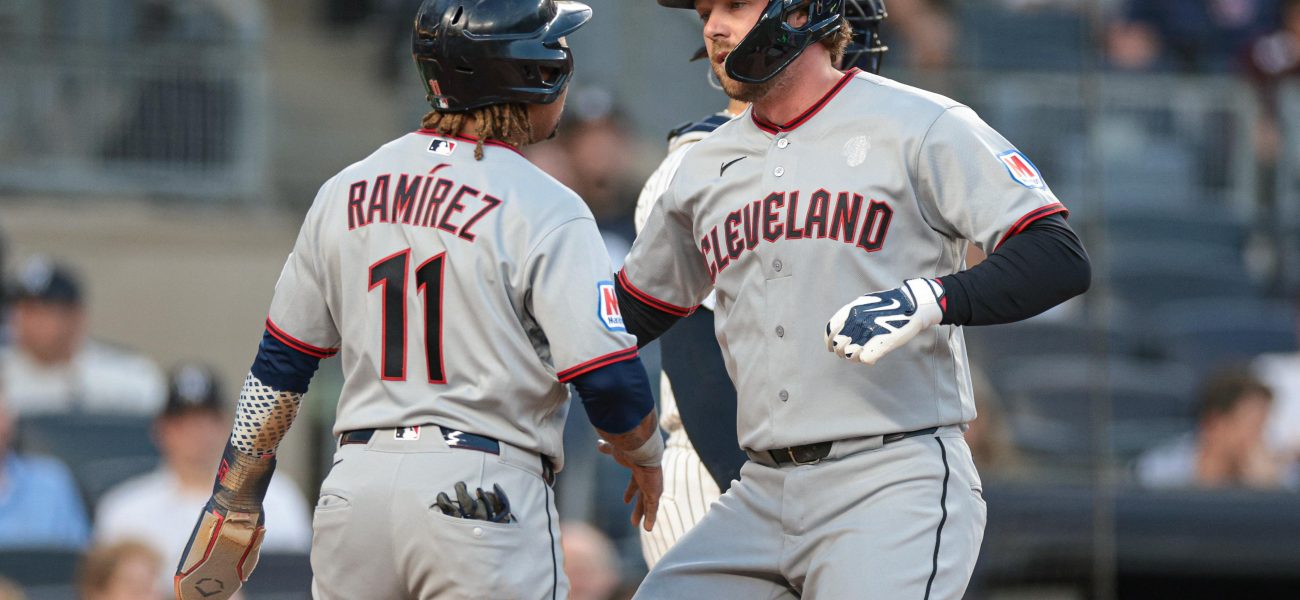
Cleveland Takes Bronx Amidst Yankee Home Run Barrage, Unsettling Local Sentiment
POLICY WIRE — Bronx, USA — It’s a grand American pastime, this ritualized contest of bat against ball, but beneath the floodlights, something more fundamental stirs. Something about the...

POLICY WIRE — Bronx, USA — It’s a grand American pastime, this ritualized contest of bat against ball, but beneath the floodlights, something more fundamental stirs. Something about the precariousness of perceived invincibility, particularly when money talks loudest. New York, city of steel and endless aspiration, saw its lauded baseball Bombers fall once more to Cleveland’s Guardians. Not a catastrophic defeat, no, but another persistent pinprick in the façade of the perpetually powerful.
The scoreboard read 5-4, a margin often deemed respectable. But don’t let that fool ya. This was a series seized right here in the Bronx by a Cleveland squad that just wouldn’t quit. They weren’t just winning games; they were poking holes in a narrative of supremacy— a narrative as essential to New York’s self-image as the endless honking taxis. Gerrit Cole, that pitching colossus, was meant to be the impenetrable shield. Yet, the Guardians managed to punch through, clocking three dingers off him. Yeah, three. That sting has a way of lingering, like an unpaid parking ticket you keep finding on your windshield.
Kyle Manzardo kicked off the scoring in the second inning, a rather emphatic shot that snapped Cole’s scoreless streak. A curveball, apparently, though it hardly mattered once it was airborne, sailing to the second deck. For all the talk of precision, sometimes it’s just about who hits it further. And while Jazz Chisholm Jr. promptly responded for the Yankees with his own 409-foot missile—because this is New York, you expect an immediate counter punch—it only tied things up, doing nothing to fundamentally shift the momentum. Because the issue wasn’t a lack of effort; it was an inability to truly take command.
The Cleveland lineup, they’re not exactly known for overpowering velocity, right? But when a pitch hangs, even the most statistically average bat can do some damage. And that’s what happened, again — and again. José Ramírez hammered one. Rhys Hoskins followed suit with a two-out thunderstrike in the fourth after an initial single was somehow wrung out of a blast by Ramírez himself. Yankee manager [QUOTE_PLACEHOLDER] must’ve been pulling out what little hair he had left, watching these supposedly inferior bats repeatedly exploit mistakes. It wasn’t about the raw stuff; it was about precision, about capitalizing on the little bobbles.
But the Yankees weren’t completely asleep at the switch, I’ll grant ’em that. José Caballero, he chimed in with a skyscraping fly ball, briefly pulling the Bombers back within a run. Angel Martínez, Guardian’s left fielder, argued fan interference—a futile gesture. He’d need the vertical leap of a gazelle (or Victor Wembanyama’s height, if you prefer local heroes) to snag that one. It just nestled right into a fan’s glove. Moments later, Ramírez did it again, another solo shot to right off Cole, making it 4-2. The cycle of despair for New York fans just kept on spinning.
Cole’s night ended abruptly after a double from Manzardo — and a walk to Hoskins. He didn’t have his stuff, they’d say, which is a charitable way of saying he was leaving meatballs over the plate. The bullpen did its job, mostly. Fernando Cruz stranded the runners. Tim Herrin got out of a jam. But the overall inability of the Yankees to establish sustained offense or stifle Cleveland’s persistent jabs is telling. Even after Ben Rice and Cody Bellinger manufactured another run, bringing it to 4-3, the bullpen faltered, Tim Hill surrendering hits, and then Paul Blackburn wasted a lucky break with a “perfect batting practice ball” to Hoskins. Ramírez scored. Again, a two-run lead for the visitors. And then, well, the game was sealed. A quick eighth — and ninth for Cleveland, even with a last-gasp double from Goldschmidt. But Smith buckled down, sealing the 5-4 deal.
📄 POLICY WIRE WHITEPAPER PUBLISHED: PAKISTAN'S NATIONAL SECURITY POLICY PRIORITIES
👉 READ BY CLICKING HEREWhat This Means
In the grand tapestry of American spectator sports, an upset like this isn’t merely a tally in a scorebook; it’s a tremor in a very expensive, deeply entrenched ecosystem. The Yankees aren’t just a team; they’re a brand, an institution, a minor economic engine unto themselves. Every defeat, especially at home, costs real money in terms of dampened consumer enthusiasm—less merchandise, fewer high-priced tickets for subsequent games, perhaps even a slight dip in ancillary business around Yankee Stadium. The frustration among the fanbase isn’t just about athletic performance; it’s an emotional investment gone awry, threatening the carefully curated image of a juggernaut.
Globally, such sporting events — even ‘minor’ ones like a regular-season baseball game — offer a strange barometer of Western cultural influence. Think about the fervent fan bases for European football, or even American basketball, which resonate deeply in parts of South Asia. While baseball struggles to gain similar traction in nations like Pakistan, where cricket is a national obsession, the underlying human drama of triumph and failure, of vast expenditure not guaranteeing victory, resonates universally. Just last year, an estimated 25 million people in India and Pakistan tuned into major global sporting events like the FIFA World Cup or the Cricket World Cup, according to a recent Nielsen report, illustrating a global hunger for athletic drama that transcends borders. This Yankee loss, a blip on the screen here, serves as a stark reminder that even with seemingly unlimited resources, control is always an illusion. It’s a sentiment keenly understood in nations grappling with geopolitical and economic realities far harsher than a simple baseball game, but where the search for consistent success is just as elusive. When the titans fall, even in a small way, it hints at a deeper, less predictable world than we often prefer to believe.
They’ll seek to salvage the final game — and ward off a sweep, but the shine’s already a bit dulled. Carlos Rodón — and Slade Cecconi, the next combatants. And we’ll watch. Because sometimes, seeing the mighty stumble is a grim comfort. Or maybe it’s just baseball, and they’ll get ’em next time. Don’t hold your breath.