

From Ember to Avalanche: New Mexico’s Cycle of Scorched Earth and Sudden Deluge
POLICY WIRE — ALBUQUERQUE, N.M. — It never just rains in New Mexico anymore. Not truly. When the clouds gather over these scarred landscapes, what descends isn’t merely precipitation....

POLICY WIRE — ALBUQUERQUE, N.M. — It never just rains in New Mexico anymore. Not truly. When the clouds gather over these scarred landscapes, what descends isn’t merely precipitation. It’s an ominous prologue to disaster, a brutal, earth-shoving torrent tearing through valleys that were, just months ago, incinerated by wildfire.
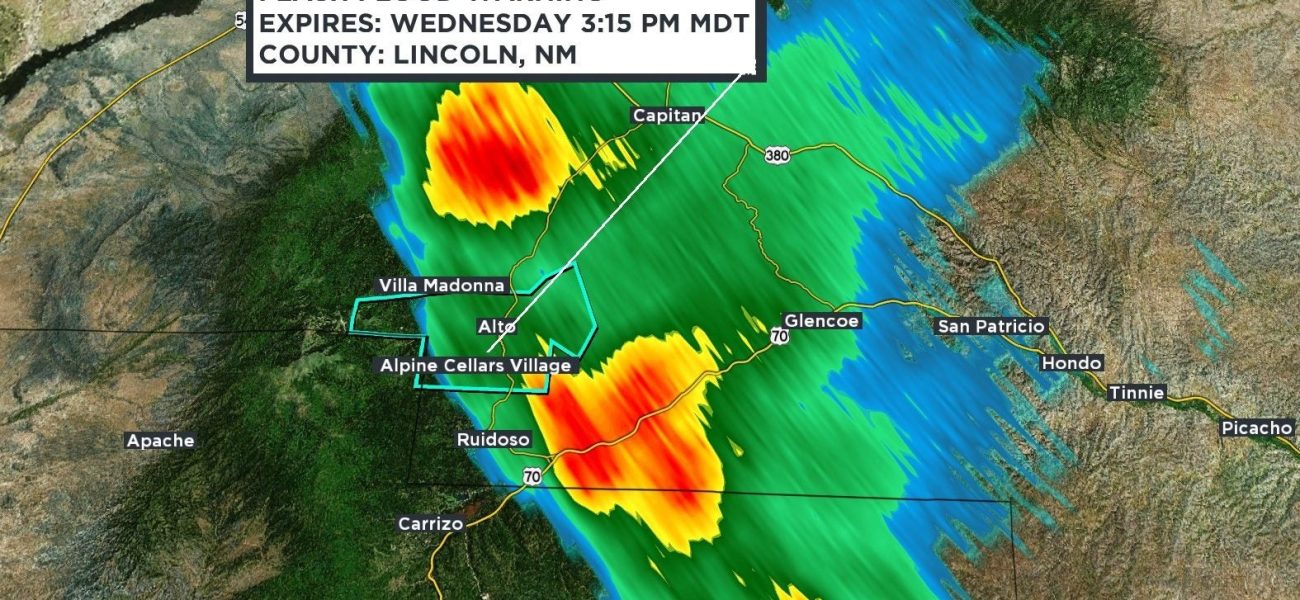
And so it was again Wednesday. While much of the world worries over inflation or elections, communities here were once more bracing for the land itself to rebel. The National Weather Service in Albuquerque didn’t pull any punches; they rarely do when the earth is about to shift. Flash flood warnings slammed across the state, hitting burn scars from the devastating Hermits Peak/Calf Canyon fire—the biggest in state history, you’ll remember—and the newer, still-smoldering South Fork incident. It’s a cyclical nightmare, a cruel loop where fire begets flood, leaving precious little reprieve.
Down near Ruidoso, the South Fork scar got hammered. Doppler radar showed rain just pouring, estimates flying around, half an inch to a full inch already down by mid-afternoon. Another quarter to three-quarters still possible. Enough to scour a valley clean. If you’ve never seen a burn scar flood, you should. The ground, baked — and barren, can’t absorb a drop. It’s like pouring water on concrete, but concrete that used to be a forest, — and is now ash and unstable soil. Then the water just runs. It carries everything. Homes, roads, lives. It’s merciless.
“This ain’t just a heavy shower. It’s a land transformed,” grimaced NWS Forecaster Eliza Thornton, her voice tight with the sort of weary authority only those who routinely stare down Mother Nature can project. “These burn scars? They turn rain into a weapon. We’re talking catastrophic debris flows, fast-moving water. Folks gotta get out, or get high ground, yesterday.”
Because the consequences are immediate. Eagle Creek — and Gavilan Canyon drainages, often tranquil, become churning conduits of mud and rock. Ruidoso — and Alto, popular mountain getaways, stand in the immediate crosshairs. Meanwhile, the colossal Hermits Peak/Calf Canyon scar saw similar deluges. One to two inches of rain on already-denuded slopes? That’s not rain; it’s a hydraulic hammer. Gallinas Creek, Tecolote Creek—they swelled, threatening everything in their path. El Provenir, Montezuma, San Geronimo: towns you’ve probably never heard of, but whose residents suddenly become characters in a very old, very scary story. State Road 518, sections of it just gone sometimes.
These aren’t isolated incidents. New Mexico, alongside states like California — and Arizona, finds itself increasingly trapped in this destructive rhythm. Wildfires are growing larger, hotter, — and more frequent. Then comes the rain, often equally extreme. It’s not a coincidence; it’s climate change playing out in stark, horrifying relief. It’s a global pattern, too, you know. Places like Pakistan, where intense monsoon rains following drought or earlier floods have crippled agriculture and displaced millions, understand this vulnerability intimately. They also confront extreme weather events that morph natural cycles into existential threats.
But the American West—it’s got its own set of challenges. Wildfires across the United States devoured over 10.1 million acres in 2020, a statistic from the National Interagency Fire Center that represents a shocking, near-record loss. It’s the scale of destruction, year after year, that transforms our land. It changes the very chemistry of the soil, making it hydrophobic – literally, water-fearing. A few years back, we were talking about “megafires.” Now, we’re talking about mega-floods cascading from those same scars.
“We’re not just fighting fires anymore; we’re in a perpetual battle with the aftermath,” observed Miguel Sanchez, Director of the New Mexico Department of Emergency Management. He’s seen it all. “The dollars we’re sinking into mitigation, into rebuilding, they’re staggering. And this is our new normal, isn’t it? It’s a hard truth, but we can’t pretend otherwise.”
We’re talking billions in federal disaster aid, untold local resources, and the irreplaceable cost of human fear, displacement, and environmental degradation. This is where policy rubber meets the burning road – — and the flooding river. It’s an enduring scar on the budget, just like it’s on the landscape. And it certainly isn’t getting any cheaper. Not anytime soon.
What This Means
The relentless cycle of wildfire and subsequent flooding in New Mexico isn’t just a weather story; it’s a political hot potato and an economic albatross. For Governor Michelle Lujan Grisham’s administration, managing these repeated natural disasters becomes a defining feature of her tenure, drawing significant state resources away from other priorities like education or infrastructure. The federal government, too, faces sustained pressure. Expect ongoing battles over disaster funding allocations, debates about preventative forest management versus reactive relief, and calls for more aggressive climate change policies.
Economically, communities like Ruidoso and the broader regions impacted by the Hermits Peak/Calf Canyon fires face devastating long-term costs. Tourism, a significant revenue stream, suffers when the landscape is scorched or roads are washed out. Property values in high-risk zones dip, — and local businesses struggle with interruptions and rebuilding expenses. Insurance markets become strained, potentially driving up premiums or reducing coverage options in affected areas. Because let’s be real, you can’t keep rebuilding the same roads every spring without some serious budgetary fatigue.