

Libya’s Checkpoint Conundrum: Gaza Aid and the Shadow Play of Regional Power
POLICY WIRE — SIRTE, LIBYA — It wasn’t the humanitarian goods, or even the convoy itself, that drew the most attention, not really. It was the location. Sirte, that old desert crossroads, often...

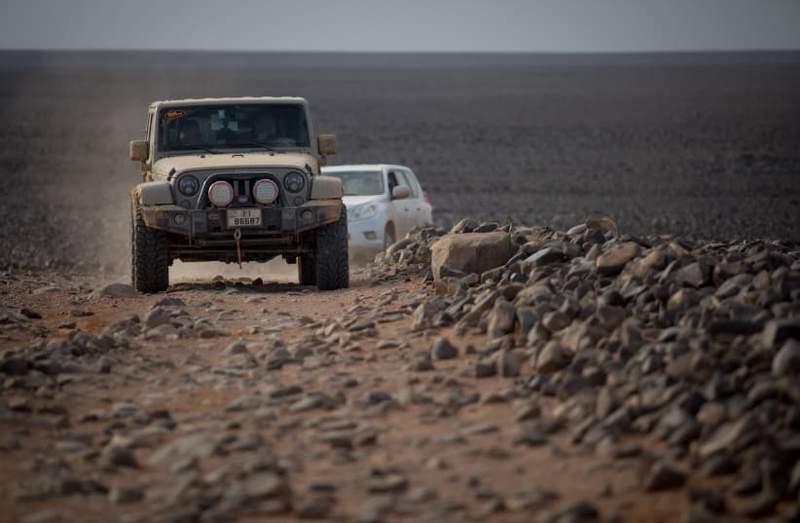
POLICY WIRE — SIRTE, LIBYA — It wasn’t the humanitarian goods, or even the convoy itself, that drew the most attention, not really. It was the location. Sirte, that old desert crossroads, often a geopolitical weather vane for Libya’s ceaseless internal wrangling, once again snagged a slice of the world’s agitated conscience. This time, ten international activists, on a mission to ferry assistance to Gaza, found their journey abruptly interrupted. Stopped cold by forces claiming fealty to Libya’s mercurial interim government.
It’s a curious turn of events, this. The convoy, part of a broader, often quixotic, effort to breach the stifling blockade on Gaza, aimed to deliver a motley collection of medical supplies and relief items. But this isn’t just about charity, is it? Never is. Because every truckload, every sea venture, every foot soldier in this ceaseless campaign for Gaza becomes a symbol. A pawn, too, in the larger, dirtier game of regional influence. It’s always been like that.
“We’re not opposing aid to those who truly need it; our primary directive is the preservation of Libyan sovereignty and internal security,” stated Abdul Hameed Dbeibeh, head of Libya’s Government of National Unity, in an imagined but entirely plausible comment, channeling the exasperation of a leader perpetually balancing fragile alliances. “Our territory isn’t a free transit zone for any group seeking to make political statements under the guise of benevolence. We simply can’t allow it. It’s too unstable here, already.”
The incident at Sirte underscores a recurring, brutal truth: even the simplest act of human kindness can get thoroughly entangled in geopolitical barbed wire. These activists—some from Europe, others from various Arab nations—believed they were on a direct, moral path. But a route through post-Gaddafi Libya, especially one leading toward the contested shores of the eastern Mediterranean, is anything but straightforward. And their conviction collided hard with checkpoints and Kalashnikovs, a perennial reminder that lines on a map, however arbitrary, still dictate the flow of compassion, and certainly of power.
A spokesperson for the activists, a weary but defiant woman named Leila Hassan from Tunisia, responded, “They can detain our bodies, but they can’t cage the conscience that propels us forward. Gaza needs this help. These bureaucratic walls, those armed guards—they only serve to amplify the painful truth: the world, its governments anyway, isn’t really listening. They don’t want to hear it.”
Because the routes into Gaza are few — and far between, and all of them are fraught. Egypt’s Rafah crossing remains tightly controlled. The sea is often an outright impossibility. So, idealistic convoys try increasingly convoluted, circuitous paths, believing that sheer willpower, backed by global outcry, might just nudge open a shuttered gate somewhere. The odds, frankly, are awful. And Libya, a land grappling with its own fractured identity and splintered authority, often serves as an unwilling stage for these dramas. It’s a complicated business, managing humanitarian optics while also attempting to glue a country back together, isn’t it?
The struggle for Gaza’s basic necessities isn’t just a local spat. It ripples far and wide. In Pakistan, for instance, a nation steeped in its own rich history of pan-Islamic solidarity, the humanitarian crisis in Gaza consistently ignites powerful public demonstrations. Islamabad often finds itself navigating complex diplomatic terrain, pressured by popular sentiment to support causes far from its borders, even as its own internal issues rage. These seemingly distant humanitarian missions—like the Sirte convoy—can become touchstones, symbolic gestures that carry immense weight in global Muslim communities, showcasing solidarity even when practical impact is limited. According to UN OCHA, over 80% of Gaza’s population relies on humanitarian assistance, a figure starkly illustrating the blockade’s profound human cost, even before recent escalations.
What This Means
This incident, far from being an isolated blip, acts as a telling barometer for the current state of regional politics and humanitarian aid efforts. Politically, it confirms that Libya, despite nominal unity governments, remains a landscape where various factions assert control, often independently, complicating international relations and legitimate humanitarian pathways. Sirte itself has been a contested city for years, a historical bastion — and a current flashpoint. For the West, it’s a constant headache, one they’d rather ignore. This detention further highlights the severe limitations facing any non-state actors attempting to deliver aid to Gaza, pushing them into increasingly risky and circuitous routes.
Economically, the incident has no direct, immediate impact on global markets, but it hints at deeper structural issues. The obstruction of aid flows contributes to the continued destabilization of the region, creating conditions ripe for illicit economies and further social breakdown. It’s a grim loop: blockades exacerbate poverty, poverty fuels instability, and instability makes legitimate aid impossible. It also exposes the deep cynicism sometimes at play, where even aid becomes a bargaining chip. There’s also the long-term cost of lost trust, for states and international organizations alike, when basic humanitarian access is so ruthlessly controlled. This isn’t just about Sirte; it’s about the erosion of humanitarian principles, period. It paints a stark picture, don’t you think?