


Kyiv Braces for Another Storm as Kremlin Hints at Escalation Post-Weekend Strikes
POLICY WIRE — Kyiv, Ukraine — The weekend’s grim serenade of air raid sirens and the shattering impact of cruise missiles hadn’t quite faded from Kyiv’s memory—nor from its battered...

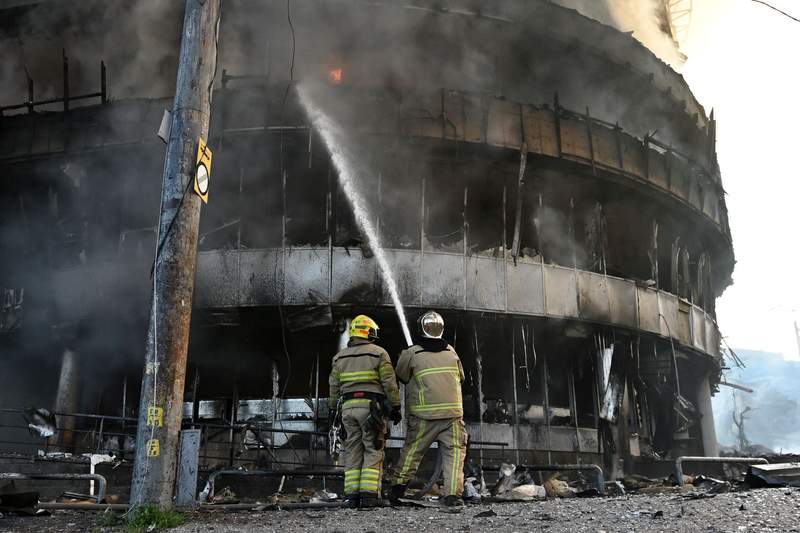
POLICY WIRE — Kyiv, Ukraine — The weekend’s grim serenade of air raid sirens and the shattering impact of cruise missiles hadn’t quite faded from Kyiv’s memory—nor from its battered infrastructure—before the Kremlin issued its rather predictable, thinly veiled warnings. They’re talking about “new targets.” About an “unavoidable response.” Because, you know, hitting civilian apartment blocks and parks isn’t enough, apparently. The city, having just pulled its people from rubble, finds itself back on edge, once again staring down the barrel of Moscow’s rhetorical and actual artillery.
It’s a peculiar brand of brinkmanship, really. A Sunday onslaught against residential districts — and critical facilities across the capital leaves a bloody footprint. Then, a few days later, Dmitry Peskov, the Kremlin’s affable, ever-present mouthpiece, floats the idea that they’ve still got more nastiness in their arsenal. “Our special military operation continues. And the demilitarization of Ukraine will continue,” Peskov deadpanned to state media, a masterclass in euphemism. “The Kyiv regime should understand: further Western military assistance will only expand the geographical scope of our operations to secure our borders and interests.” It’s always about their ‘interests,’ isn’t it? As if anyone bought that line anymore.
Ukrainian officials, for their part, aren’t exactly cowering. They’ve been through this before. This isn’t their first rodeo. Mykhailo Podolyak, an advisor to President Zelenskyy, minced precisely zero words on Monday, tweeting a defiant riposte: “Russia wants to ‘intimidate’ and force ‘concessions.’ It won’t happen. We’ll stand our ground. And for every civilian apartment building they strike, for every park they try to ruin, the answer will be a stronger, better-equipped defense. They underestimate our resolve, as always.” That’s the grit Kyiv’s built on; a grim, undeniable fact that seems to bypass the Kremlin’s strategic calculus.
And so, Kyiv residents, tired but unbroken, resume their subterranean routines during alerts, emerging to clear debris and salvage fragments of ordinary life. Air defense systems, a medley of Western and Soviet-era tech, put on quite a show during Sunday’s assault, with the Ukrainian Air Force Command claiming an interception rate of over 85% for the incoming cruise missiles that day. That’s a good number, a testament to growing sophistication. But even an 85% success rate leaves plenty of wreckage when you’re talking about dozens of missiles.
But the real theatre isn’t just in the skies above Ukraine; it’s playing out across global commodity markets, rattling the confidence of developing economies already wrestling with inflation and political instability. For nations in South Asia, like Pakistan, a sudden surge in global energy or food prices—directly impacted by the conflict’s intensity and duration—can quickly morph into full-blown crises. It isn’t some abstract threat. These renewed Russian threats aren’t just aimed at Ukrainian morale; they’re designed to project instability far beyond the immediate front lines, causing ripples from Europe’s energy exchanges to the price of basic foodstuffs in Karachi or Cairo. It’s a dirty tactic, weaponizing economic anxieties.
Because ultimately, this conflict isn’t just about territorial disputes. It’s about a reshaping of geopolitical power dynamics, and a test of Western unity that has significant implications for states attempting to balance various geopolitical pressures—nations from Turkey to India find themselves walking an incredibly fine line. A protracted, brutalized Ukraine leaves everyone less secure, less predictable. Nobody wins this messy game.
What This Means
These fresh, vague threats from Moscow, while utterly predictable after a large-scale strike, serve several intertwined purposes. First, they aim to further fracture Ukraine’s morale — and break its resolve, suggesting an unending, grinding war. They’re trying to chip away at resilience. Secondly, they’re a deliberate signal to Western allies: keep arming Ukraine, — and we’ll just escalate. It’s a test of nerve, designed to sow discord in NATO capitals that are, frankly, already squabbling over ammunition shipments and financial aid. Expect another round of urgent donor conferences, followed by the inevitable trickle of slower-than-hoped-for supplies.
Economically, this posture further muddies the waters for global markets. Russia seems content to weaponize uncertainty, especially in sectors like energy — and food. Any prolonged escalation promises continued strain on global supply chains, affecting everyone from European households bracing for winter heating bills to emerging economies like those across the Muslim world and South Asia. Nations there are already navigating treacherous fiscal conditions, and this renewed unpredictability could push some to the brink. Consider how continued instability influences everything from import costs for agricultural products to foreign investment confidence. You can trace these economic fault lines all the way to Islamabad’s strategic calculations. Politically, Russia seeks to present itself as undeterred and capable of sustained aggression, regardless of the humanitarian cost. It’s a chilling reminder of an old-world great power mentality, stubbornly refusing to adapt. The fight for Kyiv’s future isn’t just a local skirmish; it’s a barometer for the entire global order, a very painful, very messy one.