


Hoops and High Stakes: Young Thunder Challenge Established Order in Playoff Grind
POLICY WIRE — Oklahoma City, USA — It isn’t always the loudest shot or the most dramatic dunk that speaks volumes in professional sports. Sometimes, it’s the quiet resolve of a team...

POLICY WIRE — Oklahoma City, USA — It isn’t always the loudest shot or the most dramatic dunk that speaks volumes in professional sports. Sometimes, it’s the quiet resolve of a team pushing back against a historical tide, against expectations, and against the crushing weight of playoff pressure. That’s what we saw the other night, as the Oklahoma City Thunder, long considered an emerging threat, weren’t just participating; they were serving notice.
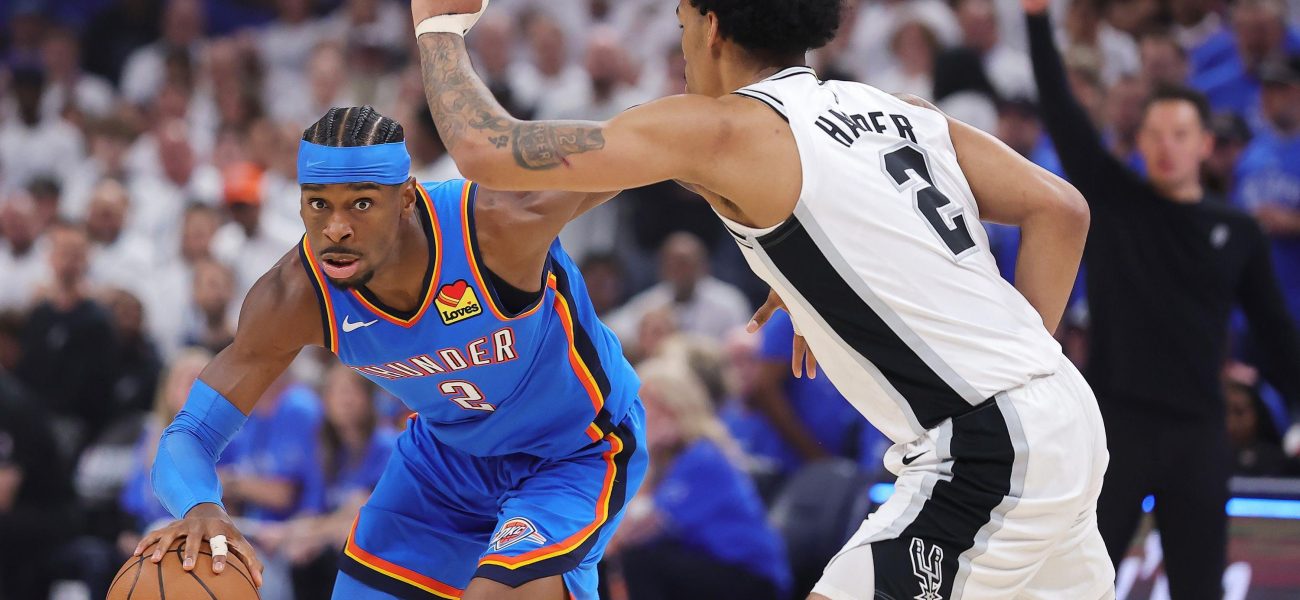
They’d stumbled, of course, in the series opener, letting a 41-point eruption from San Antonio’s phenom Victor Wembanyama run wild. But Game Two? That was a different beast entirely. Shai Gilgeous-Alexander, the man who just clinched his second consecutive MVP nod—yes, second, think about that for a minute—stepped up, plain and simple. He hung a game-high 30 points on the Spurs, guiding his squad to a 122-113 victory. Don’t sleep on his nine assists either; sometimes, giving the ball up is the smart play.
It’s an interesting narrative unfolding, particularly for a league often dominated by established franchises. The Thunder, with their fresh-faced talent, are bucking a trend, a bit like a nimble startup disrupting a monolithic corporation. Wembanyama, who had looked utterly uncontainable in Game One, found himself somewhat stifled, settling for 21 points this time around. The Thunder adjusted, as good teams do. It wasn’t a clinic, but it got the job done. The series is now squared at 1-1, heading to San Antonio for the next two.
And SGA, cool as a cucumber after the buzzer, just nodded. “The guys brought it tonight, knowing what it would’ve meant if we lost this one,” he told reporters. “We brought the energy from the jump.” He wasn’t wrong. Because in the playoffs, you don’t get many mulligans. Momentum, a slippery customer at the best of times, is a hot commodity now.
Veteran Spurs coach Gregg Popovich, rarely one to offer unvarnished praise (and often keen on a bit of theatrical misdirection), was predictably understated. “They played tough. Our guys, they fought. You lose some, you win some. We’ll learn from it,” he said, probably already drawing up complex new plays in his head that only he, and maybe a few MIT professors, could comprehend. It’s a chess match, always, with Popovich involved.
The numbers behind this kind of contest are staggering, you know. While folks are fixated on jump shots — and fouls, the economic engines whir away. Take Oklahoma City, for instance. A successful NBA playoff run can inject significant cash into a city’s economy. According to data cited by WalletHub in a recent report on the economic impact of professional sports, playoff games for a popular team can boost local spending by as much as $3.5 million per home game, covering everything from hotel bookings to concession sales and parking. That’s not pocket change; that’s real money, for real people.
This dynamic—youthful exuberance colliding with seasoned strategic prowess—isn’t just playing out on American hardwood. Look at the burgeoning interest in basketball across the globe. From Manila to Karachi, young fans are tracking these scores, analyzing player performance, and debating team strategies with an intensity that matches any domestic fan base. In Pakistan, for example, despite cricket’s dominance, NBA fandom is quietly but steadily growing, driven by digital accessibility and the captivating stories of athletes like Gilgeous-Alexander. They’re watching these games in coffee shops and living rooms, connecting with a sport that, at its heart, is a narrative about overcoming odds. The accessibility of international sports broadcasts, a testament to globalization, means these stories resonate far beyond continental borders. What’s happening in Oklahoma City has eyes on it everywhere.
“We got a W, it’s all you can ask for. Now we got to go on the road against a really good team — and go get one,” SGA summed it up. Simple. Brutal. Honest. He’s not wrong. Because that’s the nature of the beast, right? It’s never easy.
What This Means
This series, though just two games deep, highlights something profound about contemporary professional sports: the constant rebalancing of power. The NBA isn’t merely a collection of millionaire athletes; it’s a multi-billion-dollar enterprise where individual talent, team chemistry, and market dynamics clash relentlessly. The Thunder’s ascendancy isn’t just about impressive dunks and three-pointers; it’s a disruption, a challenge to the old guard. For small-market teams, building through the draft and developing talent into MVPs offers a blueprint, a kind of scrappiness economy in the face of mega-teams. It means that savvy management — and player development can, against significant odds, punch above their weight. Economically, their deep playoff runs generate disproportionate local wealth and national visibility, turning a sports team into an economic engine for often overlooked metropolitan areas. Politically, well, it brings people together. For a few hours, at least, disagreements fall silent, replaced by collective groans — and cheers. And that, in itself, is a rare kind of victory.