


Digital Dynamite: Old Video, New Fires Stoke South Asian Communal Fault Lines
POLICY WIRE — New Delhi, India — Forget geopolitics as usual; the real battle for influence across South Asia often rages on screens, in blurred video clips and weaponized whispers. You’d think...

POLICY WIRE — New Delhi, India — Forget geopolitics as usual; the real battle for influence across South Asia often rages on screens, in blurred video clips and weaponized whispers. You’d think state actors with fleets of intelligence analysts would shape regional narratives, right? Nope. Sometimes, all it takes is an out-of-context upload and a million credulous shares to send tremors through a subcontinent already grappling with its own raw nerves.
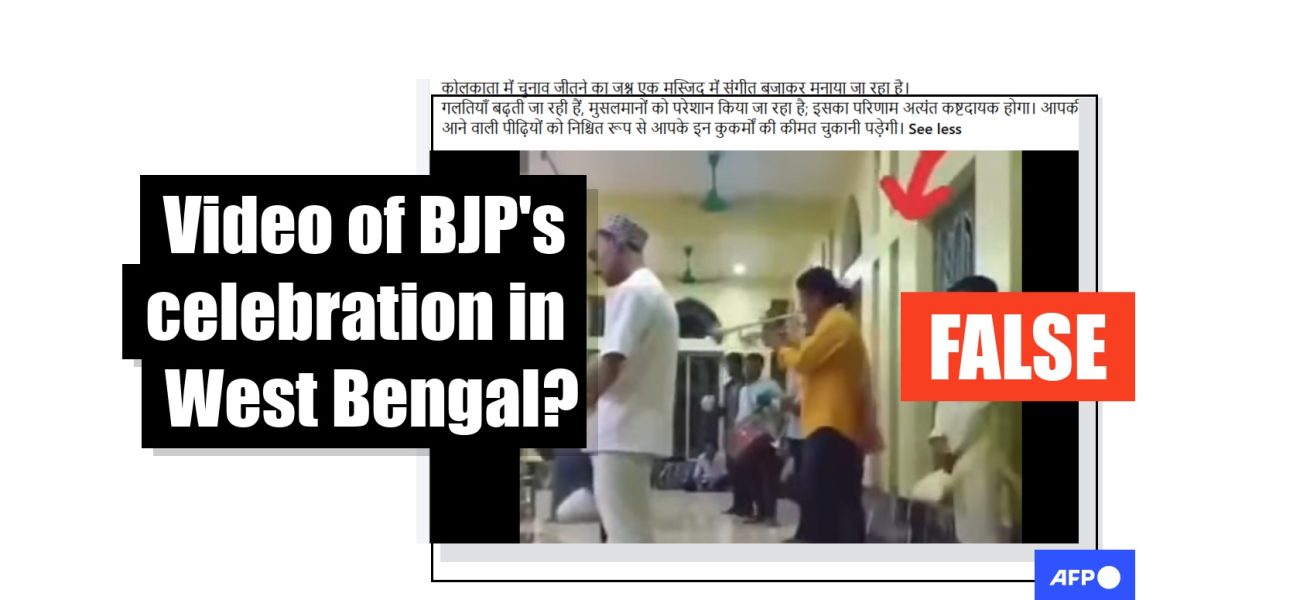
It wasn’t a grand strategy document or a fiery parliamentary debate that recently ratcheted up communal tensions in India’s West Bengal. No, it was a religious ritual from Bangladesh—a decidedly distinct nation—mistakenly peddled as fresh evidence of sectarian strife within India’s borders. A clip, showing adherents performing a specific ceremony in Dhaka, got twisted, re-contextualized, and unleashed upon a segment of the Indian populace as proof of something entirely different, something incendiary. It’s an old trick, but damn if it doesn’t work every time.
Because, in this particular ecosystem of digital discontent, facts aren’t inconvenient, they’re simply optional. The internet—this boundless wellspring of information—often morphs into a boundless sewer for deception. And when the targets are already predisposed to mistrust, or nursing grievances real and imagined, a little lie travels a very, very long way. That’s what we’ve seen playing out, again — and again.
“These online provocations are a cynical attempt to destabilize hard-won regional amity,” remarked Dr. Abida Rahman, a senior analyst at the Bangladesh Institute of Peace — and Security Studies. “It’s manufactured discord, plain — and simple, meant to ignite communal fires where none existed. We’ve worked tirelessly to build bridges; this sort of malicious editing just wants to torch them.”
You can almost hear the gears turning in the minds of the disseminators: locate an emotionally charged scene, strip it of context, then re-label it with a divisive narrative perfectly tailored to stoke local anxieties. In this instance, a benign Bangladeshi gathering became a flashpoint for what could’ve been, for what felt like, a local crisis in India. The sheer scale of such deliberate disinformation campaigns—often leveraging WhatsApp groups or shady social media channels—can warp public perception faster than any official communiqué could hope to correct.
“We’re facing an informational assault on our social cohesion,” stated Professor Ranjit Singh, an expert on communal relations at Jawaharlal Nehru University. “Every misplaced image, every out-of-context video, gets weaponized by actors who don’t care about truth, only about tearing us apart. It makes the already difficult task of governing a diverse populace all but impossible, doesn’t it?” He’s not wrong. It really does feel that way sometimes.
This isn’t some abstract academic debate either; this is the nitty-gritty of governance in the digital age. Political factions, external entities, or just plain old mischief-makers understand the power of a potent falsehood. And they’re willing to exploit the permeable digital borders between nations. India, for example, boasts over 460 million active social media users, according to a 2023 Statista report—a vast audience ripe for both connection and, sadly, calculated manipulation.
The parallels to similar disinformation tactics in other parts of the Muslim world or South Asia—from fueling sectarian rifts in Pakistan to distorting narratives during the Rohingya crisis—are undeniable. It’s a template. A particularly nasty one. These digital fictions contribute to a broader atmosphere of distrust and animosity that transcends official diplomatic channels. It makes reconciliation harder; it makes cooperation a trickier beast. Because people don’t argue with government pronouncements; they argue with what they saw, what they believed they saw, on their phone screens. But also, with all the very real challenges facing the country, like extreme weather, perhaps a society is busy recalibrating its own clock while such digital static swirls.
What This Means
This isn’t merely a factual correction; it’s a window into the messy mechanics of modern instability. Politically, the quick dissemination of such manipulated content can trigger local protests, fuel political rhetoric during election cycles, and ultimately, strain interstate relations—even between neighbors like India and Bangladesh, who generally navigate a complex but stable relationship. The economic implications, while less direct, can still sting: investor confidence takes a hit when perceived social unrest bubbles up, and communities already struggling can face further disruptions to their livelihoods if tensions escalate into real-world violence.
For New Delhi, it means perpetually fighting fires that aren’t even real. It’s a resource drain, a distraction from pressing domestic concerns. For Dhaka, it’s about managing its image abroad and reaffirming its own secular credentials—or at least its commitment to cross-border harmony—against digital currents trying to drag it into foreign quarrels. The larger implication is clear: in an age where information, however twisted, travels at light speed, the definition of national security has broadened to include defending against narrative attacks. And this isn’t some esoteric concept, this is people getting agitated, sometimes violently so, over something that never even happened.